James Webb Space Telescope Observations Suggest Mysterious Little Red Dots Could Be Primordial Black Holes

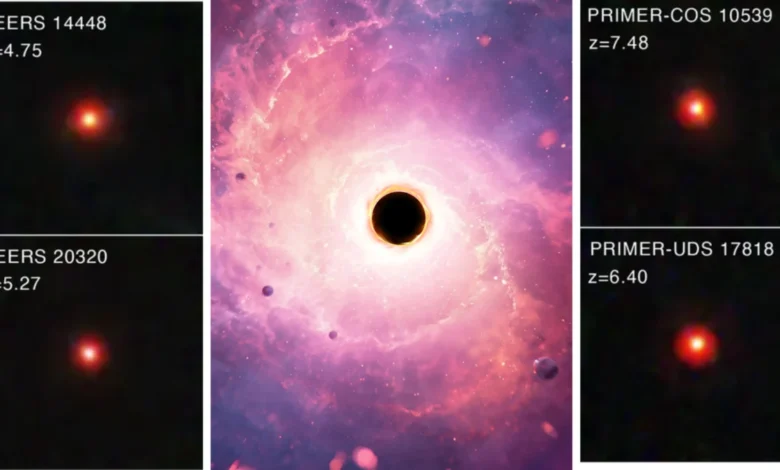
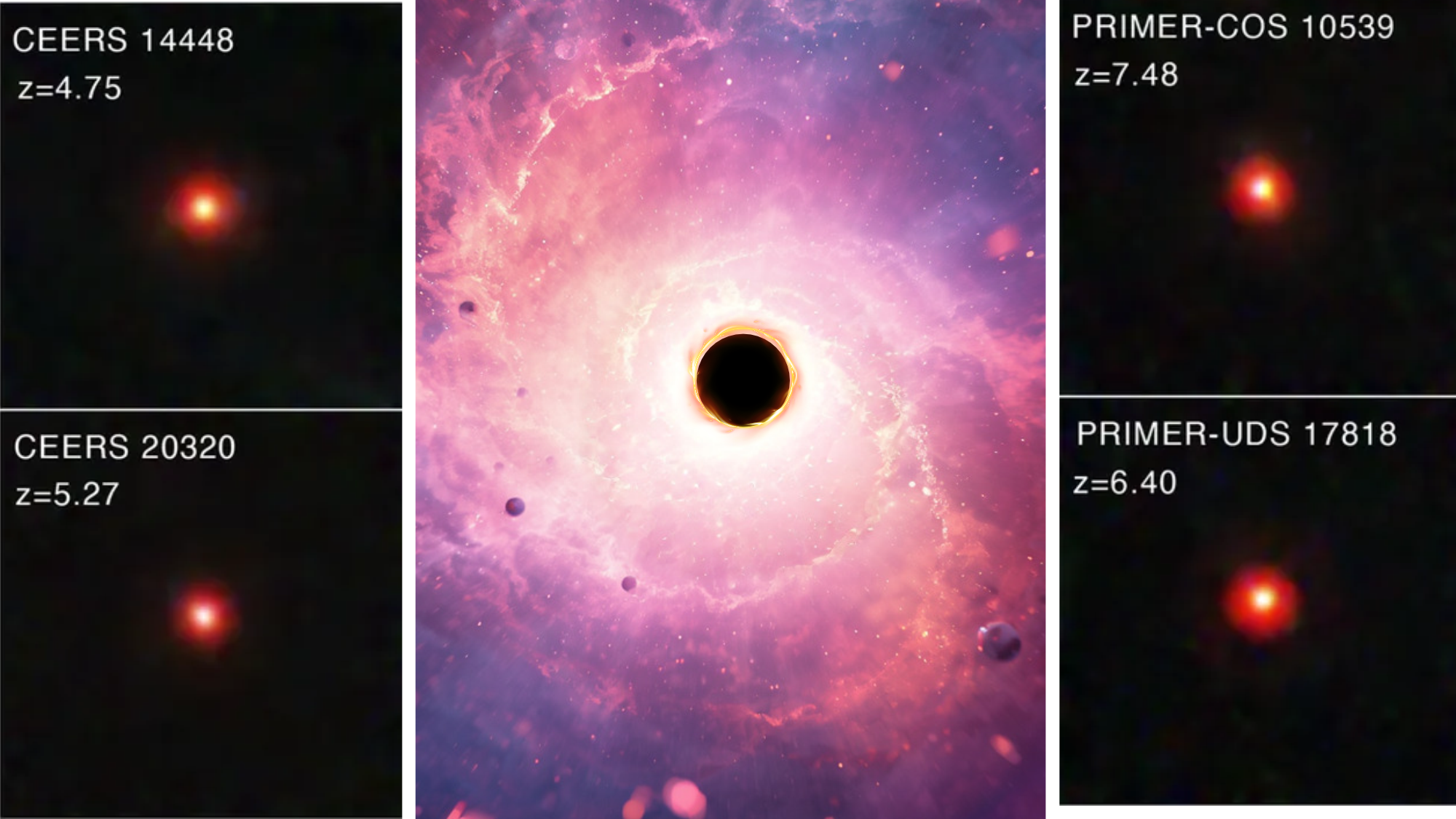
The advent of the James Webb Space Telescope (JWST) has continuously challenged and reshaped our understanding of cosmology since it commenced scientific operations. Among the most perplexing discoveries made by the observatory are the enigmatic "Little Red Dots"—compact, heavily obscured cosmic objects that appear to vanish entirely before the universe reached two billion years of age. For years, astrophysicists have debated the true nature of these objects, which defy conventional models of galaxy and star formation. Now, fresh research suggests that these elusive entities might not be traditional galaxies at all, but rather primordial black holes—ancient anomalies born not from the gravitational collapse of dying stars, but from dense matter fluctuations moments after the Big Bang.
If confirmed, this hypothesis would validate a theoretical concept first proposed by physicist Stephen Hawking in the 1970s. Primordial black holes would predate stars, cosmic dust, and elements heavier than hydrogen and helium, serving as direct relics of the universe’s most violent and volatile infancy. A research team from the Johns Hopkins University (JHU) Department of Physics and Astronomy recently tested this groundbreaking premise by analyzing JWST data concerning a specific Little Red Dot known as Abell 2744-QSO1 (QSO1). Their findings, published in the peer-reviewed journal Physical Review Letters, open a new frontier in the study of early cosmic evolution and the origin of supermassive black holes.
Understanding the Origin: Primordial Versus Astrophysical Black Holes
To comprehend the significance of the JHU research, scientists emphasize the fundamental distinction between standard astrophysical black holes and primordial counterparts. Traditional black holes are the aftermath of stellar death. When massive stars exhaust their nuclear fuel, they undergo core-collapse supernovae, leaving behind compact remnants that warp spacetime. Conversely, primordial black holes are hypothesized to have formed during an epoch of exponential space-time expansion immediately following the Big Bang, long before the first luminous stars ignited.
Valerio De Luca, a researcher at JHU and co-author of the study, elaborated on this distinction in a public statement. "A black hole is an object born from the gravitational death of a star. Primordial black holes are a very different story," De Luca explained. "They come from the physics of the early universe that predates the first stars, when the universe was expanding exponentially in time and space. So the mechanisms for creating primordial black holes are different."
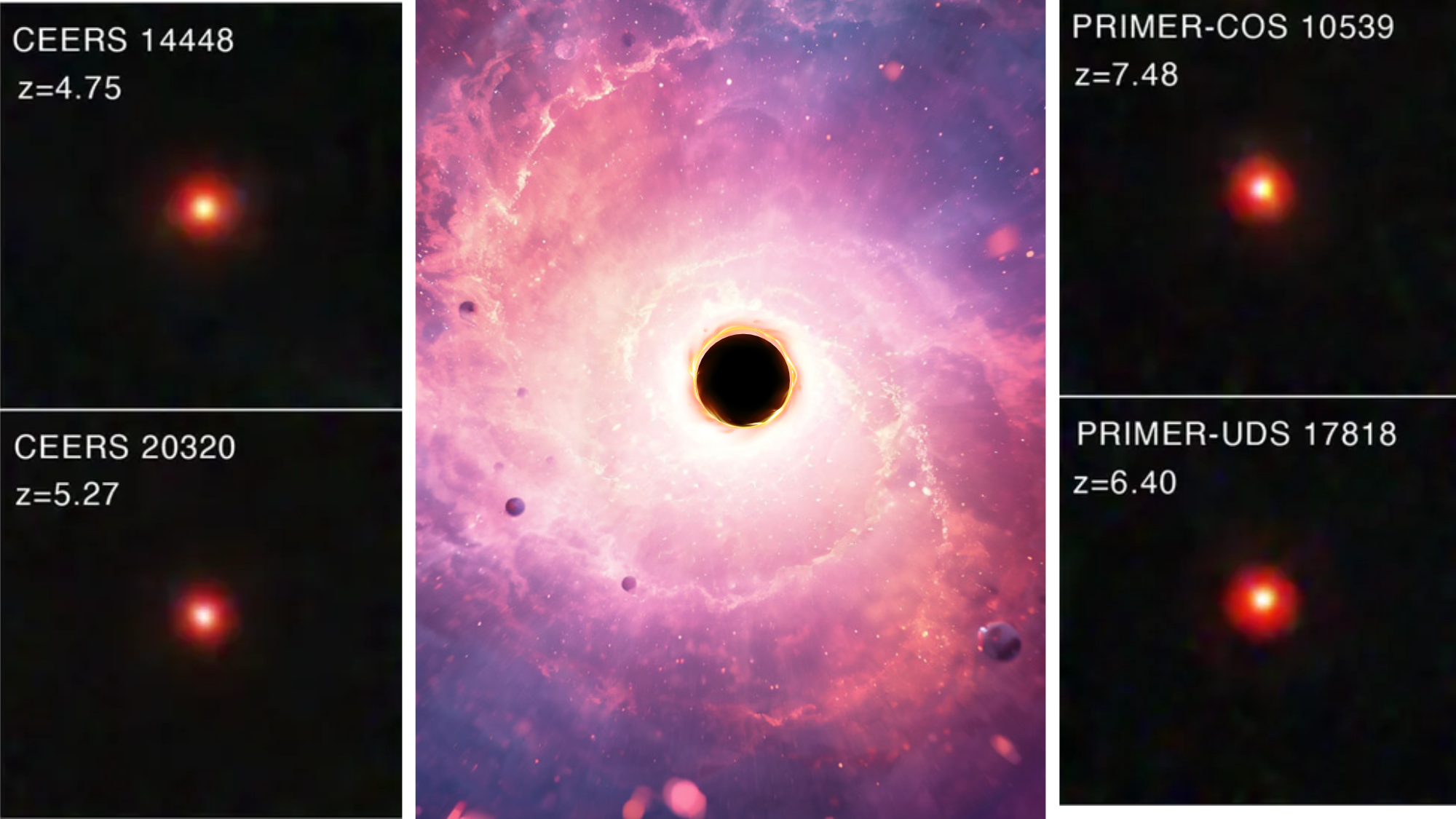
For decades, the primary obstacle in proving the existence of primordial black holes has been observational ambiguity. Because black holes themselves do not emit light, researchers must infer their presence through their surrounding environments. Little Red Dots frequently exhibit characteristics resembling active galactic nuclei—supermassive black holes accreting matter at immense rates—making it difficult to differentiate between a primordial origin and a conventional stellar-remnant black hole surrounded by dense gas.
Analyzing QSO1: A Window Into the Early Cosmos
To cut through this observational impasse, De Luca and his colleagues focused their investigation on Abell 2744-QSO1, an exceptionally distant Little Red Dot situated approximately 13.1 billion light-years from Earth. Observations capture QSO1 as it existed a mere 700 million years after the Big Bang. What sets QSO1 apart from other candidate objects is its chemical composition: it is composed almost entirely of pristine hydrogen and helium, the original chemical elements forged during Big Bang nucleosynthesis. Because it lacks the heavier elements typically contributed by subsequent generations of dying stars, QSO1 presents a uniquely unspoiled laboratory for testing primordial theories.
The research team constructed detailed theoretical models to determine whether a primordial black hole could account for the observed properties of QSO1. However, any such model must operate within strict astrophysical boundaries established by existing cosmological data.
"There are constraints on primordial black holes from cosmological observations," noted Loris Del Grosso, a JHU physicist and co-author of the study. "There can only be so many primordial black holes in the universe, for example, and there cannot be too many of them in a given cluster."
After evaluating three distinct evolutionary scenarios, the investigators concluded that the most statistically viable explanation involves a microscopic primordial black hole that accreted surrounding primordial gas and ambient energy at an accelerated rate, eventually expanding to match the observed mass and luminosity profile of QSO1.
"The door was open on this theory—that Little Red Dots could be primordial black holes," Del Grosso remarked. "We’ve now cracked it open a little farther by showing some scenarios are more likely than others."
Methodology and Chronology of the Discovery
The investigation into Little Red Dots represents a rapid evolution in observational astronomy, driven by the unprecedented infrared capabilities of the James Webb Space Telescope, which was launched on December 25, 2021. Since returning its first deep-field images in July 2022, the observatory has routinely identified luminous, compact red sources at high redshifts (z > 5), confounding theoretical astrophysicists who argued that mature galaxies and massive black holes should not have had sufficient time to assemble in the early universe.
By late 2023 and throughout 2024, spectroscopic data from JWST’s Near-Infrared Camera (NIRCam) and Near-Infrared Spectrograph (NIRSpec) instruments allowed researchers to measure the masses, gas densities, and spectral signatures of these anomalous objects. The JHU team utilized this publicly available archival data to model the accretion physics of QSO1, running computational simulations to test how density fluctuations from the inflationary period of the universe could scale up to produce objects matching the mass measurements obtained by the space telescope.
Broader Implications and Future Research Directions
The implications of confirming the primordial black hole hypothesis extend far beyond the classification of a few dozen distant celestial objects. If scientists can definitively prove that Little Red Dots harbor primordial black holes, it would provide direct empirical insight into the physics of inflation—the hypothetical period of faster-than-light expansion that occurred fractions of a second after the Big Bang. Furthermore, it could solve a long-standing cosmological conundrum: how supermassive black holes managed to grow to millions or billions of solar masses within the first few hundred million years of cosmic history, a timeframe too short for standard stellar accretion models to easily account for.
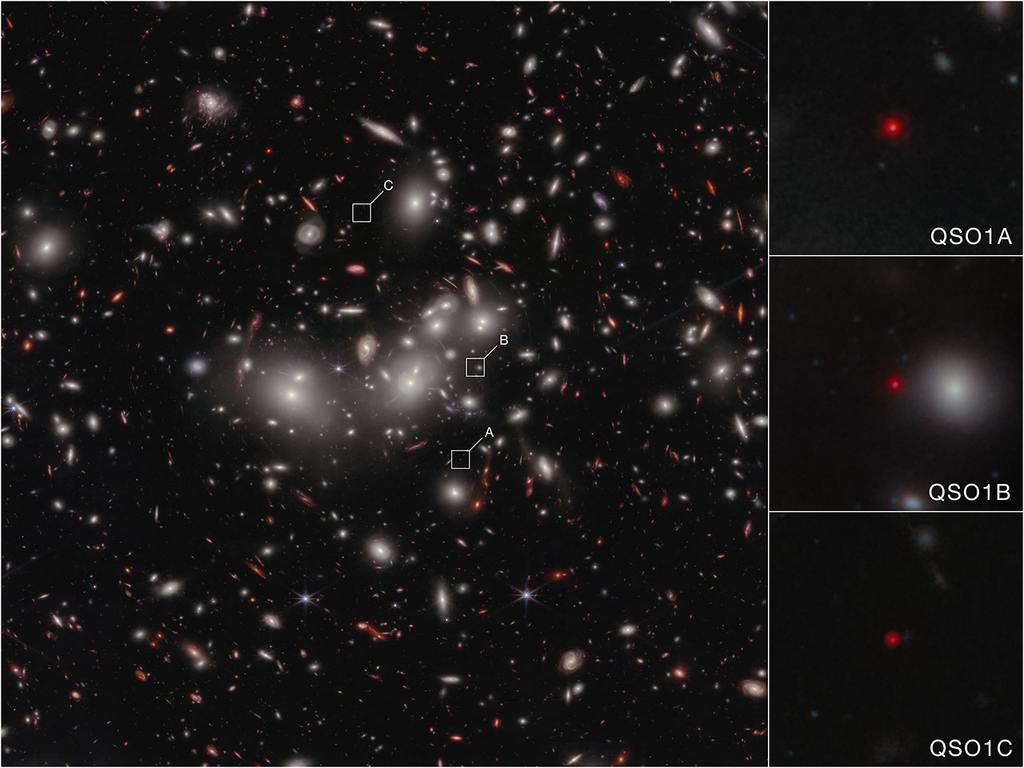
Buoyed by their findings concerning QSO1, the JHU research team has outlined plans to expand their analytical framework. Del Grosso, De Luca, and their colleagues intend to examine the remaining population of approximately 100 Little Red Dots cataloged by the JWST. By applying their accretion and evolution models across a broader sample size, the researchers hope to determine what percentage of these early cosmic anomalies could trace their origins back to the primordial soup of the Big Bang.
Despite the promise of the new models, the scientific community remains cautious. Definitive confirmation will likely require high-resolution gravitational wave data or advanced spectroscopic signatures that can unambiguously separate primordial black hole populations from early stellar black holes. Nevertheless, the research marks a significant step forward in decoding the mysteries captured by NASA’s premier observatory.
"We don’t have a clear understanding of what happens in the early universe right after the Big Bang," De Luca concluded. "If primordial black holes do exist, then something had to happen to make them in the first place, which would be a groundbreaking discovery in physics."
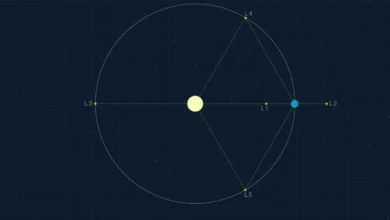
As the James Webb Space Telescope continues its mission at the second Sun-Earth Lagrange point (L2), astronomers worldwide await further data releases that may finally shed light on the darkest and oldest mysteries of the cosmos.