Mark Rober and the Human Moat: Why Real-World Experimentation Is the Ultimate Defense Against AI Content Saturation

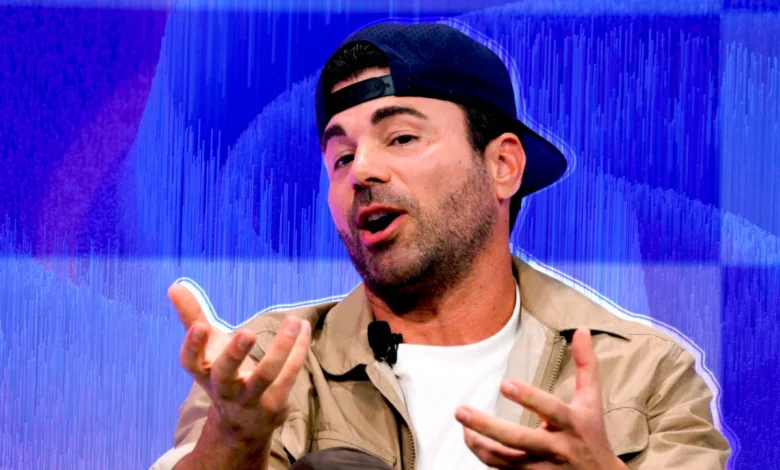
In an era where generative artificial intelligence can synthesize photorealistic video, compose scripts, and mimic human voices in seconds, the digital landscape is undergoing a profound transformation. As platforms like YouTube, TikTok, and Instagram become increasingly flooded with automated, low-quality "slop," content creators are facing an existential question: how does one remain relevant when the barrier to entry for content production has effectively vanished? For Mark Rober, a former NASA engineer turned scientific YouTube titan with over 85 million subscribers, the answer lies not in technological adaptation, but in a radical return to the tangible, high-stakes realities of the physical world.
The Rise of the Science Communicator
Mark Rober’s ascent to digital prominence was defined by an uncompromising commitment to complex engineering and infectious curiosity. Before his pivot to full-time content creation, Rober spent nine years at NASA’s Jet Propulsion Laboratory, where he contributed significantly to the Curiosity rover mission on Mars. This rigorous scientific background served as the foundation for his YouTube career, which launched in 2011.
His channel’s trajectory demonstrates a shift in audience preferences toward "edutainment"—content that is as intellectually stimulating as it is visually spectacular. Viral sensations such as "How to Survive a Grenade Blast," which has garnered over 100 million views, and "Can You Swim in Jello?," which boasts 224 million views, are not merely edited videos; they are the result of months of logistical planning, mathematical modeling, and expensive physical prototyping. Rober’s content represents a high-effort, high-reward model that contrasts sharply with the low-cost, high-volume output currently being churned out by AI tools.
The AI Conundrum: Accessibility Versus Authenticity
The democratization of content creation tools has introduced a dual-sided reality for creators. On one hand, AI has enabled unprecedented efficiency. Startups like Linguana are leveraging AI to automate the translation and dubbing of video content, allowing creators to reach international markets that were previously inaccessible due to language barriers or the high costs of localization. In April 2025, data indicated that Linguana was facilitating approximately 10,000 video translations monthly, providing a streamlined path for creators to monetize their existing back catalogs in new territories.
However, this ease of production has created a secondary, more insidious problem: the devaluation of technical execution. When any user can prompt an AI to generate a documentary-style video or a short-form clip about science, the market becomes saturated with content that mimics the aesthetic of quality without the substance of discovery. For channels that rely on anonymous narration, stock footage, or basic animation, the threat is existential. As competitors produce similar content at near-zero marginal cost, the "moat" that once protected these creators is evaporating.
The "Human Moat" Strategy
In a recent interview with Business Insider, Rober articulated a strategy that he refers to as a "moat"—a competitive advantage that AI cannot easily replicate. His theory is rooted in the visceral, undeniable nature of reality.
"Do you want to see a simulation of someone dunking a basketball with a sick trick, or do you want to see someone actually do it?" Rober asked. "The fact that you know it’s real is what makes it crazy."
This philosophy underscores a fundamental shift in value perception. As synthetic media becomes perfect, the "glitches" and stakes of the real world—the danger of a grenade, the physical resistance of gelatin, the failure of a prototype—become the primary source of entertainment. Authenticity is becoming the most valuable currency in the creator economy. Rober suggests that while AI can simulate a scientific experiment, it cannot simulate the genuine human stakes, the emotional resilience, or the unpredictable variables that occur when a human being interacts with the physical world.
Financial Viability and Business Expansion
Rober’s business model provides a case study in how to scale a creator-led enterprise in a volatile market. Last year, his YouTube channel generated approximately $17 million in revenue, an amount that closely mirrors the production costs of his ambitious experiments. By reinvesting nearly all his earnings back into the production of increasingly complex content, Rober ensures that his "moat" remains deep.
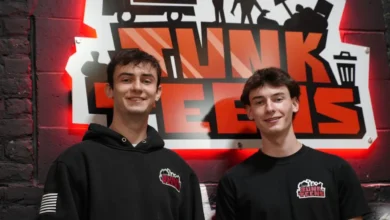
Beyond the screen, Rober has diversified his revenue through CrunchLabs, a company dedicated to hardware-based learning. By creating physical maker kits that teach children the principles of engineering, he is building a brand that extends beyond the digital medium. CrunchLabs currently employs over 200 people, signaling a shift from a "solopreneur" model to a structured educational technology company. This transition highlights a critical trend: successful creators are increasingly building robust, tangible businesses that are less susceptible to the shifting algorithms and market fluctuations of social media.
The Role of Curiosity in the Age of Automation
For Rober, the ultimate defense against the ubiquity of AI is not just physical experimentation, but a commitment to perpetual learning. He posits that curiosity is the one trait that AI cannot replicate in a meaningful way. "Curiosity is so important in this new age of AI," he remarked. "It means you just have a lifetime of learning."
This sentiment is echoed by industry analysts who observe that while AI can synthesize information, it lacks the impetus to seek out the unknown or to test hypotheses against the laws of physics. The "AI-proof" career path, according to many economic forecasts, involves roles that require high-level critical thinking, physical interaction, and complex problem-solving—the very skills that define Rober’s content.
Implications for the Future of Media
The current tension between AI-generated "slop" and human-led "extraordinary content" is likely to resolve in a bifurcation of the digital marketplace.
- The Commodity Tier: This segment will be dominated by AI-generated content, characterized by low production costs, high volume, and a focus on efficiency. It will likely capture a significant portion of the "background consumption" market.
- The Premium Tier: This segment will be reserved for creators who emphasize "high-stakes reality." Audiences are showing an increasing preference for content that provides proof of human effort. Channels that can demonstrate the "I was there" factor—through genuine travel, high-risk experiments, or original investigative journalism—will likely retain higher engagement rates and brand loyalty.
A Chronology of the Shift
- 2011: Mark Rober launches his YouTube channel, focusing on high-quality engineering videos.
- 2018–2022: The rapid maturation of generative AI tools (such as GPT-4, Sora, and various dubbing engines) begins to lower the barrier to entry for video production.
- 2024: The term "AI slop" enters the mainstream lexicon, describing the proliferation of low-quality, automated content on social media platforms.
- 2025: Startups like Linguana scale to thousands of translations per month, demonstrating the commercial viability of AI-aided localization for creators.
- 2026: Leading creators like Rober begin to publicly articulate strategies for "competing" with AI, shifting the focus of the industry toward human-centric, high-effort production as a primary differentiator.
Analysis: The Sustainability of the "Moat"
While Rober believes his current approach offers a temporary advantage, industry experts note that the "moat" is inherently fragile. As generative AI models advance, they will eventually gain the ability to create more sophisticated simulations of real-world phenomena. However, the psychological satisfaction of watching a human succeed against the constraints of physics is a social construct that may persist long after the technology to fake it is perfected.
The long-term implication is that the creator economy will likely favor those who integrate their digital presence with tangible, real-world businesses. By moving from a content-only model to a product-and-service model—such as the educational kits offered by CrunchLabs—creators are insulating themselves against the inevitable commoditization of their digital output.
Ultimately, the battle between AI and human creators is not a zero-sum game. It is a refinement process. The creators who thrive will be those who use AI to handle the administrative and technical burdens of their work while reserving their human energy for the messy, unpredictable, and profoundly authentic moments that only a person can create. In this new landscape, Mark Rober’s insistence on "doing something noteworthy" serves as a blueprint for the next generation of digital entrepreneurs: if the machine can do it, you must do something else.