2 Brothers Started a $1.2M Side Hustle as Teens. The Blue-Collar Business Made $3M Last Year: ‘Young People Are Looking for Different Career Paths.’

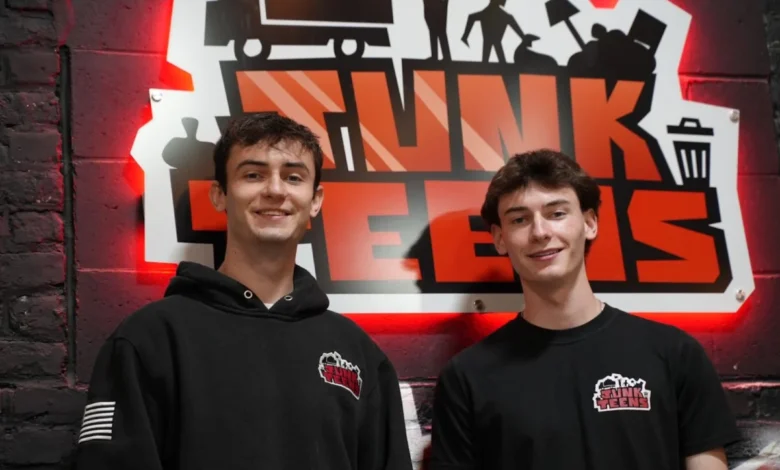
The inspiring trajectory of Junk Teens, a Greater Boston-based junk removal service founded by brothers Kirk McKinney (22) and Jacob McKinney (21), exemplifies the power of entrepreneurial vision, adaptability, and strategic growth. What began as a modest side hustle in 2021 with a single pickup truck has rapidly evolved into a formidable enterprise, projected to achieve $5 million in revenue this year. Their journey, marked by innovative operational shifts and a commitment to community, offers a compelling case study in scaling a blue-collar business in the modern era.
From Humble Beginnings to a Growing Empire: A Chronology of Success
The genesis of Junk Teens traces back to 2021 when the McKinney brothers, then teenagers, launched their venture. Their initial capital was surprisingly resourceful: a pair of working speakers discovered at a local dump sparked an idea. They began salvaging usable items from discarded piles, meticulously cleaning and reselling them on Facebook Marketplace. This early initiative quickly generated $1,000, providing the seed money for their first pickup truck and the formal establishment of Junk Teens. This period highlights their innate ability to identify value where others saw waste, a principle that continues to underpin their business model.
By 2024, when Entrepreneur magazine first profiled the brothers, Junk Teens had already surpassed expectations, generating an impressive $1.2 million in revenue, even while still primarily operating as a side hustle. This early success was a testament to their nascent business acumen and the burgeoning demand for efficient and responsible junk removal services. The company’s operational footprint expanded beyond Greater Boston to include Cape Cod and Rhode Island, indicating a strategic geographical growth plan targeting diverse customer bases.

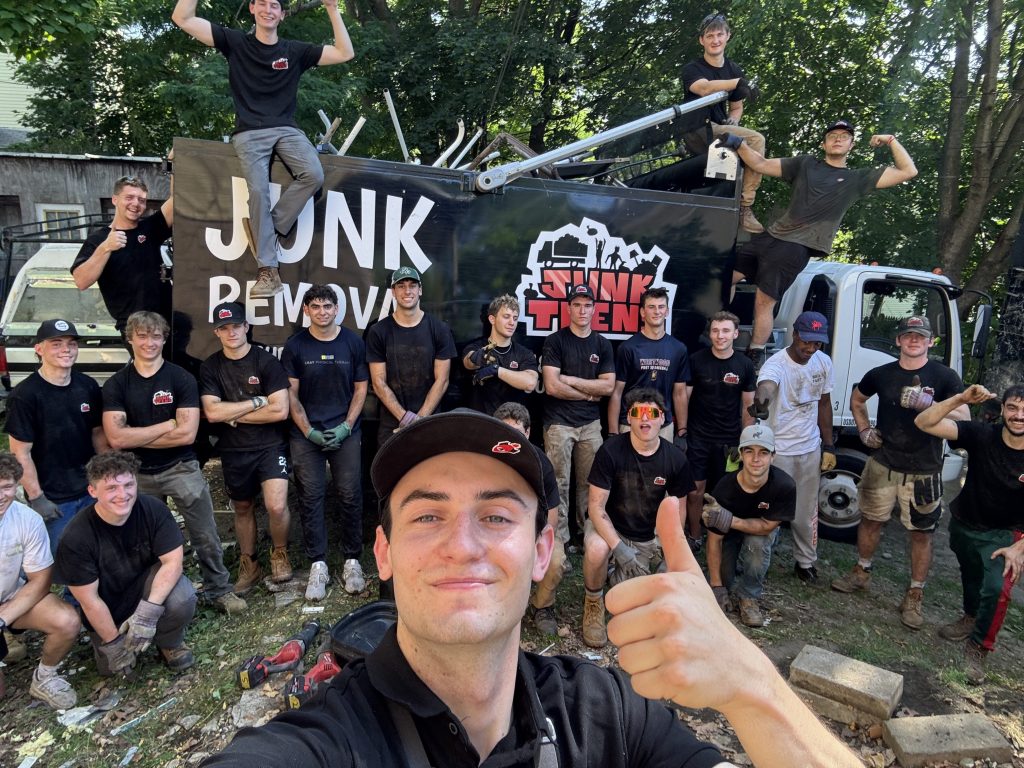
The following year, 2025, saw another significant leap, with the company’s revenue climbing to $3 million. This substantial increase underscored the effectiveness of their evolving business strategies and their deepening market penetration. Fast forward to the current year, and Junk Teens is on track to hit an ambitious $5 million in revenue, solidifying its position as a significant player in the regional junk removal industry. This rapid financial growth is mirrored by an expansion in resources: the company now boasts a fleet of eight trucks and a dedicated team of 25 full-time employees, many of whom are high school and college students.
Beyond financial metrics, Junk Teens has made a tangible environmental impact, having handled an estimated 7.4 million pounds of items since its inception. A core tenet of their operation is a commitment to sustainability: they rigorously sort collected items, prioritizing usable goods for donation, resale, or repurposing whenever possible, diverting substantial waste from landfills. This eco-conscious approach resonates strongly with an increasingly environmentally aware consumer base, adding a layer of social responsibility to their commercial success.
Strategic Evolution: Breaking Operational Bottlenecks
One of the most critical junctures in Junk Teens’ growth story involved overcoming operational bottlenecks inherent in rapid expansion. In the early stages, Jacob McKinney single-handedly managed the complex logistics of scheduling employee routes and determining disposal locations for all collected items. This centralized control, while functional for a smaller operation, became unsustainable as the fleet grew to three or four trucks. Jacob recounted working "12 hours a day, nonstop," leaving no time for strategic planning or further hiring.
The brothers recognized this as a significant impediment to scaling. Their solution was a decisive act of delegation, breaking Jacob’s monolithic role into several specialized positions. This move allowed for a more distributed workload and specialized focus. A pivotal step was promoting an experienced team member, who was taking a gap year from college, to a managerial role. This individual assumed critical responsibilities, such as daily employee check-ins and schedule reviews.
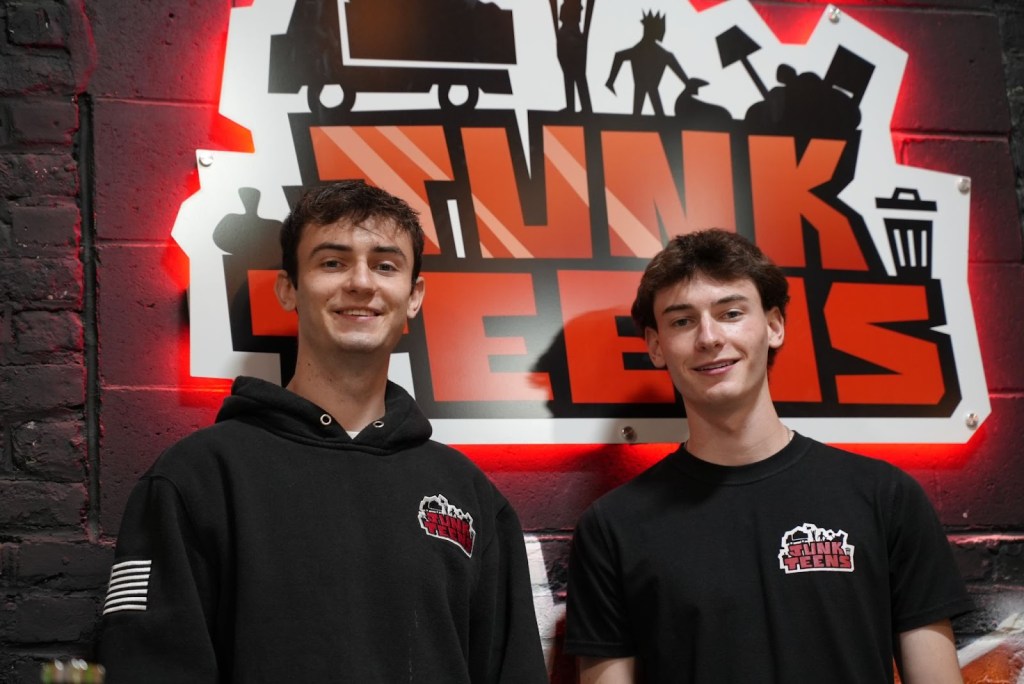
This strategic delegation proved transformative. By empowering key employees and decentralizing management tasks, Jacob was freed from the daily grind, allowing both brothers to dedicate more time to building robust systems, enhancing training protocols, and focusing on long-term strategic initiatives. This transition from an owner-operator model to a more structured, delegated management framework is a classic growth strategy for small businesses aiming for significant scale. It underscores the importance of trust in employees and the necessity of founders transitioning from operational roles to leadership positions as their companies mature.
Embracing Technology and AI: From Apple Notes to Custom Apps
The technological evolution of Junk Teens is as remarkable as its financial growth. In 2024, despite generating $1.2 million in revenue, the company’s entire day-to-day operations were managed through Apple Notes. Kirk McKinney candidly described it as "basically a $1 million side hustle at that point," highlighting the rudimentary nature of their early systems. This anecdote serves as a powerful reminder that entrepreneurial success can initially stem from sheer grit and basic tools before sophisticated infrastructure is in place.
However, the McKinneys swiftly recognized the imperative to modernize. They adopted a suite of professional tech tools to streamline operations and enhance efficiency. Jobber was implemented for customer relationship management (CRM), providing a structured approach to client interactions and service tracking. GoHighLevel was brought in for comprehensive customer data collection, enabling better insights into client needs and market trends. For internal management, Connecteam was adopted to facilitate employee scheduling, communication, and task management.
Beyond off-the-shelf solutions, Junk Teens ventured into bespoke technology development. In a testament to accessible tech and their youth-driven team, a long-standing employee with foundational tech skills, leveraging platforms like Base44 and AI tools such as ChatGPT for UI/UX referencing, developed a custom Junk Teens app. This in-house application features vital tools like a leaderboard and other statistical tracking mechanisms, allowing for real-time monitoring of employee performance metrics such as revenue per hour and closing rates. Kirk emphasized the groundbreaking nature of this achievement: "Our entire app was developed by a teenager. That’s another interesting thing – that technology’s at the point where high school kids can create full apps. And our entire company uses that app every single day." This highlights a broader trend in the tech landscape, where no-code and low-code platforms, coupled with AI assistance, are democratizing app development, enabling even smaller businesses to create customized solutions without relying on expensive external development firms.

Mastering Digital Engagement: The Power of Social Media
Junk Teens’ digital strategy extends significantly to social media, which has become a powerful engine for brand building, customer acquisition, and internal culture development. Initially, Kirk McKinney managed content creation and video posting in his limited free time. Recognizing the immense potential, they systematized their social media approach. Kirk now focuses on collecting raw footage during his field operations, then outsources the editing to professionals who help realize his creative vision.
Approximately eight months prior, Kirk expanded this strategy by training other Junk Teens team members to capture their daily operations using Meta Glasses and GoPros. This approach not only generates a constant stream of authentic content but also involves the entire team in the storytelling process. Kirk explained, "So now I have all this great content to work with, and then I can kind of be the translator between that footage and the team." This collaborative content generation ensures a diverse and engaging portrayal of the company’s work.
The results of this strategic social media investment are staggering. Junk Teens has amassed over 213,000 followers on TikTok, 269,000 followers on Instagram, and 69,000 subscribers on YouTube. These numbers are not just vanity metrics; they represent a massive, engaged audience that drives brand awareness and customer leads.
Beyond marketing, social media has become a powerful tool for team building and fostering a vibrant company culture. Kirk observed, "A company is just a group of people at the end of the day, and when you see yourself in these videos and the social media’s capturing it, you’re a part of that, and it really elevates the culture." This sense of collective ownership and visibility motivates employees and, crucially, acts as a recruitment magnet, attracting new talent who are drawn to the company’s dynamic and inclusive environment. In an era where employer branding is key, Junk Teens leverages social media to showcase its unique workplace ethos, effectively turning its employees into brand ambassadors.

Cultivating a Vibrant, Youth-Centric Company Culture
A cornerstone of Junk Teens’ success is its distinctive company culture, largely shaped by its young workforce. The majority of their employees are high school or college students, a demographic often overlooked or underpaid in traditional blue-collar sectors. The McKinney brothers actively counter this by offering competitive wages, averaging $25 to $30 an hour, inclusive of hourly rates, commissions, and tips. This commitment to fair compensation helps attract and retain top young talent.
This investment in their team fosters a profound sense of ownership and shared purpose. Kirk noted that employees "feel like they’re building the company with us because they’re also building their opportunity as the company grows." This forward-thinking mentality, coupled with the inherent optimism and adaptability of a young team, creates a dynamic work environment where ideas are welcomed, and personal growth is intertwined with company success.
The seasonality of the junk removal business, which sees volume nearly double during the summer months, aligns perfectly with the availability of student workers. While some employees return to school, the brothers strategically plan for this ebb and flow, leveraging the peak season to maximize revenue. For instance, their new Cape Cod location alone booked an impressive $350,000 in services during last year’s peak season, demonstrating the effectiveness of their seasonal workforce model.
The co-founders also highlight the intangible benefits of a young team: an open-mindedness and high energy that permeates the company culture. Jacob explained the positive peer effect: "In that scenario where someone had something happen in their life where they might be a little down coming in the next day, they get picked right back up because there’s 10 or 15 other guys that all have high energy around them. It’s impossible to still act sad or down when you’re in that type of environment." This camaraderie and positive reinforcement create a supportive and resilient workplace, crucial for demanding physical labor.
Broader Impact, Community Engagement, and Future Vision
Junk Teens’ commitment extends beyond commercial success to meaningful community engagement. They have forged impactful partnerships that underscore their dedication to social responsibility. A collaboration with Computers 4 People facilitated a computer drive, distributing refurbished laptops and desktops to under-resourced communities, bridging the digital divide. Another significant partnership with WellStrong on Cape Cod involved raising funds for wellness and peer-support programs aimed at aiding substance abuse recovery, addressing a critical public health issue. These initiatives not only enhance their brand reputation but also demonstrate how businesses, regardless of sector, can integrate social good into their operational framework.
Looking ahead, the McKinney brothers are firmly focused on perfecting their business systems, with an ambitious goal of nationwide expansion within the next couple of years. This vision reflects a confidence in their scalable model and a desire to replicate their success on a larger stage. Kirk expressed his excitement about "empowering the youth," articulating a belief that while technology offers myriad opportunities, the fundamental need for services like junk removal, coupled with the continuous demand for after-school and summer jobs for young people, creates a powerful synergy. He sees Junk Teens as offering viable alternative career paths beyond the traditional college route, appealing to a generation increasingly seeking practical, hands-on experience and direct income.
The co-founders frequently receive direct messages from young people seeking advice on starting their own businesses. Their consistent counsel is to overcome procrastination and simply begin. Jacob wisely noted, "I don’t think there’s ever a perfect roadmap unless you already have $1 million and are a business expert, which we were not, and most people starting businesses are not. So start, even if it’s not going to be the business that you retire with. We just started with something that we thought was adventurous and entertaining, not even something that we thought would make us the most money." This ethos of experimental entrepreneurship, prioritizing passion and learning over immediate financial gain, resonates deeply with aspiring young business owners.
Junk Teens stands as a testament to the modern entrepreneurial spirit: resourceful, tech-savvy, socially conscious, and deeply committed to its team. From a few discarded speakers to a multi-million dollar enterprise, the McKinney brothers have not only built a successful business but have also created a model for youth empowerment and sustainable growth in the blue-collar sector. Their journey continues to inspire, proving that with innovation and determination, even the humblest beginnings can lead to extraordinary achievements.