From the Soundtrack of the Internet to Digital Sovereignty: The Evolution of Ian Rogers

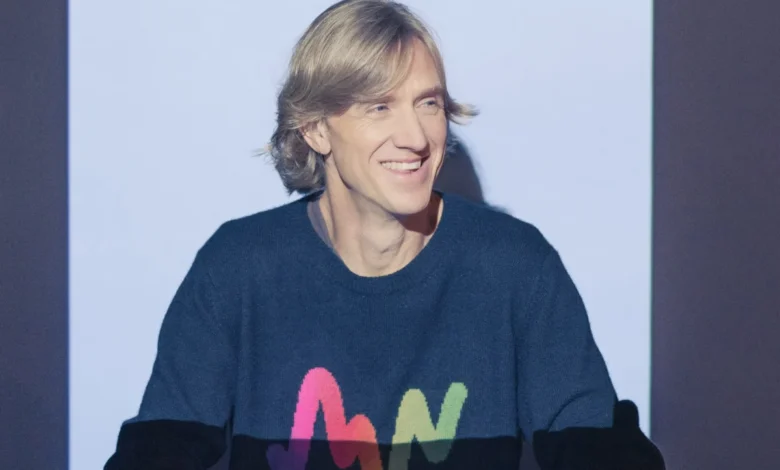
Ian Rogers has spent his career defining how consumers interact with the digital world. From the formative days of the World Wide Web to the high-stakes boardrooms of Apple and the luxury digital transformation of LVMH, Rogers has consistently been at the vanguard of consumer technology. Today, he is pivoting from the creative arts to the fundamental pillar of the digital future: self-sovereign security. As the Chief Human Agency Officer at Ledger, a $1.5 billion security unicorn, Rogers is applying his decades of experience in user experience and ecosystem building to the complex, often intimidating world of cryptocurrency and digital identity protection.
A Career Defined by Disruption
The trajectory of Ian Rogers’ career reads like a history of modern digital consumerism. Growing up in Indiana, Rogers caught the early wave of computer science in the 1990s. At a time when the internet was an academic curiosity rather than a household utility, he was already building some of the web’s earliest websites. His transition from the academic study of code to the music industry proved to be the catalyst for his professional philosophy: the marriage of technology and human desire.
In 1999, after dropping out of graduate school to tour with a band, Rogers moved to California, where he quickly pivoted to the burgeoning MP3 revolution. He was instrumental in developing a portable digital audio player that caught the attention of AOL, leading to a successful acquisition. This set a pattern for his career: identify a consumer friction point, build an elegant solution, and integrate it into a larger ecosystem. His work at Yahoo Music between 2003 and 2008 further cemented his reputation as a bridge between the tech sector and the creative industries.
The pinnacle of this era was his tenure at Beats Music. As a key architect behind the platform, Rogers played a pivotal role in its 2014 sale to Apple for $3 billion. Joining Apple as a Senior Director, he was tasked with the monumental challenge of launching Apple Music in 2015. This experience provided him with a masterclass in product design and brand loyalty. He observed that Apple’s dominance was not merely a result of hardware superiority, but the creation of an integrated, frictionless ecosystem—the "blue bubbles," the seamless AirDrop, and the reliability that defined the modern iPhone experience.
The Pivot to Luxury and Digital Transformation
Following his success at Apple, Rogers took a departure from the tech-native sector, moving to Paris to become the Chief Digital Officer of LVMH. This transition represented a significant challenge: taking a heritage-focused, largely offline luxury conglomerate and dragging it into the digital age. Under his leadership, LVMH evolved from an organization where e-commerce accounted for a negligible 3% of sales in 2015 to a digital-first enterprise that thrived during the forced shift of the COVID-19 pandemic. This period taught Rogers that even the most traditional industries could—and must—adapt to digital consumer habits, a lesson he is now applying to the security sector.
Ledger and the New Frontier of Identity
In 2021, Rogers joined Ledger, a French startup founded by Nicolas Bacca, Eric Larcheveque, and Joel Pobeda. Ledger operates in the niche but critical market of hardware wallets, utilizing secure chip technology—similar to that found in modern credit cards and government-issued passports—to protect digital assets.
Ledger’s fundamental premise is the separation of digital assets from the vulnerable online environment. By storing private keys on a physical, offline device, the company effectively mitigates the risk of remote hacking. With over eight million devices sold and a valuation exceeding $1.5 billion, the company has established itself as a market leader. However, Rogers believes the firm’s role is expanding. His title—Chief Human Agency Officer—reflects this shift. It is a deliberate choice to emphasize that the primary issue facing the digital economy is not the complexity of the technology itself, but the erosion of individual autonomy and security.
"AI security is a top three problem for humanity at the moment," Rogers notes. He argues that the solution is not to build more complex AI, but to empower the individual to remain in control of their digital footprint. In his view, Ledger is no longer just a crypto company; it is a security infrastructure provider for an era where identity and assets are increasingly digital and under constant threat.
The Intelligence Revolution: Managing AI Agents
Looking forward, Rogers is focused on the next tectonic shift in computing: the rise of AI agents. He posits that the current fascination with large language models will eventually give way to a practical reality where computers take independent actions on behalf of users. "We will all become the managers of AI agents," he predicts.
For the current generation entering the workforce, Rogers advises against focusing solely on software development or traditional coding. Instead, he advocates for developing the skill of "agent orchestration." He suggests that the future economy will be defined by humans who can initiate processes, set parameters, and validate the output of autonomous agents that handle the repetitive "middle-to-middle" work. This shift, he argues, is comparable to the transition from the early days of the web to the smartphone era.
Lessons in Market Selection and Pain Points
Reflecting on his past ventures, Rogers offers a candid critique of his own career trajectory. He admits that he often allowed his personal interests—specifically in music and entertainment—to cloud his judgment regarding market sizing. He notes that many young founders fall into the trap of building solutions for problems they understand because of their personal lifestyle, such as the music or hospitality industries, rather than identifying the most critical, often "unsexy," pain points.
He emphasizes that founders should seek out industries with high friction and high necessity, such as logistics, insurance, and cyber-security. "You find the pain, and then you make a painkiller. You don’t make a painkiller and then go looking for pain," he asserts. This disciplined approach to product-market fit has defined his tenure at Ledger, where the "pain" is the existential risk of losing one’s digital identity or wealth to malicious actors.
Broader Implications and Future Outlook
The implications of Rogers’ work at Ledger extend far beyond the cryptocurrency community. As digital assets—from tokenized real estate to personal identity credentials—move onto blockchains, the need for robust, user-friendly security hardware becomes a matter of public interest. If the "internet of value" is to replace the "internet of information," the infrastructure must be as reliable and intuitive as the smartphone.
The success of the $179 NanoGen 5 and the broader Ledger ecosystem suggests that consumers are beginning to prioritize digital sovereignty. However, the barrier to entry remains high. For Ledger, the challenge lies in scaling its technology to a mass audience without sacrificing the security that is its primary value proposition.
Rogers’ transition from the "soundtrack of the internet" to the "security of the internet" highlights a broader trend in the tech industry: a move away from hyper-growth consumer apps toward infrastructure and security. As we move deeper into the era of AI and decentralized networks, the human element—the "human agency" that Rogers champions—will likely be the deciding factor in whether these technologies serve to empower individuals or increase their vulnerability.
For now, Rogers remains in rural Italy, working at the intersection of European hardware manufacturing and global digital security. His career serves as a roadmap for how to successfully navigate the rapid cycles of tech innovation, proving that while the technologies change, the fundamental requirement for a successful product—solving a genuine human problem with clarity and conviction—remains constant. Whether the next decade brings the widespread adoption of AI agents or a total overhaul of how we manage digital identities, Rogers is positioning Ledger to be the vault in which that future is secured.