Beyond the Algorithm: Why Humanity-Centric Degrees Are Becoming the New Gold Standard in the AI Era


The rapid ascent of generative artificial intelligence has fundamentally altered the professional landscape, casting a long shadow over the once-invincible computer science degree. For decades, the tech industry was defined by a straightforward trajectory: earn a degree in computer science, master a specific coding language, and secure a high-paying position at a software firm. However, as AI tools increasingly automate routine programming tasks, code generation, and data debugging, the labor market is experiencing a significant correction. Recent data from the Federal Reserve Bank of New York indicates that the unemployment rate for recent computer science graduates now hovers around 6.1%, surpassing the 5.7% unemployment rate for the broader cohort of recent college graduates. This trend has prompted a seismic shift in how students, educators, and recruiters view the value of a traditional technical education.
The Changing Economics of Technical Degrees
The current climate represents a departure from the post-pandemic hiring boom that saw tech giants aggressively expanding their engineering teams. Between 2020 and 2022, the surge in digital transformation efforts created an insatiable demand for entry-level developers. As market conditions cooled in 2023 and 2024, many companies began prioritizing senior-level talent capable of managing complex AI integrations over junior developers who require extensive training.
Despite these entry-level hurdles, the long-term outlook for the technology sector remains robust. The U.S. Bureau of Labor Statistics (BLS) projects that software developer positions will expand by 15% between 2024 and 2034. This growth rate is roughly five times higher than the projected average for all occupations, suggesting that the current employment friction is more a matter of industry restructuring than a permanent decline in demand. The challenge for today’s students is not that computer science is obsolete, but rather that the barrier to entry has risen. A degree in coding alone may no longer serve as a sufficient differentiator in a market where AI can replicate basic engineering functions.
Rethinking the Liberal Arts in a Digital World
In response to these market pressures, industry experts are increasingly pointing toward fields of study that emphasize cognitive versatility over technical specificity. According to recent analysis, three disciplines—anthropology, mathematics, and philosophy—are emerging as unexpected powerhouses for those looking to thrive in an AI-dominated economy. The common thread among these fields is their focus on domains where artificial intelligence currently lacks the nuance, ethical framework, and creative agility required for high-level decision-making.
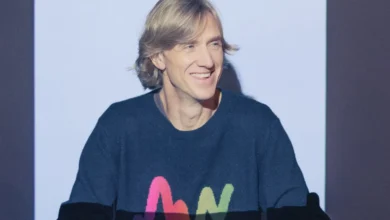
Anthropology, often dismissed as a purely academic pursuit, is seeing a resurgence in professional relevance. As firms grapple with the societal implications of their AI deployments, they require employees who understand human behavior, cultural structures, and the ethical foundations of social interaction. Alec Litowitz, a veteran of the financial sector and former partner at the hedge fund Citadel, serves as a prime example of this interdisciplinary value. With an educational background spanning mathematics and anthropology, Litowitz has spent decades navigating the complexities of global markets by applying anthropological insights to human decision-making. In his view, the ability to "telescope out"—to analyze broad societal trends through the lens of human history and culture—provides a competitive advantage that technical training alone cannot replicate.
The Analytical Edge of Mathematics
While anthropology addresses the human element, mathematics provides the structural foundation for rigorous problem-solving. Bert Bean, CEO of the staffing and consulting firm Insight Global, notes that the most successful candidates in today’s technical interviews are not necessarily those who have memorized the most syntax, but those who possess a deep, intuitive grasp of logical architecture.
During the hiring process, Bean often employs a whiteboard-based assessment, challenging candidates with complex, open-ended problems that test their mental agility rather than their rote knowledge of software libraries. Math majors frequently excel in this environment because their curriculum emphasizes the "how" of problem-solving—a methodology that remains portable regardless of the specific technology stack being used. In an age where AI can generate code, the ability to architect a solution and verify its logic manually has become a premium skill.
Philosophy as the Ultimate Future-Proof Skill
Perhaps the most surprising recommendation from industry leaders is the pursuit of philosophy. While it may seem counterintuitive to prioritize the study of logic and ethics over software engineering, proponents argue that philosophy cultivates a capacity for critical thinking that is immune to automation. Ana Prestamo, a recent graduate who pursued philosophy, emphasizes that the discipline provides a framework for understanding the "why" behind technological implementation.
As AI systems become more autonomous, the need for individuals who can interpret the moral consequences of machine decision-making will only increase. Philosophy teaches students to analyze arguments, identify biases, and navigate ambiguity—skills that are essential for the roles of AI ethicists, product strategists, and policy architects. This human-centric perspective is becoming increasingly vital in a corporate world where technical capability is treated as a commodity, but judgment and wisdom remain scarce resources.
The Fallacy of the "AI Major"
A critical takeaway from recent labor market discussions is the warning against over-specialization. Peter Miscovich, an executive at JLL, has cautioned students against focusing too heavily on "AI" as a standalone major. His critique is grounded in the evolution of technology: just as knowing how to use Microsoft Excel became a baseline expectation rather than a specialty, knowledge of AI tools is rapidly becoming a fundamental literacy across all disciplines.
Majoring in AI, Miscovich argues, is "too narrow." It locks students into a specific paradigm that may be superseded by new technological breakthroughs within a few years. Instead, educational experts suggest a "T-shaped" approach: developing a broad foundation in the liberal arts to ensure adaptability, while maintaining a secondary, deep expertise in a technical or analytical field. This combination allows professionals to remain resilient as the technological environment shifts.
Chronology of a Shifting Labor Market
- 2020–2022: The tech industry experiences a hiring surge; computer science enrollment hits record highs as graduates enjoy near-instant employment.
- 2023: Market saturation and the rapid adoption of Large Language Models (LLMs) begin to displace entry-level coding roles, leading to a rise in unemployment for recent CS graduates.
- Early 2024: Industry analysts and recruiters begin to pivot their messaging, de-emphasizing technical degrees in favor of "human-centric" analytical skills.
- Mid-2024: Leading firms begin to integrate interdisciplinary candidates into senior AI strategy roles, valuing the synthesis of humanities and STEM.
- 2025 and Beyond: Academic institutions begin to evaluate the long-term impact of AI on curriculum design, with a growing emphasis on hybrid degrees that combine traditional arts with computational logic.
Implications for Future Academic Pathways
The ongoing debate surrounding college majors is not a condemnation of computer science, but rather an invitation for students to broaden their educational horizons. The most successful professionals of the next decade will likely be those who can bridge the gap between machine intelligence and human intent. As AI continues to automate the mechanical aspects of work, the value of a degree will increasingly be measured by the development of "soft" skills—empathy, ethical reasoning, and historical perspective—coupled with a robust, analytical foundation.
For students entering the workforce, the path forward is clear: technical proficiency is necessary, but it is no longer the sole determinant of success. By integrating fields like anthropology and philosophy into their academic portfolio, graduates can position themselves to lead in a future where the most important question is not just what AI can do, but what it should do. In this new landscape, the humanities have reclaimed their place at the center of the professional dialogue, proving that the most advanced technology still requires a distinctly human touch to navigate the complexities of the modern world.