Common Vitamin Derivative Pantethine Shows Promising Results as a Novel Adjunctive Treatment for Psoriasis in Preclinical and Clinical Studies


Recent biomedical investigations conducted by a team of researchers in China have unveiled a potentially transformative approach to managing psoriasis, a chronic and often debilitating autoimmune skin condition. Published on October 27 in the Journal of Experimental Medicine (JEM), the study demonstrates that pantethine—a widely accessible nutritional supplement derived from vitamin B5—can effectively modulate the behavior of overactive immune cells. By targeting the fundamental biochemical pathways driving autoimmune inflammation, pantethine successfully prevented the development of psoriasis in murine models and yielded clinically meaningful symptom improvements in a preliminary human trial.
This breakthrough not only offers fresh therapeutic avenues for dermatological care but also establishes an unexpected, critical bridge between cellular cholesterol production and systemic immune regulation. As researchers continue to map the intricate networks connecting metabolism to immunology, this discovery could redefine how modern medicine approaches not only psoriasis, but a broader spectrum of autoimmune and inflammatory disorders.
Main Facts and the Core Discovery
Psoriasis affects millions of individuals worldwide, manifesting as thick, red patches of skin covered with silvery scales, accompanied by persistent discomfort, itching, and pain. While conventional treatments often focus on suppressing surface symptoms through topical ointments, systemic biologics, or phototherapy, the underlying systemic immune dysfunction remains a formidable clinical challenge.
At the heart of the new study is the discovery of a distinct biochemical axis involving enzymes known as Vanins, the nutrient pantethine, and intracellular cholesterol synthesis. The research team, spearheaded by Wei-Na Zhang and colleagues at the State Key Laboratory of Biomedical Analysis in Beijing, working alongside Cheng-Xin Li of The First Medical Center of Chinese PLA General Hospital, observed that patients suffering from psoriasis and related autoimmune conditions exhibit abnormally elevated levels of Vanin enzymes within their dendritic cells.
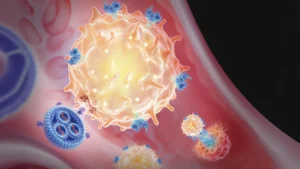
Dendritic cells function as the master conductors of the immune orchestra. Under normal physiological conditions, these specialized sentinels patrol tissues, capture foreign antigens, present them to T cells, and dispatch chemical signals to coordinate an immune response. However, when dendritic cells become hyperactivated, they cease to protect the host and instead drive chronic, destructive inflammation.
The researchers discovered that excessive Vanin activity depletes intracellular reservoirs of pantethine. Because pantethine acts as a crucial regulator within metabolic pathways, its depletion triggers a surge in cellular cholesterol production. This localized accumulation of cholesterol hyperactivates dendritic cells, fueling the inflammatory cascades characteristic of psoriasis. By administering pantethine—either to restore depleted intracellular levels or to interrupt the pathogenic feedback loop—the scientists effectively curbed cholesterol accumulation, quieted the overactive immune cells, and mitigated disease progression.
Chronology and Research Trajectory
The path leading to these findings represents a multi-stage scientific endeavor that systematically bridged basic molecular biology, translational animal models, and initial human clinical evaluation.
The investigative timeline began with comprehensive genomic and proteomic analyses of tissue samples. Scientists identified the anomalous upregulation of Vanin enzymes in clinical samples from autoimmune patients. This observation formed the foundational hypothesis: that modifying Vanin activity or its downstream metabolic consequences could alter immune cell behavior.
To test this hypothesis, the research team utilized targeted pharmacological inhibitors designed to block Vanins in laboratory settings. When these inhibitors were administered to mice prone to psoriasis-like skin inflammation, the development of the disease was entirely prevented. This critical milestone confirmed that the Vanin pathway played a direct, causal role in the pathogenesis of the condition.
Following the success of the animal trials, the investigators turned their attention to the biochemical mechanism linking Vanins to inflammation. They traced the enzymatic pathway to pantethine, recognizing that Vanins metabolize this specific derivative of vitamin B5. Recognizing that pantethine is already safely manufactured and commercialized as a nutritional supplement primarily used for managing blood lipid levels, the researchers recognized a unique opportunity for accelerated translational application.
Encouraged by preclinical safety and efficacy data, the team advanced to an investigator-initiated clinical trial involving human participants. This phase transitioned the laboratory discoveries into a controlled medical setting, culminating in the publication of their comprehensive findings in the Journal of Experimental Medicine in late October.
Supporting Data and Clinical Trial Insights
To evaluate whether the biological mechanisms observed in mice translate to human pathology, the research team designed and executed a focused, small-scale clinical trial comprising 24 human participants diagnosed with psoriasis.
All 24 patients were prescribed a standard topical combination ointment consisting of calcipotriene and betamethasone. Calcipotriene, a vitamin D derivative, acts to regulate abnormal skin cell proliferation, while betamethasone functions as a potent corticosteroid designed to suppress localized inflammation. To test the hypothesis that metabolic intervention could augment standard care, the patient cohort was evenly divided, with half receiving oral pantethine tablets in addition to the topical regimen.
After a 12-week intervention period, the results demonstrated a clear divergence in clinical outcomes. Patients who received the pantethine supplement alongside their standard ointment exhibited significantly greater reductions in psoriasis severity scores compared to those receiving the topical treatment alone. Notably, the therapeutic advantage of pantethine was most pronounced among participants who presented with elevated baseline blood cholesterol levels prior to the commencement of the study.
Despite the encouraging outcomes, the study authors maintain a rigorous, objective perspective regarding the limitations of the trial. With a cohort size limited to 24 individuals, the findings must be interpreted as a foundational proof-of-concept rather than definitive clinical validation. Furthermore, the human trial design did not permit direct, invasive measurement of intracellular dendritic cell cholesterol levels in patients during treatment, meaning the exact clinical mechanism in humans warrants further validation through larger, randomized, double-blind trials.
Official Responses and Academic Analysis
The implications of the study have drawn attention from the broader immunological and dermatological research communities. Experts note that the work represents a paradigm shift in how metabolic health and immunology intersect, moving past the traditional view of cholesterol solely as a cardiovascular risk factor to recognize its direct immunomodulatory properties.
"Emerging evidence highlights that metabolic pathways and their associated metabolites play vital roles in regulating immune cell function and autoimmune progression," stated Wei-Na Zhang, lead author of the study from the State Key Laboratory of Biomedical Analysis in Beijing. Zhang emphasized that while the metabolic underpinnings of inflammatory diseases have long been suspected, therapeutic strategies directly exploiting these pathways remain remarkably underexplored.
Addressing the results of the human trial, Zhang characterized the data as an encouraging stepping stone for clinical feasibility. "Our investigator-initiated clinical trial demonstrated encouraging therapeutic efficacy of pantethine as an adjunctive therapy in psoriasis, but these findings should be interpreted as proof-of-concept for clinical feasibility rather than direct mechanistic validation," Zhang noted. "Overall, our study uncovers the Vanin-pantethine-cholesterol axis as a key metabolic pathway governing dendritic cell activation and provides a foundation for therapeutic strategies targeting several dendritic cell-mediated autoimmune diseases."
Independent medical analysts reviewing the study highlight several important considerations for patients and clinicians. Because pantethine is widely available over the counter, dermatologists have cautioned against self-medication or altering prescribed treatment regimens based on preliminary trial results. Clinical adoption requires larger multi-center trials to establish standardized dosing guidelines, assess long-term safety profiles, and identify specific patient sub-phenotypes most likely to benefit from metabolic adjunctive therapies.
Broader Impact and Future Implications
The discovery of the Vanin-pantethine-cholesterol axis extends far beyond the dermatological manifestations of psoriasis. Dendritic cells serve as primary architects of the adaptive immune system, playing central roles in the initiation and perpetuation of a wide variety of autoimmune and inflammatory conditions, including rheumatoid arthritis, inflammatory bowel disease, and type 1 diabetes.
By demonstrating that a safe, readily available nutritional compound can intercede in this metabolic pathway, the study opens new horizons for low-toxicity adjunctive therapies. Modern therapeutic regimens for autoimmune diseases often rely heavily on broad immunosuppressive agents or expensive biologics, which, while highly effective, can carry significant financial burdens and long-term safety risks such as increased susceptibility to opportunistic infections.
Integrating metabolically targeted agents like pantethine could eventually allow clinicians to manage inflammation through synergistic mechanisms—enhancing therapeutic efficacy while potentially lowering the required dosages of more potent immunosuppressive drugs. Additionally, the strong correlation between lipid metabolism and immune activation underscores the importance of holistic patient care, where managing systemic metabolic parameters such as hypercholesterolemia may yield direct immunological benefits.
As the scientific community looks toward the future, the research team in Beijing and their collaborators are planning expanded clinical trials with larger, more diverse patient populations. These subsequent studies will aim to definitively isolate the intracellular biomarkers identified in murine models, confirm the exact biochemical pathways operating in human tissue, and establish robust protocols for integrating nutritional derivatives into mainstream dermatological guidelines.
Until such comprehensive trials are completed, the medical consensus remains cautiously optimistic. Pantethine stands out not as a standalone cure, but as a scientifically grounded, highly promising candidate for redefining adjunctive psoriasis care—transforming a common vitamin derivative into a sophisticated tool for immune modulation.