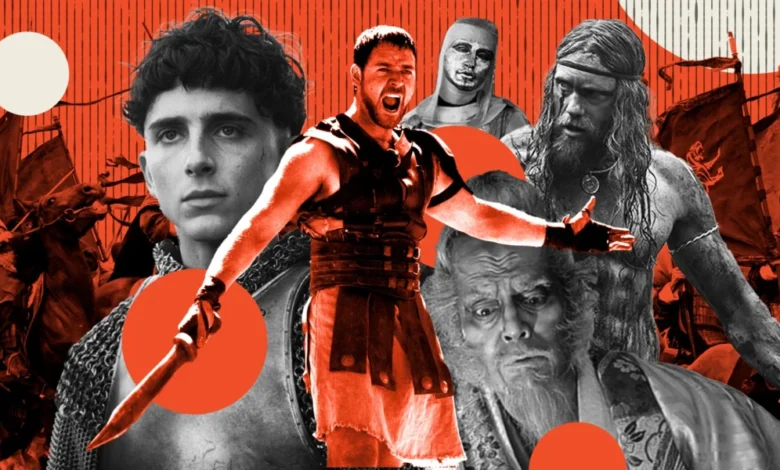
The cinematic world is abuzz with the highly anticipated $250 million adaptation of Homer’s "The Odyssey," helmed by acclaimed director Christopher Nolan. This ambitious undertaking marks a significant moment for epic filmmaking, a genre that has become increasingly rare in Hollywood’s current landscape, often dominated by superhero franchises and more broadly palatable, four-quadrant blockbusters. Nolan, a filmmaker whose work is characterized by grand scale and structural complexity, brings his signature approach to Odysseus’s arduous ten-year journey home from the Trojan War. This epic poem, a cornerstone of Western literature, has profoundly influenced countless works of art, from Joel and Ethan Coen’s "O Brother, Where Art Thou?" to, with a stretch, "Star Trek: Voyager." However, the sheer scale and gravitas of Nolan’s "The Odyssey" suggest a renewed appreciation for the ancient historical epic.

The significance of this adaptation cannot be overstated. While the genre of Greek mythology in film has seen limited exploration, Nolan’s vision promises a modern, prestige-level interpretation that could redefine its potential. His previous successes, particularly the Oscar-sweeping "Oppenheimer," have cemented his reputation among cinephiles, making him a figure capable of drawing immense attention to even the most classical of narratives. "The Odyssey," with its themes of homecoming, sacrifice, and a protagonist grappling with his path, aligns seamlessly with Nolan’s recurring thematic interests, making it a fitting next chapter in his directorial oeuvre.

Christopher Nolan himself has acknowledged that "the genre of Greek mythology doesn’t really exist in movies." This statement, while accurate in its lack of a distinct, sustained cinematic tradition, overlooks the enduring power of historical action films that have captured the spirit of the epic genre. To complement Nolan’s modern take on "The Odyssey," we explore a selection of ten significant historical action films released after the decline of the classic Hollywood studio epic era in the mid-1960s. These films, ranging from celebrated modern classics to critically overlooked gems, offer a compelling cinematic lineage that resonates with the grandeur and thematic depth of Homer’s work.

A Legacy of Epic Storytelling: Cinematic Journeys Through Myth and History
The enduring appeal of epic narratives lies in their ability to transport audiences to worlds steeped in heroism, conflict, and profound human struggles. These films, often characterized by their sweeping scale, elaborate battle sequences, and morally complex characters, tap into a universal fascination with the past and the extraordinary. Christopher Nolan’s "The Odyssey" stands poised to join this distinguished tradition, offering a contemporary lens on an ancient story of resilience and the human spirit.

Excalibur (1981): The Birth of a King
John Boorman’s "Excalibur" is a quintessential Arthurian legend film, a dazzling spectacle of chivalry, sorcery, and the flawed ambitions of its heroes. The film masterfully chronicles Arthur’s ascension from a humble squire to a prophesied king, charting the rise and fall of Camelot through a series of iconic myths. Boorman’s confident direction, following a challenging sequel to "The Exorcist," imbues the narrative with a surrealistic edge and a palpable sense of darkness, making "Excalibur" a pivotal work in the evolution of mythic cinema. Its blend of grand sets, vast armies, and profound heroic themes, coupled with a hunger for innovative visual effects, cemented its status as a benchmark for epic storytelling. The film explores the dynamic tension between decay and vitality, as characters confront their own mythical significance in real-time, a theme that resonates deeply with the cyclical nature of epic narratives.

- Release Year: 1981
- Director: John Boorman
- Key Themes: Arthurian legend, destiny, betrayal, the quest for the Holy Grail.
- Impact: Revitalized the Arthurian legend on screen with a visually striking and thematically rich approach.
Ran (1985): Kurosawa’s Shakespearean Tragedy
Akira Kurosawa, often hailed as one of cinema’s greatest masters, delivered "Ran," a breathtaking adaptation of Shakespeare’s "King Lear" set in feudal Japan. The film is a spectacular exploration of war, madness, and familial discord. It chronicles the downfall of warlord Hidetora Ichimonji after he relinquishes his power, only to be betrayed by his sons. "Ran" is a visual feast, featuring jaw-dropping sequences, vibrant costumes, and an escalating sense of tragic inevitability. Kurosawa’s masterful use of landscape and elemental forces, which significantly influenced Christopher Nolan’s own approach to "The Odyssey," creates an immersive and powerful cinematic experience. The film’s striking visual style perfectly complements the escalating feuds and destructive ambitions that drive its narrative to its devastating conclusion.

- Release Year: 1985
- Director: Akira Kurosawa
- Key Themes: Shakespearean tragedy, power, family, war, madness.
- Impact: A monumental achievement in historical epic filmmaking, showcasing Kurosawa’s unparalleled visual storytelling.
Gladiator (2000): The Return of the Roman Epic
Ridley Scott’s "Gladiator" marked a significant resurgence for the historical epic genre in the 21st century. This Oscar-winning film tells the story of Maximus Decimus Meridius, a Roman general betrayed and enslaved, who seeks vengeance through the gladiatorial arenas. Russell Crowe’s powerful portrayal of Maximus, embodying virtues of strength and honor, resonated deeply with audiences, revitalizing the archetype of the wronged hero. While the film takes liberties with historical accuracy, its visceral portrayal of Roman life and its compelling narrative of justice and retribution proved immensely popular. "Gladiator" demonstrated that large-scale historical dramas could still achieve significant commercial and critical success, paving the way for subsequent films in the genre.

- Release Year: 2000
- Director: Ridley Scott
- Key Themes: Revenge, honor, Roman Empire, justice, betrayal.
- Impact: A critical and commercial success that reignited interest in the Roman epic and historical dramas.
Troy (2004): Homer’s War on the Big Screen
It was almost inevitable that the epic of "The Odyssey" would be preceded by an adaptation of its thematic companion, "The Iliad." "Troy," released in 2004, represents one of the most significant attempts to bring Homer’s war-torn narrative to the silver screen in recent decades. Directed by Wolfgang Petersen and featuring a star-studded cast including Brad Pitt as Achilles, Eric Bana as Hector, and Sean Bean as Odysseus, the film tackles the immense scope of the Trojan War. While the movie streamlines and alters certain elements of the epic, notably downplaying the role of the gods and condensing the timeline, it delivers spectacular battles and grand set pieces. The script, penned by David Benioff (later a showrunner for "Game of Thrones"), sought to humanize the conflict, focusing on the personal motivations and sacrifices of the warriors on both sides. The film’s exploration of the vengeful duel between Achilles and Hector remains a powerful cinematic moment, showcasing the potential for epic narratives within a studio blockbuster framework.

- Release Year: 2004
- Director: Wolfgang Petersen
- Key Themes: Trojan War, heroism, fate, love, honor, loss.
- Impact: A large-scale adaptation of Homer’s "The Iliad" that brought classical mythology to a modern audience.
Kingdom of Heaven (2005): A Director’s Vision Realized
Ridley Scott’s "Kingdom of Heaven" is another monumental historical epic that demands attention, particularly its extended director’s cut. The film chronicles the story of Balian of Ibelin, a blacksmith who travels to Jerusalem during the Crusades and becomes entangled in the political and religious conflicts of the era. The director’s cut, significantly longer and more nuanced than the theatrical release, delves into the complexities of religious war and the struggle for peace between Christian and Muslim forces. "Kingdom of Heaven" stands as a powerful examination of the folly of religious extremism and the urgent need for diplomatic tolerance, themes that held particular resonance in the post-9/11 era. Its scope, reminiscent of David Lean’s "Lawrence of Arabia," combined with its historical skepticism and humanistic approach, makes it one of the most impressive and robust epics of the 2000s.

- Release Year: 2005
- Director: Ridley Scott
- Key Themes: Crusades, religious conflict, tolerance, duty, honor.
- Impact: A critically acclaimed epic that offers a nuanced perspective on historical religious conflicts.
The King (2019): A Gritty Take on Royal Destiny
David Michôd’s "The King" offers a raw and unflinching portrayal of medieval warfare and the burdens of leadership, drawing inspiration from William Shakespeare’s "Henry V." The film centers on Prince Hal (Timothée Chalamet), a disaffected heir who reluctantly ascends to the English throne and is thrust into a brutal war with France. Michôd eschews Shakespearean verse for a more grounded, visceral approach, depicting the chaos and brutality of battle with remarkable intensity. Chalamet’s performance as the morose and conflicted young king foreshadows his later iconic roles, while Robert Pattinson’s scene-stealing turn as the French Dauphin adds a memorable layer of villainy. "The King" is a testament to the enduring power of historical dramas that explore the personal cost of power and the weight of national destiny.

- Release Year: 2019
- Director: David Michôd
- Key Themes: Kingship, war, duty, betrayal, political intrigue.
- Impact: A modern, gritty interpretation of a historical royal drama, lauded for its performances and authentic depiction of medieval warfare.
The Northman (2022): Viking Fury Unleashed
Robert Eggers’ "The Northman" plunges viewers into the brutal and mystical world of Viking sagas. Based on the legend that inspired Shakespeare’s "Hamlet," the film follows Amleth (Alexander Skarsgård) on a relentless quest for vengeance against his uncle, who murdered his father and usurped his throne. Eggers’ signature style, characterized by meticulous historical detail and a deep dive into the esoteric, is on full display. The film is a visceral and often unsettling journey through betrayal, violence, and the pursuit of destiny. Despite its initial box office underperformance, "The Northman" has been celebrated for its raw, earthy spectacle and its unflinching portrayal of Viking culture. Its grim spirituality and the hero’s inexorable path toward confrontation make it a powerful and unique entry in the epic genre.

- Release Year: 2022
- Director: Robert Eggers
- Key Themes: Vengeance, Viking culture, fate, betrayal, family legacy.
- Impact: A critically acclaimed, intensely atmospheric Viking epic that showcases Eggers’ distinctive directorial vision.
These films, each in their own way, demonstrate the enduring power of epic storytelling. They transport audiences to different eras, immerse them in grand conflicts, and explore timeless themes of heroism, sacrifice, and the human condition. As Christopher Nolan embarks on his monumental adaptation of "The Odyssey," he inherits a rich cinematic legacy, poised to add a defining chapter to the genre of epic filmmaking. The anticipation for his vision of Odysseus’s journey suggests a public appetite for grand narratives that resonate with the timeless stories that have shaped our culture.