Sweet Success: How the Aroma of Chocolate Can Boost Your Workout Without Extra Effort

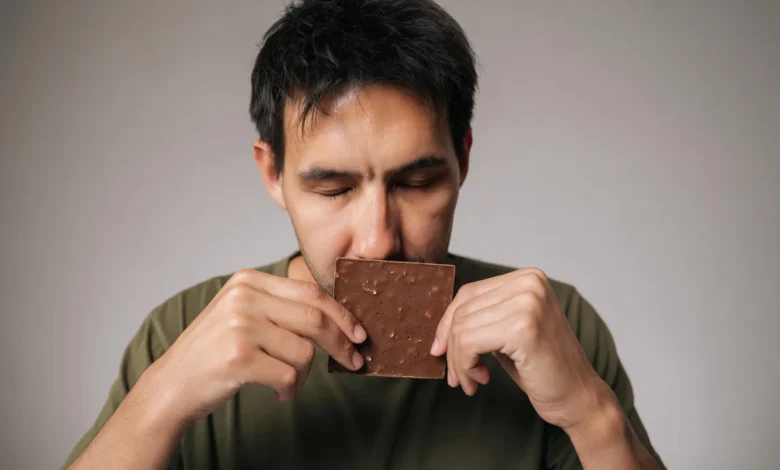
The intersection of sensory neuroscience and physical conditioning has long fascinated researchers studying how the human brain responds to external stimuli during high-stress activities. Recently, a novel study published in the peer-reviewed journal Frontiers in Physiology has added a fascinating new dimension to this field, revealing that the mere scent of chocolate can significantly enhance physical performance during resistance training. According to the findings, exposure to dark and milk chocolate aromas before and during rigorous leg exercises allowed moderately trained participants to complete substantially more repetitions. Remarkably, this performance boost occurred without any corresponding increase in perceived exertion, suggesting that olfactory cues can trick the psychobiological systems governing endurance and fatigue.
Led by Dr. Mohamed Nashrudin bin Naharudin, an assistant professor at the Faculty of Sports and Exercise Science at the University of Malaya, the research opens up innovative pathways for exploring how environmental scents might be harnessed in athletic training regimes. While athletes routinely rely on physical ergogenic aids such as caffeine, beta-alanine, and sports drinks to push past plateaus, the integration of olfactory stimulation represents an unconventional, non-invasive method to optimize workout capacity. As sports science continues to investigate the mind-body connection, this study underscores how deeply human physiology is intertwined with sensory perception, particularly the primal circuitry of the olfactory system.
Unraveling the Psychobiological Experiment
To investigate the relationship between olfaction, appetite, and muscular endurance, Dr. Nashrudin Naharudin and his research team recruited a cohort of 23 healthy, moderately trained male participants in their early to mid-20s. The controlled study design required these participants to undergo a rigorous testing protocol while subjected to specific aromatic environments. Before arriving at the laboratory, the subjects maintained a minimum 10-hour fasting period to standardize baseline metabolic and hunger states, ensuring that recent food consumption would not skew the results.
The experimental design divided the participants into three distinct groups, each exposed to a different scent sample during their workout sessions. The olfactory stimuli included a liquified dark chocolate sample containing 90 percent cocoa, a liquified milk chocolate sample containing 60 percent cocoa, and a control sample consisting of plain, odorless water. The choice of these specific cocoa concentrations allowed researchers to examine whether varying levels of bitterness, sweetness, and fat content would elicit different physiological and psychological responses.
Participants performed leg extensions—a classic open-chain resistance exercise targeting the quadriceps, where an individual sits on a specialized machine and straightens the lower legs against mechanical resistance. Throughout the session, researchers systematically measured leg extension performance both prior to and during the physical exertion. Furthermore, subjective metrics were continuously tracked. Before exercising, participants completed comprehensive questionnaires rating their immediate hunger, subjective fullness, desire to eat, and future intention to eat. During the workout, these appetite metrics were reassessed at regular intervals immediately following brief, 30-second exposures to the assigned scent samples.
Divergent Effects of Dark and Milk Chocolate
The experimental data revealed striking differences between how dark chocolate and milk chocolate aromas affected the participants’ appetites and physical outputs. The scent of 90 percent dark chocolate exerted a profound suppressive effect on hunger. Compared to both the water control and the milk chocolate conditions, exposure to the dark chocolate aroma was consistently correlated with diminished hunger ratings, a lower desire and intention to eat, and heightened subjective feelings of fullness prior to commencing exercise. Consequently, the dark chocolate scent acted as an appetite-suppressant mechanism, successfully shifting the participants’ internal metabolic perceptions toward a state of satiety despite their 10-hour fast.
In contrast, milk chocolate produced a markedly different psychological profile. While participants rated the aroma of the 60 percent milk chocolate as significantly more pleasant than either the dark chocolate or the water control, this sweeter scent failed to induce any statistically significant changes in hunger or general appetite. Instead of suppressing hunger, the milk chocolate aroma functioned primarily as a hedonic reward cue, creating an uplifting and pleasurable sensory environment for the athletes.
Despite their divergent impacts on appetite, both chocolate aromas successfully drove tangible improvements in physical performance, though to varying degrees. The data showed that sniffing the 90 percent dark chocolate odor enabled participants to complete an average of approximately 18 additional repetitions during their leg extensions compared to the odorless water control. Meanwhile, the sweeter 60 percent milk chocolate odor yielded an average increase of about nine additional repetitions over the baseline control group. Most importantly, these performance gains were achieved without any elevation in the participants’ ratings of perceived exertion, meaning the athletes accomplished significantly more work while feeling that the exercise was no more difficult than usual.
Olfactory Pathways and Anticipatory Brain Mechanisms
To understand how simple scents could generate such pronounced physical and psychological shifts, the researchers analyzed the neurological pathways linking the olfactory system to the brain’s appetite and emotion networks. Olfaction is uniquely wired into the human brain; unlike other senses that must first pass through the thalamus, smell signals travel directly to the olfactory bulb, which has intimate anatomical connections with the limbic system—the emotional and memory center containing the amygdala and hippocampus.
From an evolutionary and developmental perspective, humans constantly experience specific environmental aromas in conjunction with eating behaviors. Over years of repeated exposure, these aromas transition into learned cues that signal the brain and body to anticipate the physiological events that normally follow food consumption. In the context of the recent study, the researchers theorize that these deeply ingrained expectations effectively tricked the participants’ central nervous systems.
The dark chocolate scent served as a robust, learned cue for a rich, bitter, and densely caloric food source, successfully driving the participants’ physiology into an anticipatory state of fullness and metabolic satisfaction. Conversely, the milk chocolate scent operated primarily as a hedonic reward trigger. By flooding the sensory environment with a universally beloved and pleasurable aroma, the milk chocolate scent enhanced training volume by boosting mood and motivation rather than by altering core metabolic hunger signals. This distinction highlights the complex ways in which different chemical profiles within food aromas can independently modulate human psychology and physical stamina.
Methodological Limitations and Future Research Directions
While the findings present exciting possibilities for the future of athletic conditioning, the study’s authors have exercised caution, emphasizing several important methodological limitations. Most notably, the biological mechanisms driving these behavioral changes remain largely speculative. Because the researchers did not collect physiological markers such as blood hormone levels—including ghrelin, leptin, or cortisol—nor did they monitor real-time neural activity via neuroimaging, the study cannot definitively isolate the exact biological pathways responsible for the observed shifts in appetite and resistance exercise performance.
Additionally, standardizing the olfactory intensity across the dark chocolate, milk chocolate, and water control samples presented a technical challenge. It is possible that the aromatic concentrations were not perfectly identical, which could have introduced minor confounding variables. Furthermore, because the control condition utilized completely odorless water, participants were likely aware of when they were experiencing the control versus the chocolate scents, potentially introducing psychological bias into their subjective ratings.
Demographic constraints also limit the immediate generalizability of the findings. The study cohort was relatively small, consisting exclusively of 23 healthy, moderately trained young men. Consequently, additional research involving larger, more heterogeneous populations—including female athletes, untrained individuals, and older adults—will be essential to determine whether these psychobiological responses are universal or specific to certain demographics.
Broader Implications for Sports Science and Daily Fitness
The publication of this study invites broader questions regarding the potential applications of olfactory stimulation in everyday fitness and professional athletic training. Chief among these inquiries is whether chocolate possesses uniquely powerful properties or if other familiar food aromas could replicate or even exceed these performance-enhancing effects.
Dr. Nashrudin Naharudin notes that while chocolate is certainly a potent stimulus due to its nearly universal reward associations and deep-rooted cultural appeal, it is unlikely to be entirely unique. Other familiar foods that are strongly linked in human memory to feelings of satisfaction, energy, or reward might produce comparable psychobiological responses, though such hypotheses require empirical validation through rigorous future experimentation.
For a scent to successfully trigger the necessary psychological and performance shifts, researchers suggest that an individual must find the odor familiar and appealing—or at least non-repulsive. Unpleasant or unfamiliar smells could trigger stress responses or aversions that would counteract any potential ergogenic benefits.
As sports scientists continue to explore the boundaries of psychobiology, the integration of targeted ambient aromas into gym environments or training gear could become a standard frontier in athletic optimization. By leveraging the brain’s powerful learned associations with food, athletes may soon find that achieving a new personal record is as simple as stopping to smell the chocolate.
Related posts: