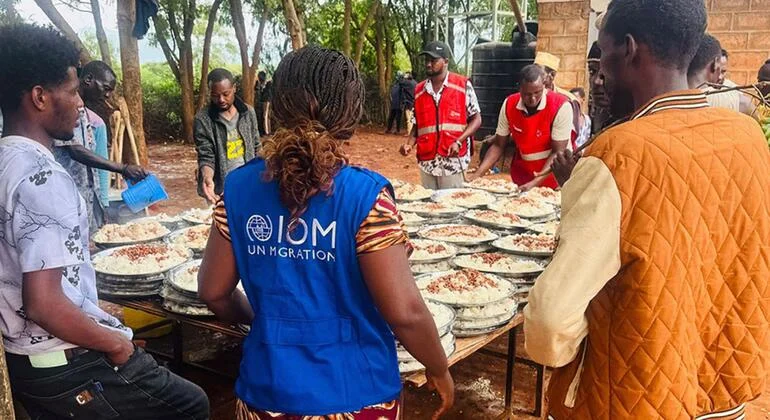
Humanitarian agencies are racing against time to avert a deepening humanitarian disaster in northern Kenya, where tens of thousands of refugees who fled violent ethnic and political clashes in Ethiopia are facing acute shortages of life-saving necessities. The International Organization for Migration (IOM), working in tandem with various United Nations agencies and local non-governmental organizations, has issued an urgent international appeal for financial support. The funds are desperately required to assist an estimated 50,000 individuals who have crossed the porous border into the Moyale region of Kenya since late October, escaping escalating instability in their home country.
The crisis has placed an immense strain on local infrastructure and impoverished host communities in northern Kenya, which were already grappling with chronic resource scarcity, prolonged regional drought patterns, and economic vulnerabilities. According to a comprehensive rapid assessment conducted by Kenyan authorities with frontline operational support from the IOM and international partners, the displaced population is living in deeply precarious conditions. Surveying a representative sample of 758 households, the assessment paints a bleak picture of widespread deprivation, severe health risks, and a rapidly closing window for effective humanitarian intervention.
The Core Humanitarian Crisis on the Border
The sheer magnitude of the displacement has overwhelmed the response capacity of local authorities in Moyale. Nomagugu Ncube, the IOM Kenya Chief of Mission, underscored the gravity of the situation, noting that the families who made the harrowing journey across the border are experiencing critical shortages of food, potable water, and adequate shelter. Compounding the emergency, the communities hosting these vulnerable populations are already operating on severely constrained resources, leaving little margin to absorb the sudden influx of people.
Data gathered from the rapid assessment reveals that 71 percent of the displaced households do not have enough food to sustain themselves, with 80 percent identifying food as their single most urgent survival need. Malnutrition rates, particularly among young children, are projected to spike rapidly if sustained food distribution pipelines are not established immediately.
Beyond food security, water, sanitation, and hygiene (WASH) conditions are deteriorating to alarming levels. Nearly half of the surveyed households—44 percent—reported having insufficient access to safe drinking water, exposing thousands of people to the immediate risk of waterborne diseases such as cholera and typhoid. Furthermore, more than three-quarters of the displaced population lack basic handwashing facilities, severely undermining hygiene practices in crowded communal settings or temporary shelters.
Healthcare access has similarly collapsed for the arrivals. More than half of the surveyed households reported severe difficulties in obtaining medical treatment, primarily driven by prohibitive out-of-pocket costs and widespread shortages of essential medicines in local clinics. Pregnant women, infants, and the elderly are disproportionately affected by the lack of functional healthcare infrastructure in the borderlands.
Chronology of the Escalation: From Localized Clashes to Mass Exodus
The latest wave of displacement did not occur in a vacuum; it is the culmination of months of simmering tensions and localized violent confrontations in Ethiopia’s southern and southeastern peripheries.
The roots of the current crisis trace back to long-standing communal grievances, resource competition, and political tensions within Ethiopia’s Oromia and Somali regional states. Over the course of 2026, low-intensity conflicts and localized security incidents gradually escalated, creating an atmosphere of chronic insecurity for civilians residing in rural and semi-urban border districts.
By mid-October, the security situation in several districts within the Oromia and Somali regions deteriorated sharply. Armed confrontations, targeted violence, and widespread threats to civilian safety forced communities to make the snap decision to abandon their homes, livestock, and livelihoods entirely.
In late October, the trickle of fleeing residents transformed into a mass exodus. The displacement was so absolute that survey data indicates nine in ten people reported their entire village had fled en masse. This total depopulation of communities illustrates the extreme terror and perceived finality of the violence that prompted the flight.
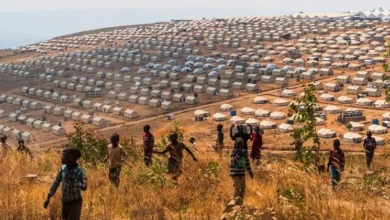
Crossing international borders primarily through unofficial entry points along the rugged terrain of northern Kenya, the refugees converged on Moyale. By early November, local aid coordinators estimated that approximately 50,000 individuals had crossed into Kenyan territory. Rapid response teams were mobilized in the first week of November to conduct assessments, register new arrivals, and triage the most critical medical and nutritional cases. As the calendar turned toward mid-November, humanitarian actors transitioned from emergency rescue operations to establishing longer-term registration, shelter coordination, and supply chains, while concurrently sounding the alarm for international donor funding.
Demographic Realities and the Burden on Host Communities
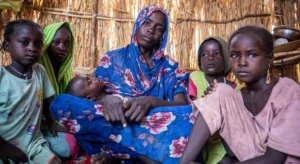
A closer examination of the demographic makeup of the displaced population reveals a particularly vulnerable cohort. More than half of all new arrivals are children, with a significant percentage falling under the age of five years old. Humanitarian coordinators have expressed profound apprehension regarding the health, psychological wellbeing, and developmental safety of these young children as they endure harsh living conditions, lack of nutrition, and exposure to the elements.
The logistical challenge of sheltering 50,000 people in a remote border region has forced communities to improvise. The vast majority of the displaced—nearly the entirety of the influx—are being absorbed by relatives and host community members in Moyale. While this traditional system of solidarity provides an immediate safety net, it places an unsustainable financial and physical burden on local households. Families who were already struggling with their own economic hardships are now sharing cramped living spaces, depleting their food stores, and stretching local water points to a breaking point.
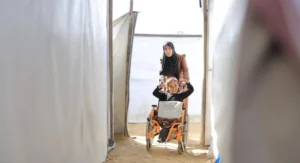
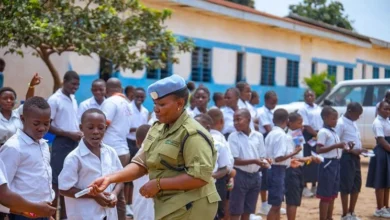
For those unable to find space with host families, conditions are even more precarious. Hundreds of people have sought refuge within the compounds of local schools, disrupting educational facilities, while others occupy makeshift temporary sites or sleep entirely in the open air, exposed to nocturnal drops in temperature and unpredictable weather patterns. The saturation of host communities threatens to create secondary tensions over scarce resources if external humanitarian aid is not scaled up significantly in the coming weeks.
Official Responses, Institutional Appeals, and International Coordination
In response to the escalating crisis, international humanitarian organizations and Kenyan authorities are mobilizing a coordinated response, though their efforts are severely constrained by chronic underfunding.
The International Organization for Migration, alongside sister United Nations agencies such as the UN Refugee Agency (UNHCR), the World Food Programme (WFP), and UNICEF, is collaborating closely with the Kenyan government’s disaster response units. These entities are working to establish formal reception structures, map out water trucking routes, and distribute emergency non-food items, including blankets, sleeping mats, and basic hygiene kits.
However, operational leads on the ground emphasize that current distributions are merely a stopgap measure. Nomagugu Ncube and other humanitarian representatives have reiterated that without an immediate injection of international donor funds, agencies will be forced to ration life-saving assistance. The appeal focuses on securing capital to procure bulk food supplies, drill and rehabilitate boreholes for sustainable water access, deploy mobile health clinics, and construct transitional shelter units before seasonal weather patterns complicate overland logistics in the borderlands.
Diplomatic channels are also engaged, with regional bodies monitoring the cross-border spillover of internal Ethiopian conflicts. Stability in the Horn of Africa remains inextricably linked; humanitarian experts stress that sustainable solutions require not only immediate relief for refugees in Kenya but also long-term peacebuilding and security stabilization efforts within Ethiopia to enable safe, voluntary, and dignified returns.
Broader Implications for Regional Stability and Humanitarian Security
The influx of 50,000 refugees into northern Kenya highlights the fragile nature of human security in the Horn of Africa. The crisis carries significant geopolitical, economic, and social implications for both Ethiopia and Kenya.
For Ethiopia, the mass depopulation of entire villages in the Oromia and Somali regions underscores the profound domestic challenges facing state authorities in maintaining territorial security, protecting ethnic minorities, and resolving internal boundary and resource disputes. The loss of human capital and the psychological trauma inflicted upon civilian populations will complicate future post-conflict reconstruction and reconciliation initiatives.
For Kenya, the sudden arrival of tens of thousands of displaced persons tests the resilience of its border governance and humanitarian preparedness frameworks. While Kenya has a long, generous history of hosting refugees from neighboring nations including Somalia, South Sudan, and Ethiopia, localized crises in peripheral regions like Moyale strain decentralized government budgets and public services. Local healthcare facilities, schools, and environmental resources face immediate degradation unless robust burden-sharing mechanisms are implemented by the international community.
Furthermore, the environmental impact on the Moyale region cannot be overlooked. Increased pressure on fragile arid and semi-arid lands—already degraded by climate variability—threatens to exacerbate competition over grazing land and water between refugees, host communities, and local pastoralist populations.
As the situation develops, the international community faces a critical test of responsiveness. The immediate priority remains securing the fiscal and material resources required to feed the hungry, hydrate the thirsty, and shelter the vulnerable in Moyale. Yet, the underlying drivers of the crisis demand a broader, more strategic vision from regional and global stakeholders to address the root causes of displacement in Ethiopia and safeguard the stability of the entire East African borderlands.