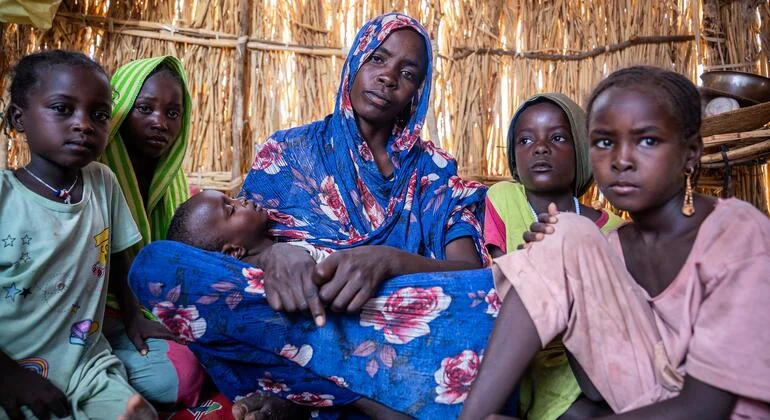
The humanitarian catastrophe unfolding in Sudan has reached unprecedented proportions, leaving international aid organizations warning that they can no longer meet even the most basic survival needs of the population. More than a year and a half after a brutal power struggle erupted between rival military factions in April 2023, the country has become the epicenter of the world’s largest displacement crisis. According to recent assessments shared by United Nations agencies, a staggering 15.4 million people across the nation are in urgent need of adequate shelter, protection, and basic life-saving commodities.
The conflict, which pits the Sudanese Armed Forces (SAF) against the paramilitary Rapid Support Forces (RRF), has systematically dismantled the country’s infrastructure, shattered its economy, and displaced millions. Humanitarian workers stationed on the ground report that while marginal improvements in access have allowed them to reach certain isolated pockets of vulnerable and returning populations, this increased access has only laid bare the sheer scale of the ongoing devastation. As warehouses sit completely empty and emergency reserves are exhausted, international agencies are sounding the alarm: the international community’s failure to adequately fund relief operations risks plunging millions of vulnerable civilians into even deeper despair as harsh weather conditions close in.
Anatomy of a Catastrophe: Background and Origins of the Conflict
To understand the current depths of Sudan’s humanitarian emergency, it is essential to examine the political and military trajectory that precipitated the collapse of the state in April 2023. For decades, Sudan experienced cycles of civil war, authoritarian rule, and severe economic isolation. The downfall of longtime autocrat Omar al-Bashir in April 2019 following mass popular protests ushered in a fragile transitional government intended to guide the country toward democratic civilian rule.
Power was ostensibly shared between civilian leaders and a military council, led by General Abdel Fattah al-Burhan of the SAF and General Mohamed Hamdan Dagalo, commonly known as Hemedti, head of the Rapid Support Forces. However, deep-seated institutional rivalries and competing visions for the future security architecture of the state—specifically regarding the integration of the RRF into the official armed forces—stymied the transition.
The latent tensions erupted into open warfare on April 15, 2023, when heavy fighting broke out in the capital city of Khartoum, rapidly spreading to the Darfur and Kordofan regions, as well as other densely populated areas. The capital, once a bustling hub of commerce and culture, was transformed overnight into an active urban battlefield. Hospitals were bombed, residential neighborhoods were targeted, and vital supply chains were severed. The destruction of institutional capacity left millions without access to clean water, electricity, healthcare, or employment, triggering a massive wave of forced displacement that has continued unabated.
Chronology of Escalating Displacement and Relief Shortages
The trajectory of the conflict has been marked by continuous waves of displacement, shifting front lines, and an increasingly desperate scramble for resources by international humanitarian organizations.
In the initial months following the outbreak of hostilities in April 2023, millions fled Khartoum and surrounding conflict zones, seeking refuge in safer states within Sudan or crossing international borders into neighboring Chad, Egypt, South Sudan, Central African Republic, and Ethiopia.
By late 2023 and into 2024, the conflict decentralized, engulfing agricultural heartlands and regional capitals, particularly in the Darfur and Kordofan regions, which were already fragile due to decades of historical conflict, underdevelopment, and localized ethnic violence.
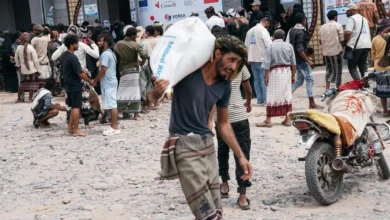
Throughout 2024, localized truces repeatedly failed, and impediments to bureaucratic and physical humanitarian access hindered the delivery of aid. Even when access routes opened, supply pipelines were choked by a severe lack of international funding. By late 2024 and heading into 2025, major international migration and refugee bodies reported that their emergency stockpiles had reached absolute zero. Warehouses that once held tens of thousands of tonnes of relief supplies were emptied out, leaving agencies incapable of responding to new displacement shocks or providing winterization kits for families bracing against dropping temperatures and adverse seasonal weather.
Voices from the Ground: The Reality of Exhausted Resources
Senior humanitarian officials stationed in Khartoum and operating across the vast expanse of Sudan have painted a grim picture of operational realities. Mohamed Refaat, Chief of Mission in Sudan for the International Organization for Migration (IOM), highlighted the precarious state of logistics during a recent briefing from the capital.
"Just yesterday, we had 16 trucks arriving in Darfur, but they were just the last that we had in our stocks. We are facing serious problems. Our supplies are running out," Mr. Refaat stated, underscoring the razor-thin margins under which aid workers currently operate.
While acknowledging that humanitarian access to vulnerable displaced populations and returnees has marginally improved in certain areas—allowing aid workers to physically reach more people—Mr. Refaat emphasized the psychological toll this development takes on the humanitarian workforce. "This means also that we can listen to the stories of their suffering. We cannot say that we don’t know," he noted.
Abubakarr Jalloh, Deputy Representative for the UN Refugee Agency (UNHCR) in Sudan, echoed these concerns via video link from Khartoum, emphasizing that the physical items distributed by aid agencies represent far more than mere utilitarian goods.
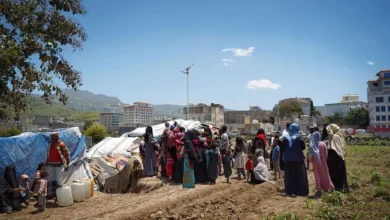
"For a woman who has lost everything, a tent is more than just a shelter; it means the difference between sleeping in the open, surrounded by strangers, and having a space of her own. It means dignity. It is privacy. And it is safety for that woman and family," Mr. Jalloh explained.
He further detailed how seemingly simple non-food items serve critical protection functions in conflict zones. "A solar lamp is more than just a source of light, it is safety. It means a woman can reach a latrine at night without walking in darkness. A kitchen set is also more than a collection of household items. It means a mother can cook for children without exposing herself to unnecessary risk."
Vulnerability Multiplied: Women, Children, and Climate Shocks
The human cost of the conflict falls disproportionately on society’s most vulnerable members. According to UNHCR data, approximately three out of every four internally displaced persons (IDPs) in Sudan are women and children. These populations face heightened risks of gender-based violence, exploitation, lack of medical care, and severe malnutrition.
Compounding the misery of war, environmental factors have further exacerbated the humanitarian crisis. El Niño-related weather patterns induced significantly below-average rainfall across Sudan throughout the agricultural season. This severe meteorological anomaly devastated harvests in key food-producing regions such as Darfur and Kordofan.
Ordinarily, food prices experience a downward stabilization following the harvest season. However, due to the destruction of agricultural infrastructure, disrupted trade routes, and general insecurity, food prices have remained persistently and painfully high.
"For a family that has lost everything, every Sudanese pound spent on food is money that cannot be spent on a blanket or on materials needed for safe shelter," Mr. Jalloh stressed. Families are routinely forced to make impossible choices between purchasing meager food rations and securing protective shelter materials to shield their children from the elements.
The Looming Threat of Winter and Depleted Warehouses
As emergency supply levels drop to critical lows, UN agencies have issued stark warnings regarding the impending winter months. Without flexible, unearmarked, and immediate funding injections, millions of displaced families will face harsh weather conditions entirely unprotected. The lack of proper shelter, combined with heightened insecurity and ongoing risks of physical violence, creates a lethal environment for children and the elderly.
Mr. Refaat underscored the totality of the resource depletion, noting the sharp contrast between previous operational capacities and the current reality. "This year, I was able to distribute more than 40,000 tonnes of relief assistance. But our warehouses are completely empty now," he stated. Without immediate replenishment, the logistics network risks complete paralysis.
The Refugee Exodus and Regional Spillover Effects
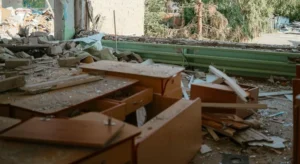
The crisis within Sudan’s borders is inextricably linked to regional stability. While more than 5.2 million people have attempted to return to their areas of origin, a significant proportion find themselves unable to reoccupy their properties because their homes have been entirely destroyed, burned, or systematically looted. Furthermore, vital public infrastructure—including healthcare facilities, electrical grids, and municipal water purification systems—remains non-functional or severely damaged across vast swathes of the country. This absence of basic services means that many returnees are subsequently forced to flee a second or third time, often with zero hope of ever returning.
The implications of this protracted collapse extend far beyond Sudan’s immediate borders. Highlighting changing migration patterns, the IOM chief noted that Sudanese nationals currently constitute the largest demographic arriving in Europe via the perilous Eastern Mediterranean migratory route.
"If we are not able to provide aid in Sudan at scale, it means neighbouring countries will be impacted, other countries will be impacted," Mr. Refaat warned, pointing to the inevitable strain that unmitigated displacement places on neighboring states already grappling with their own economic and political challenges.
Funding Deficits and the Path Forward
Despite hosting what international monitors classify as the largest and most severe displacement crisis in the modern world, the international response remains glaringly inadequate. The 2026 Humanitarian Needs and Response Plan for Sudan is operating under a profound financial deficit. To date, only 47 percent of the required $2.9 billion has been successfully mobilized from donor nations and international financial institutions.
This funding gap directly translates into operational rationing. As noted in a joint statement released by UNHCR and IOM, humanitarian agencies are currently forced to turn away approximately nine out of every 10 individuals who desperately require assistance, simply because the resources to help them do not exist.
As diplomatic efforts to broker a sustainable ceasefire continue to stall amid shifting geopolitical interests and uncompromising military postures by the warring parties, the humanitarian imperative remains clear and urgent. Concluding his remarks on the crisis, Mr. Refaat captured the moral responsibility facing the international community: "Millions of Sudanese families have already lost so much. We cannot undo what they have endured, but we can make sure that they have a safe place to sleep tonight." Without a massive, coordinated scale-up in financial contributions and unhindered humanitarian access, the suffering of the Sudanese people will undoubtedly continue to deepen, leaving an indelible stain on the global conscience.