An F-150 Lightning Owner Resold His Truck And Nearly Got His Money Back: ‘A Little Less Than We Paid New’

The Dynamics of a Changing Secondary Market
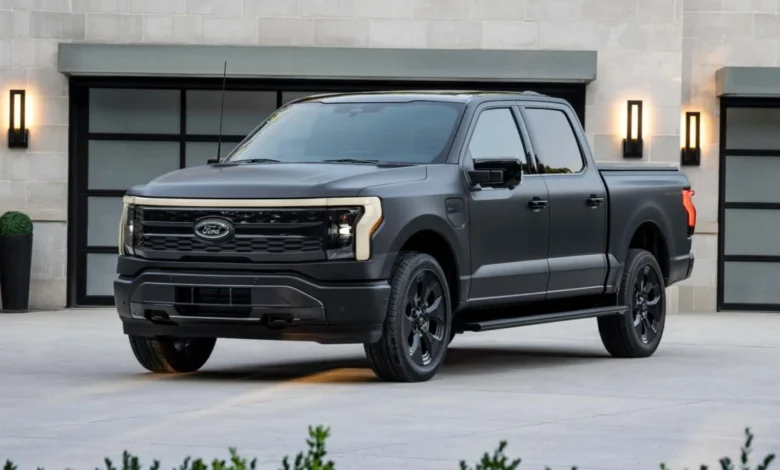
The recent activity within the Ford F-150 Lightning Owners Group on Facebook serves as a microcosm of this broader trend. A user identified as JF recently disclosed that the online automotive retailer Carvana purchased his Lightning for a figure just slightly below his original acquisition cost. In subsequent correspondence with industry observers, the owner noted that while he genuinely appreciated the vehicle’s performance and engineering, his personal usage patterns did not align with the capabilities of a full-size pickup. Specifically, the owner admitted that he rarely utilized the truck’s cargo bed, rendering the utility of the F-150 somewhat redundant for his lifestyle.
The decision to divest was driven by a realization that the resale environment for the Lightning had reached a point of high liquidity. As the owner explained, the desire for a smaller vehicle, combined with the favorable valuation offered by major retailers, created an ideal window for a trade-in. This sentiment is not isolated; it reflects a growing awareness among EV owners that the current supply-demand imbalance for specific electric models can yield surprisingly high returns during the divestment process.
A Chronology of the F-150 Lightning’s Market Journey
To understand why the F-150 Lightning is currently experiencing this secondary market renaissance, it is necessary to examine the vehicle’s turbulent history since its introduction. When Ford first announced the Lightning, the automotive industry viewed it as a pivotal moment for the electrification of the American work truck. However, the rollout was hampered by a series of economic and logistical headwinds.
The launch, which occurred in 2022, was met with significant enthusiasm, yet the reality of the consumer market soon became apparent. Initially marketed with an attractive starting price point near $40,000, the vehicle quickly saw its base MSRP climb toward the $50,000 threshold and beyond due to supply chain constraints, raw material inflation, and shifts in corporate pricing strategy. This price creep alienated a significant portion of the intended consumer base, who viewed the premium as prohibitive.
By late 2024, the situation had become more severe. Ford was forced to pause production of the F-150 Lightning at the Rouge Electric Vehicle Center in Dearborn, Michigan, citing cooling demand for electric vehicles. This production hiatus was a clear signal that the initial hype had exhausted its reach. By December 2025, Ford made the definitive decision to cease production of the model entirely, marking the end of its first generation. This move, while seen as a retraction at the time, has paradoxically contributed to the current secondary market phenomenon by effectively capping the supply of available units.
Economic Factors: The "Sweet Spot" of Depreciation
The valuation of the F-150 Lightning in the used car market is currently undergoing a correction that benefits buyers who were previously priced out. Jimmy Douglas, the CEO of the wholesale electric vehicle platform Plug, provided insight into this dynamic in a recent interview with Bloomberg. According to Douglas, the primary barrier to the Lightning’s success was its original sticker price, which made the cost-to-utility ratio difficult for the average consumer to justify.

However, once the vehicle hits the secondary market, the depreciation curve shifts the value proposition significantly. Douglas noted that when these trucks are priced at 50 to 60 percent of their original MSRP, they enter a "sweet spot." At this price point, the F-150 Lightning becomes an exceptionally competitive offering. Buyers are no longer paying for the premium of new technology but are instead purchasing a highly capable, modern vehicle at a fraction of the cost. This creates a surge in demand from value-oriented buyers who are willing to overlook the limitations of early-generation EV technology in exchange for the utility and performance of a full-size Ford pickup.
Implications for Future Electrification Strategies
The story of the F-150 Lightning serves as a valuable case study for the broader automotive industry regarding the transition to electric powertrains. Ford has already begun shifting its strategy, moving away from pure battery-electric vehicles (BEVs) toward more flexible configurations. The company’s upcoming pivot to an "extended-range electric vehicle" (EREV) model represents a strategic concession to current consumer preferences.
The EREV platform, which will replace the current Lightning, maintains the electric drivetrain architecture but integrates an onboard gasoline-powered generator. This generator does not drive the wheels directly; rather, it functions as an auxiliary power source to charge the battery while in operation. This design is engineered to address "range anxiety"—the primary inhibitor for many truck owners who require the ability to travel long distances or perform heavy-duty work without the downtime associated with frequent charging stops. Ford projects that this system will allow for a combined range exceeding 700 miles, bridging the gap between internal combustion engine (ICE) utility and the environmental benefits of electric motors.
While Ford has not provided a firm release date for the EREV, it is widely anticipated to reach the market before the next-generation F-150 platform arrives toward the end of the decade. This transition suggests that Ford has learned from the Lightning’s market performance: that consumers are not necessarily opposed to electrification, but they are highly sensitive to price, range, and the practicalities of day-to-day utility.
Analytical Overview: The Used Market as a Barometer
The current interest in the used F-150 Lightning market is a testament to the fact that the product itself—the engineering, the torque, and the utility—remains highly regarded. The failure was not in the vehicle’s capability, but in its economic accessibility. As these trucks migrate from the hands of early adopters to a broader secondary market, their perceived value is undergoing a fundamental realignment.
This trend also highlights the importance of the used vehicle market as a barometer for consumer adoption of new technologies. When a vehicle becomes more "popular" on the used market than it was as a new release, it serves as an indicator that the price point was the primary friction in the product’s adoption curve. For manufacturers, this underscores the necessity of aggressive cost-reduction measures and the potential for hybrid or range-extended solutions to fill the void until battery technology and charging infrastructure reach a level of maturity that satisfies the mass market.
As more owners look to exit their F-150 Lightning leases or ownership agreements, the market will likely see a period of increased price volatility. However, the overarching trend is clear: the F-150 Lightning, in its afterlife on the secondary market, is finding the audience that it failed to capture at the dealership. Whether this serves as a foundation for Ford’s future EREV success remains to be seen, but it is a clear reminder that in the automotive world, timing, pricing, and practical utility remain the three pillars of success. For now, those who held onto their vehicles may find that the market has finally caught up to the value they saw in the truck from the start.