Geely EX2 Electric Hatchback: Analyzing the New Chinese Challenger to Europe’s Competitive B-Segment Market

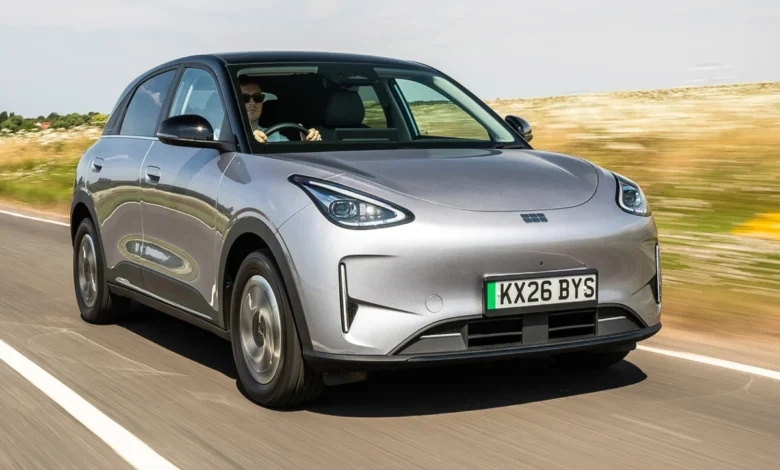
The Geely EX2 represents a strategic pivot for one of China’s most prolific automotive conglomerates as it seeks to penetrate the highly competitive European small-car market. Positioned as a B-segment hatchback that offers the interior volume typically associated with larger C-segment vehicles, the EX2 is designed to challenge established European icons such as the Renault 5, the Mini Cooper Electric, and the Fiat Grande Panda. By utilizing a rear-wheel-drive architecture—a rarity in the budget-conscious small electric vehicle (EV) category—Geely is attempting to blend practical urban packaging with the premium driving dynamics often demanded by European consumers. This move signals a broader effort by Geely to move beyond being a mere manufacturer of affordable transport, aiming instead to establish a reputation for sophisticated engineering and thoughtful design.
Technical Specifications and Performance Profiles
The Geely EX2 is offered with two distinct powertrain configurations, designed to cater to different price points and usage patterns. The entry-level variant features a 35.4kWh battery pack paired with a motor producing 81bhp. This configuration provides a range of approximately 157 miles on a single charge. While these figures place the base EX2 in direct competition with urban-centric vehicles like the Renault Twingo, the EX2’s physical dimensions are significantly larger, creating a unique value proposition based on "space per pound."
For consumers requiring greater versatility, Geely offers a higher-specification model equipped with a 47.1kWh battery and a 114bhp motor. This version extends the driving range to 214 miles, aligning it more closely with the entry-level versions of the Mini Cooper and the Fiat Grande Panda. At 4135mm in length, the EX2 occupies a middle ground in the market; it is longer than the Renault 5 (approximately 3.92m) but remains more compact than the Cupra Born or the Renault Megane E-Tech. Its closest market rival is identified as the MG 4 EV, specifically the recently introduced "Urban" trim, which prioritizes affordability and city-focused range over long-distance touring capabilities.
Engineering Innovation: The Rear-Wheel Drive Advantage
One of the most distinctive features of the Geely EX2 is its rear-wheel-drive (RWD) layout. In the small EV segment, front-wheel drive is the industry standard due to lower production costs and simplified assembly. However, Geely’s decision to place the motor at the rear was driven by two primary objectives: driving dynamics and urban maneuverability.
By removing the motor and driveshafts from the front axle, Geely’s engineers have allowed the front wheels a significantly greater degree of steering articulation. This results in a turning circle that is remarkably tight, drawing comparisons to the LEVC TX—the modern London black cab. This connection is not coincidental, as Geely is the parent company of the London Electric Vehicle Company (LEVC). The technology transfer between Geely’s commercial and passenger vehicle divisions has allowed the EX2 to offer "taxi-like" agility, which is a major selling point in densely populated European cities with narrow streets and difficult parking scenarios.
Furthermore, the RWD configuration provides packaging benefits. Without the bulk of a front-mounted powertrain, Geely has been able to include a "frunk" (front trunk), providing additional storage space for charging cables or small bags. This feature is often omitted in small EVs to save costs, but its inclusion in the EX2 underscores Geely’s ambition to offer a more "complete" vehicle than its price-point rivals.
Design Philosophy and Aesthetic Positioning
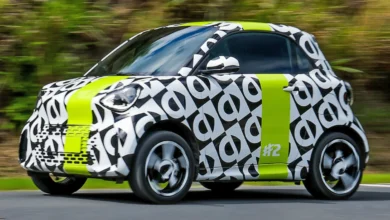
While the engineering of the EX2 is innovative, its aesthetic execution has been met with a more measured response. Geely’s design department has utilized a language that the company describes in highly creative terms, yet industry analysts have noted that the final product leans toward a generic, "segment-standard" appearance. The EX2 does not directly mimic any specific competitor, but it incorporates various design elements seen across the current EV landscape, leading to a look that some describe as "bland."
The vehicle sits on 16-inch wheels, which, despite being wrapped in relatively tall 205/60 tires, have been criticized for appearing undersized relative to the car’s body. This "under-wheeled" look is a common trait of budget-oriented vehicles where aerodynamic efficiency and tire replacement costs are prioritized over aggressive styling. To combat the risk of being "invisible" in a market that includes the high-fashion Renault 5, Geely is offering the EX2 in a variety of pastel colors. By moving away from the "greyscale" palette of blacks, whites, and greys that dominate the automotive industry, Geely hopes to appeal to a younger, more lifestyle-oriented demographic.
Strategic Context: Geely’s Global Expansion
The launch of the EX2 must be viewed within the context of Geely’s rapid expansion and its complex web of brands. Geely Holding Group now oversees a portfolio that includes Volvo, Polestar, Zeekr, Lotus, Lynk & Co, and LEVC. This multi-brand strategy allows Geely to share platforms and technologies across different price brackets and geographic regions.
The EX2 is part of a new "EX" series of vehicles, joining the larger EX5 and the Starray. This lineup is intended to provide a cohesive family of electric and electrified vehicles that can be exported globally. The use of the Sustainable Experience Architecture (SEA) or derivatives thereof allows Geely to achieve economies of scale that few European manufacturers can match. This cost advantage is critical as the EX2 enters a market where price sensitivity is high, and the transition to electric mobility is being hampered by the high initial purchase price of EVs.
Market Chronology and Competitive Landscape
The development of the Geely EX2 follows a clear timeline of Chinese manufacturers moving from domestic dominance to international exportation.
- 2021-2022: Geely refines its modular EV platforms, focusing on rear-wheel-drive efficiency for small to mid-sized cars.
- 2023: The "EX" branding is solidified as Geely’s primary export-focused line for mainstream consumers.
- 2024: The EX2 is unveiled to international audiences, positioned specifically to intercept customers considering the new wave of "affordable" European EVs like the Citroën e-C3 and the Renault 5.
In terms of competition, the EX2 faces a two-pronged challenge. On one side are the "style leaders" like the Mini Cooper and Renault 5, which trade on heritage and iconic design. On the other side are the "value leaders" like the MG 4 and the incoming Dacia Spring. The EX2 attempts to occupy the middle ground, offering more space than the style leaders and more sophisticated driving dynamics than the value leaders.
Implications for the European Automotive Industry
The arrival of the Geely EX2 carries significant implications for the European automotive sector. European regulators and manufacturers have expressed growing concern over the influx of Chinese-made EVs, which often benefit from integrated supply chains and lower energy costs. The EX2, with its respectable specifications and clever packaging, represents exactly the type of vehicle that could erode the market share of traditional European "B-segment" stalwarts.
Industry analysts suggest that the EX2’s success will depend heavily on its pricing strategy and the strength of its dealer network. While the car’s styling may be perceived as conservative, its practical benefits—specifically the interior space and the turning circle—are highly relevant to the target audience. However, the lack of a "long-range" option (exceeding 250 miles) may limit its appeal to one-car households that require a vehicle capable of occasional long-distance motorway travel.
Conclusion and Future Outlook
The Geely EX2 is a calculated entry into a market segment that is currently undergoing a radical transformation. By focusing on the "B-segment size with C-segment space" philosophy, Geely is addressing a core need for practical, urban-friendly electric transportation. While it may lack the visual flair of its French or Italian rivals, its engineering choices—particularly the rear-wheel-drive layout and the resulting maneuverability—demonstrate a sophisticated understanding of urban driving requirements.
As Geely continues to roll out its EX series, the automotive world will be watching to see if "sensible" Chinese engineering can overcome the brand loyalty and design-led appeal of Europe’s home-grown favorites. The EX2 is not just a new car; it is a testament to Geely’s ability to adapt and compete on a global stage, utilizing its vast industrial resources to challenge the status quo of the European small-car market. Whether it becomes a bestseller or remains a niche alternative will depend on how European consumers weigh the EX2’s tangible packaging benefits against its more understated aesthetic identity.