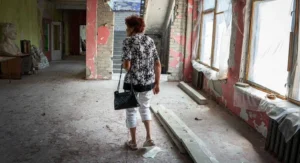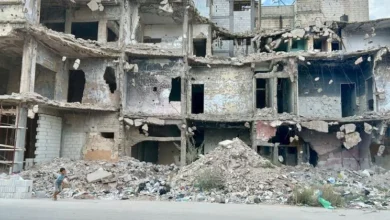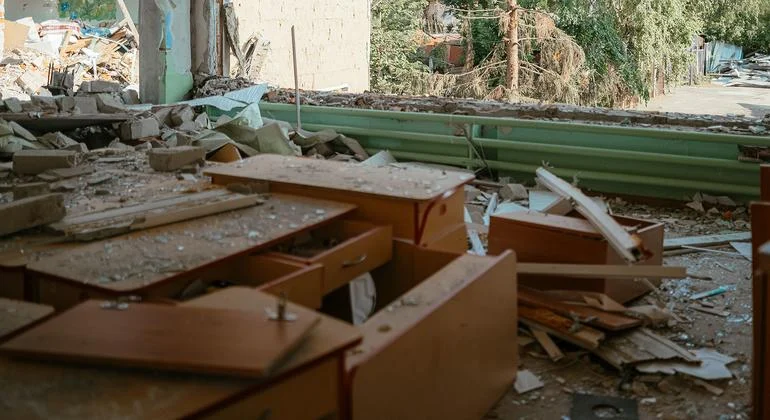
The systematic targeting of educational infrastructure in Ukraine has reached a grim milestone, underscoring the profound human cost of the ongoing conflict as it enters its fourth year. According to recent data released by the United Nations Children’s Fund (UNICEF), Ukraine has sustained nearly 2,000 attacks on educational institutions since the escalation of the full-scale Russian invasion in February 2022. This relentless violence has not only devastated physical structures—ranging from rural kindergartens to major universities—but has also severely fractured the foundational right to education for millions of children. The crisis was thrown into stark relief following a deadly strike on a school utilized for humanitarian aid distribution, prompting urgent international condemnation and renewed calls for the protection of civilian infrastructure.
The intensification of hostilities targeting public spaces highlights an alarming trend: schools, once sanctuaries of learning and community support, are increasingly caught in the crosshairs of military engagements. As the conflict drags on, the psychological and structural toll on the younger generation is compounding, threatening to create a lost generation whose academic, social, and emotional development has been fundamentally disrupted by relentless warfare.
The Chronology of Destruction: A Timeline of Escalation
To understand the current crisis in Ukraine’s educational sector, one must examine the systematic progression of attacks since 2022. The escalation can be traced through several distinct phases:
- February – December 2022: The initial months of the full-scale invasion saw widespread, indiscriminate shelling and airstrikes across Ukraine. Hundreds of schools were damaged or destroyed in the opening weeks alone as frontlines shifted rapidly. Educational facilities were frequently repurposed as makeshift bomb shelters, community distribution hubs, or military positions, making them primary targets.
- 2023: As the conflict settled into a war of attrition, aerial bombardments became more targeted and frequent. Long-range missile strikes and drone attacks routinely interrupted remote and hybrid learning systems. Educational institutions faced cumulative damage, with regional disparities emerging as front-line oblasts bore the heaviest burden.
- 2024 – 2025: The frequency of air raid alerts escalated significantly in major urban centers such as Kyiv, while front-line regions faced daily bombardments. Schools adapted by constructing subterranean bunkers and reinforced classrooms, transforming the academic environment into an underground experience. Despite these defensive measures, the cumulative loss of instructional hours grew exponentially.
- November 2026: The crisis reached a tragic climax with a devastating strike on a school and community shelter in Komyshuvakha, located in the Zaporizhzhia region. The attack, which struck a site actively used for distributing humanitarian relief, killed at least 29 civilians and municipal workers, followed by secondary strikes that targeted first responders. This event underscored the extreme danger facing humanitarian operations conducted within educational facilities.
Data and Statistics: Learning Under Fire
The empirical evidence compiled by international monitors and humanitarian agencies reveals a staggering disruption to daily life for Ukrainian youth. UNICEF reports that approximately 270 attacks on education have been recorded in 2026 alone, demonstrating that the intensity of the war has not abated.
Since the beginning of the academic year leading up to late October, students across Ukraine have experienced an average of 34 hours of air raid alarms directly during school hours. This equates to more than 13 percent of their total scheduled learning time. In heavily impacted regions, the situation is far more acute. Children in areas such as Dnipropetrovsk, Kirovohrad, and Kharkiv have endured more than 60 hours of school-time alerts—representing approximately one-quarter of their entire academic calendar.
Urban centers have experienced a dramatic surge in aerial threats. In the capital city of Kyiv, air raid alerts during the month of September skyrocketed from just 12 instances in 2025 to 71 instances in September 2026. This exponential increase forces hundreds of thousands of children—over 560,000 in the most heavily affected regions alone—to repeatedly abandon their classrooms and seek refuge in underground shelters.
For many students, the classroom experience is now defined by concrete walls and fluorescent lighting rather than natural light and schoolyards. Testimonies gathered by humanitarian workers highlight the psychological strain of this reality. Fifteen-year-old Katia from the Mykolaiv region captured the sentiment of countless peers, noting that despite returning to in-person schooling, the majority of the day is spent underground due to continuous air raid alerts.
Official Responses and Humanitarian Condemnations
The international community has responded with profound alarm to the recent escalation in attacks on civilian and educational infrastructure. Matthias Schmale, the United Nations Resident and Humanitarian Coordinator in Ukraine, issued a forceful condemnation following the late-October strike in Komyshuvakha.
Mr. Schmale detailed the horrific nature of the incident, noting that the victims were primarily local residents who had gathered at the school to receive vital humanitarian aid, alongside employees of the local administration. The tragedy was compounded when subsequent strikes hit the exact same location, killing two emergency rescuers and four police officers who had arrived to render aid and investigate the initial blast. With nearly 50 individuals still reported missing following the double-tap strike, search and rescue operations have faced unprecedented hazards.
Child protection advocates have emphasized that these attacks violate international humanitarian law, which explicitly protects schools and hospitals during armed conflicts. The Safe Schools Declaration, endorsed by numerous nations, commits governments to strengthening the protection of students and educators during times of war; however, the ongoing conflict in Ukraine has continually tested the limits of these international norms.
Compounding the physical danger is the diversion of critical resources. Maysa Jabout, head of the UN global fund Education Cannot Wait, addressed the broader systemic impacts of the crisis. She revealed that the immense psychological toll of the war has forced humanitarian organizations to reallocate substantial financial resources away from core educational tools—such as textbooks, technology, and facility repair—and toward specialized psychosocial counseling. These funds are urgently required simply to help children cope with the trauma of learning in active war zones.
The Broader Implications for Ukraine’s Future
The long-term consequences of persistent educational disruption extend far beyond immediate academic setbacks. Sociologists and economists warn that a generation of Ukrainian children missing significant portions of foundational education risks facing diminished economic prospects, social alienation, and protracted psychological trauma.
The reliance on remote learning, necessitated by security concerns, has created deep digital divides, particularly for students in rural areas lacking reliable internet infrastructure or stable electricity grids due to targeted attacks on Ukraine’s energy grid. While underground classrooms and hybrid models provide a semblance of continuity, they cannot fully replicate the social and developmental benefits of traditional schooling.
Furthermore, the continuous exposure to sirens, explosions, and the loss of community infrastructure embeds a deep-seated anxiety among youth. Mental health professionals note that older children, in particular, struggle with maintaining concentration and detaching from the constant threat of violence occurring just above their subterranean classrooms. Without sustained, long-term investments in mental health support and educational reconstruction, the invisible wounds of this conflict threaten to impact Ukrainian society for decades to come.
As the international community continues to monitor the crisis, humanitarian agencies reiterate their appeals for an immediate cessation of attacks on civilian infrastructure, the enforcement of international humanitarian law, and increased financial backing to ensure that the children of Ukraine are not robbed of their future alongside their classrooms.