For decades, international tourism to Iceland has followed a well-trodden blueprint centered on the southwestern corner of the island nation. Millions of travelers arrive at Keflavík International Airport, tour the capital city of Reykjavík, and subsequently embark on the classic Golden Circle route—a heavily trafficked, single-day loop encompassing the Þingvellir National Park rift valley, the roaring Gullfoss waterfall, and the geothermal field of Haukadalur. While this region offers an accessible introduction to the country’s dramatic geology, it captures only a fraction of the national identity. A growing number of visitors are bypassing the southern crowds in favor of North Iceland, a region characterized by vast distances, harsher winter climates, and a deeply ingrained bathing culture that serves as the social bedrock of northern communities.
The disparity in population distribution heavily influences these regional travel patterns. The greater Reykjavík area is home to approximately 63 percent of Iceland’s total population, creating a sharp contrast with the expansive, sparsely populated rural expanses of the north. Yet, tourism boards and returning travelers emphasize that dismissing a second trip to Iceland based on prior visits to the capital is a missed opportunity. The northern topography, while forbidding and dramatically colder during the winter months, has fostered a resilient local culture. This resilience is epitomized not merely by survival strategies against the sub-arctic climate, but by the pervasive and egalitarian tradition of community swimming pools and geothermal bathing.
Historical Context and the Geothermal Lifeline
The historical narrative of northern Iceland is fundamentally a chronicle of endurance against severe environmental pressures. When Norse settlers arrived from Norway during the late 9th century, they encountered an austere landscape where arable land was scarce and sustained agriculture nearly impossible. Dietary staples quickly adapted to necessity rather than luxury, yielding preservation-heavy traditions such as salted cod and fermented shark, with scant native flora beyond wild berries.

However, the harsh realities of the northern climate were counterbalanced by a vital natural resource: geothermal energy. From the earliest days of settlement, residents utilized naturally occurring hot springs for warmth, cooking, and hygiene. Over centuries, this practical utilization evolved into a sophisticated civic infrastructure. Today, virtually every town in Iceland—regardless of size—features a municipally funded swimming pool, transforming what might otherwise be isolating winter conditions into an active, communal public life. This tradition received international validation when UNESCO officially added Icelandic swimming pool culture to its Representative List of the Intangible Cultural Heritage of Humanity, placing the practice alongside peer traditions like the Finnish sauna.
Akureyri: The Urban Hub of the North
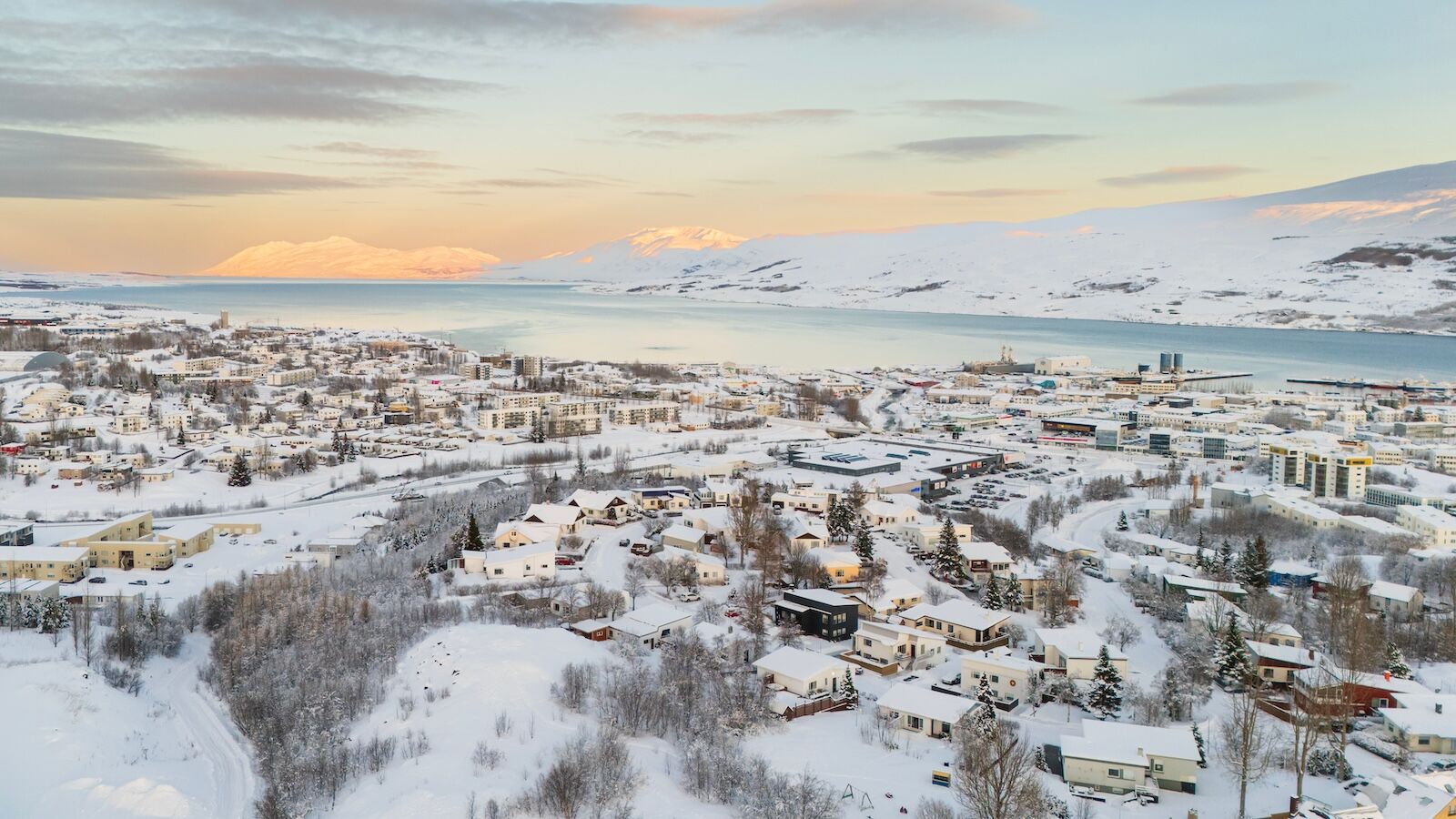
Serving as the economic and cultural center of the region, Akureyri is situated at the head of Eyjafjörður, the longest fjord in Iceland. Located roughly a 45-minute flight from Reykjavík, the town functions as an optimal base camp for winter exploration. Sheltered by surrounding mountains within the valley, Akureyri enjoys a microclimate that is noticeably milder than typical sub-arctic conditions suggest.
With a population hovering around 20,000, Akureyri is the largest urban settlement outside the southwestern capital region. Its compact, highly walkable center features a traditional grid layout, a prominent two-block main thoroughfare lined with historic timber houses dating to the 18th century, and a robust culinary and hospitality sector. Despite its urban amenities, the town retains a distinct village atmosphere, characterized by close social networks and intergenerational community bonds.
Beyond urban commerce, Akureyri and its surrounding districts offer diverse access points to the region’s defining feature: geothermal bathing. While globally recognized commercial facilities such as the Blue Lagoon in the southwest draw the majority of international media attention, northern Iceland offers a distinct spectrum of bathing experiences ranging from modern luxury lagoons to historic municipal pools.
The Spectrum of Northern Bathing: From Luxury Lagoons to Civic Hubs
The contemporary northern bathing circuit spans multiple distinct environments, reflecting both commercial tourism development and deeply rooted local traditions.
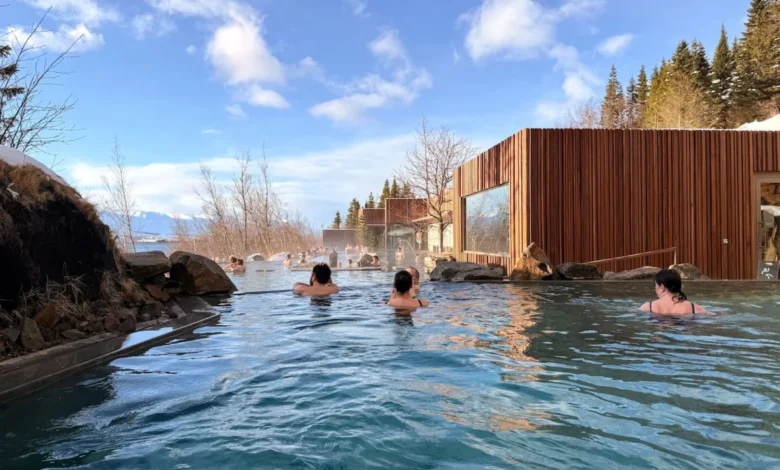
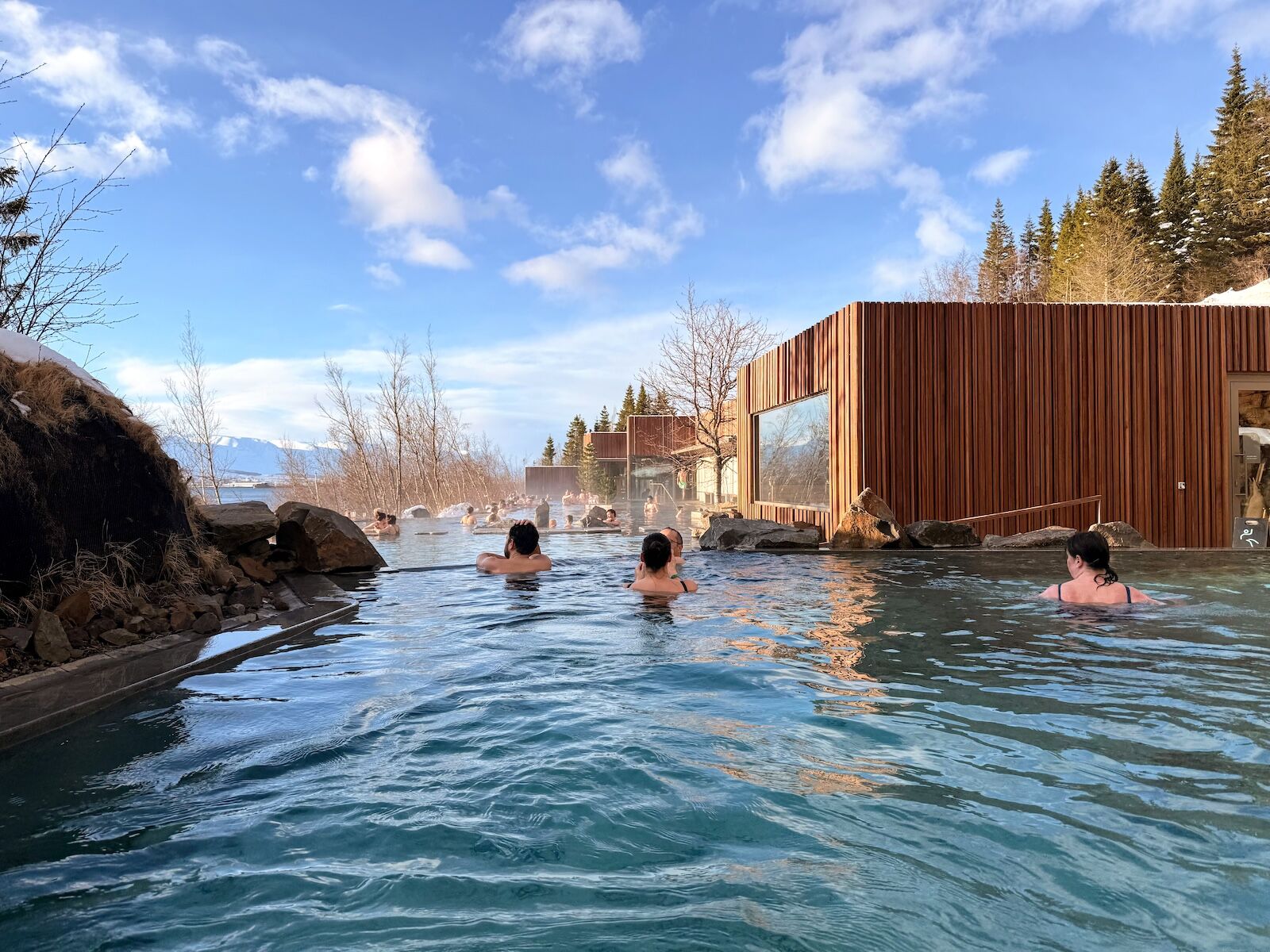
On the western shore of Eyjafjörður, the Forest Lagoon complex provides a modern architectural integration with the natural landscape. Opened to leverage the region’s geothermal output, the facility features expansive infinity pools surrounded by snow-draped evergreen forests, subterranean saunas with panoramic windows, and cold-plunge architecture designed to stimulate circulation.
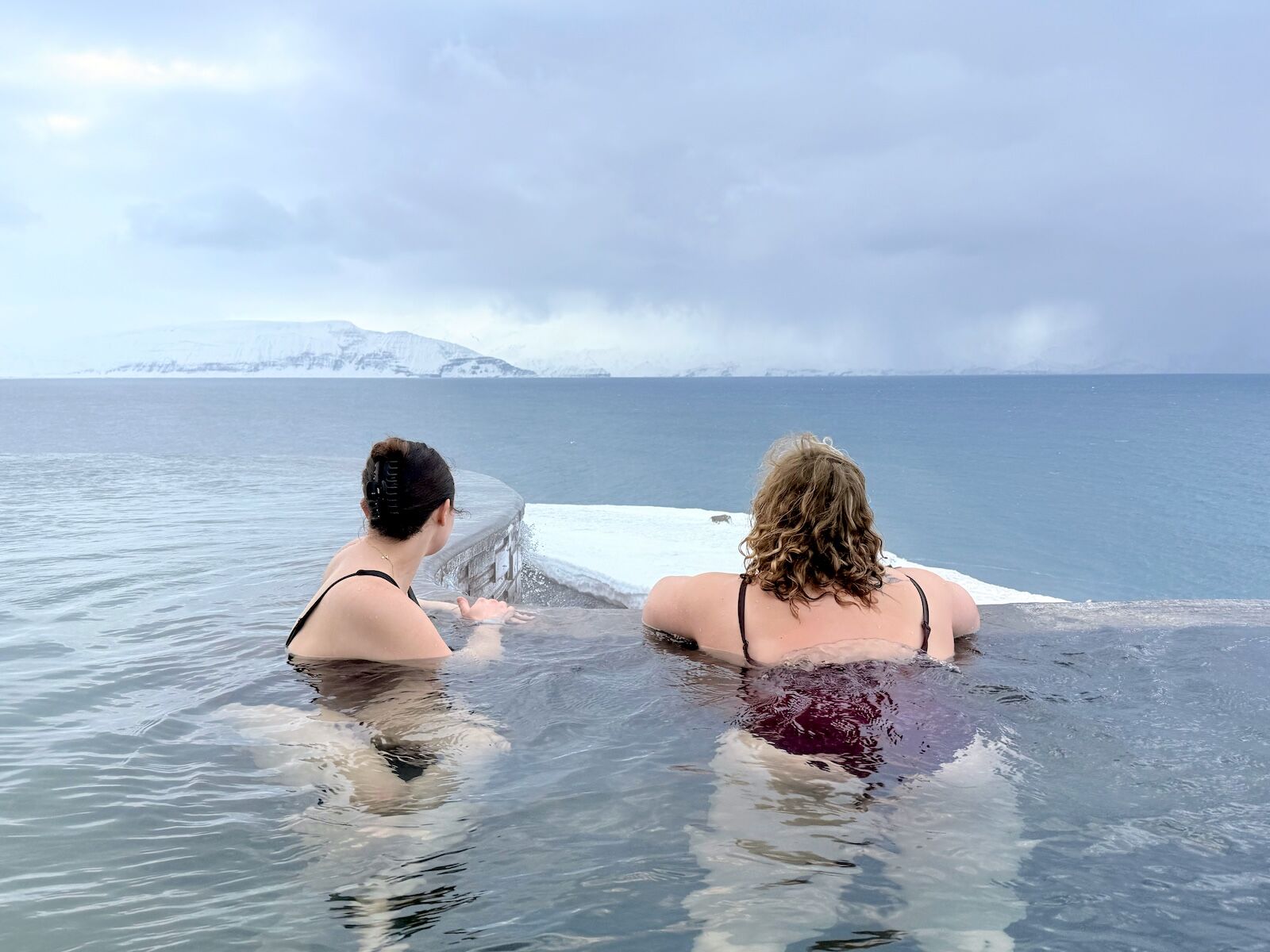
Further east, located approximately an hour from Akureyri in the coastal fishing town of Húsavík, the GeoSea Geothermal Sea Baths offer a different hydrological experience. Unlike freshwater thermal pools, GeoSea utilizes mineral-rich subterranean seawater. Terraced infinity pools overlook Skjálfandi Bay, a marine zone globally renowned for cetacean activity, where humpback and minke whales frequently breach during feeding seasons.
However, industry analysts and cultural anthropologists note that the true essence of Icelandic bathing culture resides in municipal public pools rather than commercial luxury resorts. Local facilities, such as Akureyri’s primary community pool complex, operate as civic town squares. Equipped with multi-lane lap pools, children’s wading areas, and extensive water slide infrastructure, these community centers record high daily attendance rates across all demographic cohorts, from toddlers to senior citizens.
Strict Hygiene Protocols and Social Equality
A critical component of the Icelandic pool experience is adherence to rigorous hygiene protocols, which differentiate public bathing in Iceland from similar cultures globally. Before entering any pool or lagoon, visitors and locals alike are required to strip completely and wash thoroughly in communal shower facilities under the direct supervision of attendants or automated enforcement. Public nudity in these transition spaces is mandatory and culturally unremarkable, serving to break down socioeconomic distinctions before patrons enter the shared, swimsuit-required thermal waters.
Karen Möller Sívertsen, a public relations coordinator at Business Iceland, emphasizes the broader sociological implications of this infrastructure. "Iceland’s public swimming pools play an important role in fostering a sense of equality, informal connection, and social cohesion," Sívertsen explains, noting that these spaces intentionally "bring together people of all ages and backgrounds in a shared space."
This egalitarian ethos ensures that municipal pools function as vital democratic anchors, mitigating the isolation often exacerbated by long, dark northern winters.
Expanding Tourism Infrastructure Beyond the Springs
While geothermal bathing anchors the northern winter tourism economy, regional authorities have diversified infrastructure to support year-round visitation. Akureyri and the surrounding Eyjafjörður and Skagafjörður districts offer structured excursions that leverage the natural landscape without compromising ecological integrity.
Popular winter itineraries include snowmobile expeditions across the frozen expanse of Lake Mývatn, visits to the partially frozen Godafoss—historically designated as the "waterfall of the gods"—and equestrian tours utilizing the purebred Icelandic horse. Renowned for their double coats and sure-footedness in snow, these horses remain central to the agricultural and cultural heritage of rural northern valleys.
Concurrently, the culinary landscape of North Iceland has undergone a significant evolution. Traditional preservation methods, born of historical scarcity, have been integrated into modern gastronomy. Establishments such as the Vogafjós Farm Resort utilize geothermal heat to bake dense, sweet rye bread underground for up to 24 hours. Rural community halls, including Áskaffi in Skagafjörður, operate dual-purpose spaces that function as civic venues for weddings and concerts while serving traditional baked goods derived from multi-generational family recipes.
Broader Economic Impact and Future Outlook
The strategic promotion of North Iceland represents a concerted effort by national tourism boards to decentralize visitor traffic and alleviate environmental strain on southwestern honeypots like the Golden Circle. By distributing tourist expenditures more evenly across regional municipalities, the Icelandic government aims to bolster rural economies, extend seasonal employment opportunities, and promote sustainable tourism models.
Industry data indicates that while southwestern hubs will retain high baseline volumes due to proximity to the primary international airport, northern destinations are experiencing steady, manageable growth. This controlled expansion allows regional operators to maintain infrastructural standards while preserving the intimate, community-centric atmosphere that defines northern hospitality.
Ultimately, the enduring appeal of North Iceland lies in its synthesis of dramatic natural geography and unpretentious social architecture. For travelers willing to venture beyond the established metropolitan perimeters, the region offers a nuanced perspective on contemporary Icelandic life—one where the sub-arctic cold is consistently met with the warmth of the earth and the solidarity of its people.