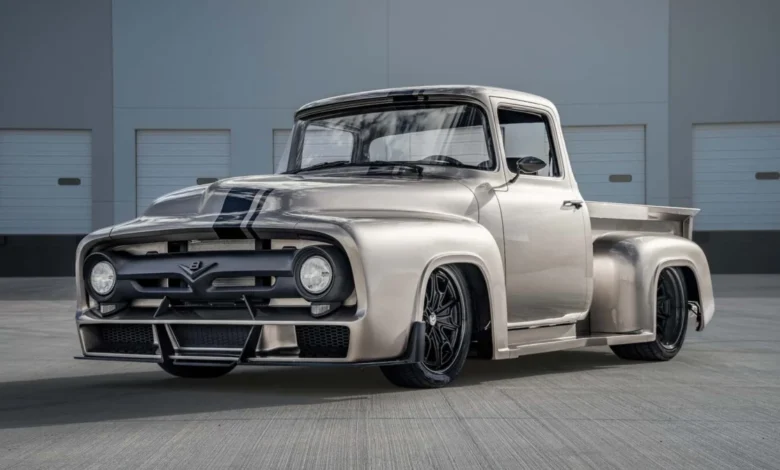
The annual Specialty Equipment Market Association (SEMA) Show in Las Vegas serves as the premier global stage for the automotive aftermarket, a place where the boundaries between vintage restoration and high-performance engineering are routinely erased. Among the thousands of vehicles showcased in the Las Vegas Convention Center, the "GT/FX"—a radical 1956 Ford F-100 restomod by Arizona-based shop Fat Fender Garage—has emerged as a masterclass in modernizing classic American iron. Representing a total investment of more than 15,000 man-hours, this build is not merely a restoration; it is a complete reimagining of the iconic mid-century pickup through the lens of a contemporary Ford Mustang GT.
The Evolution of a Classic Platform
The 1956 Ford F-100 occupies a hallowed space in the history of light-duty trucks. Known for its distinctive wrap-around windshield and the "big window" cab option, the 1956 model year is widely considered the pinnacle of the second-generation F-Series design. However, while the aesthetic remains timeless, the factory chassis and powertrain of the 1950s are fundamentally ill-equipped for modern high-performance demands.
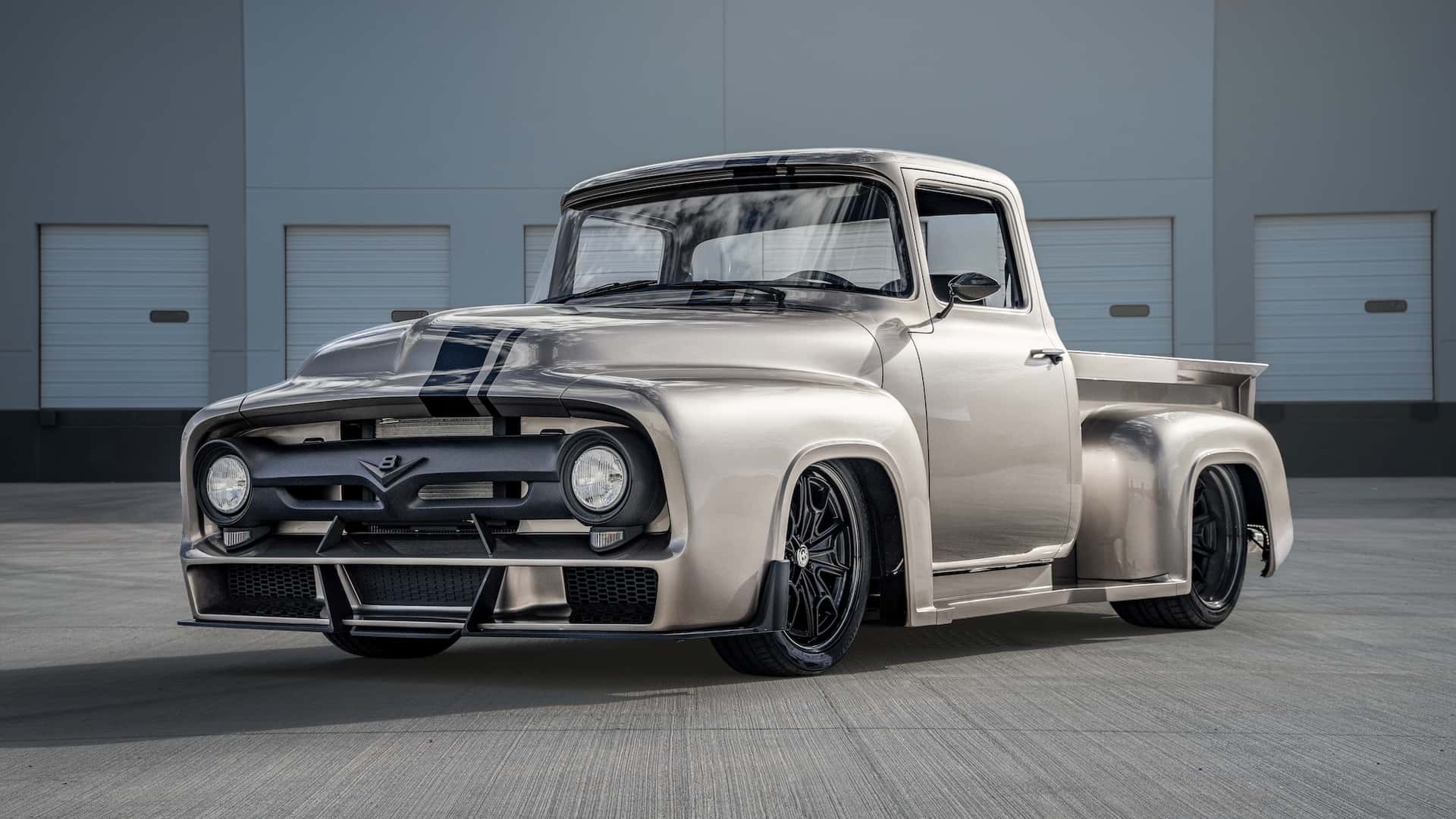
Fat Fender Garage approached the GT/FX project with a philosophy of functional integration. The team did not simply drop a new engine into a rusted shell; they subjected the all-steel body to a rigorous process of modernization. The fabrication work includes "pancaking" both the hood and the roof, a delicate process that requires cutting and re-welding steel to achieve a sleeker, lower profile without compromising the structural integrity of the cabin. Furthermore, the cab was sectioned by two inches, and the wheel arches were widened, providing a broader, more aggressive stance that allows the vehicle to accommodate modern, wide-profile performance tires.
Mechanical Architecture and Performance Specs
The heart of the GT/FX is a third-generation Ford 5.0-liter Coyote V8, a powerplant renowned for its reliability and tunability. In this iteration, the engine is paired with a massive 3.0-liter Whipple supercharger, pushing the output to a staggering 800 horsepower and 750 pound-feet of torque. To manage this immense power, the builders utilized the Ford 10R80 10-speed automatic transmission, a gearbox designed to provide rapid shifts and maintain the engine’s power band across a wide variety of speeds.
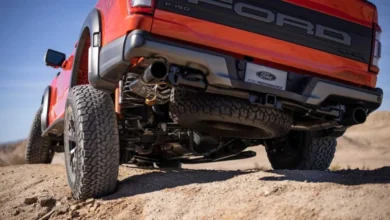
The engineering team prioritized the vehicle’s acoustic signature and thermal management by designing a custom three-inch exhaust system. This setup incorporates Borla XR-1 Raceline mufflers and JMD resonators, complemented by electric cutouts that allow the driver to bypass the mufflers for a more aggressive, track-oriented exhaust note. Custom-machined valve covers provide a bespoke aesthetic touch to the engine bay, signaling that the level of detail extends far beyond the surface.
Chassis Engineering and Handling Dynamics
A vehicle with 800 horsepower is only as capable as its suspension and chassis architecture. Fat Fender Garage opted to move away from the traditional leaf-spring setup of the 1956 F-100 in favor of their proprietary FF1 Performance Coilover Chassis. This bespoke frame is designed to provide the handling characteristics of a modern sports car, focusing on high-speed stability, precise cornering, and the ability to manage the weight transfer inherent in a truck body during heavy acceleration and braking.
The chassis is supported by a set of custom HRE wheels wrapped in Toyo Proxes Sport 2 tires. The combination of the lightweight custom frame and high-performance rubber allows the GT/FX to maintain grip during cornering, a feat that would be impossible with the original factory suspension. The use of Cerakote finishes on the bumpers, trim, and exposed hardware further reinforces the theme of modern durability meeting classic style.
Interior Refinement and Bespoke Fabrication
The interior of the GT/FX serves as a stark contrast to the utilitarian origins of the 1956 F-100. Fat Fender Garage has created a fully custom cockpit defined by high-end materials and ergonomic integration. The cabin features premium leather upholstery throughout, covering the custom bucket seats and the dash pad.
To maintain a clean, uncluttered dashboard, the builders implemented a hidden climate control system that directs airflow through a single, nearly invisible vent. The integration of modern gauges and advanced audio equipment ensures the vehicle is as comfortable for long-distance touring as it is potent on a drag strip. Additional modern conveniences include custom door actuators and flush-mounted glass, which reduce wind noise and drag while providing a modern visual aesthetic that blends seamlessly with the vintage bodywork.
Aesthetic Craftsmanship and Exterior Detailing
Visually, the GT/FX is a blend of heritage and modern track-car influence. The exterior retains the original grille, which remains the only major factory component left unmodified, serving as a nostalgic anchor for the entire build. Conversely, the rear of the vehicle has been transformed with a grafted-in Ford Mustang Shelby GT350 rear diffuser, a choice that underscores the "GT" aspect of the project’s name.
The custom double-walled truck bed features unique flares that match the widened fenders, while the tailgate is motorized, opening at the simple push of a button. The body is finished in a custom BASF paint, with racing stripes that were hand-finished by the internal team. Carbon-fiber mirrors and custom LED taillights provide the final modern flourishes, ensuring that the truck is instantly recognizable as a contemporary build despite its 1956 silhouette.
The Significance of 15,000 Hours
The 15,000-hour figure cited by Fat Fender Garage is a testament to the level of labor required for a build of this caliber. In the world of high-end automotive customization, such a timeframe suggests a project that involved constant design iteration, prototyping, and iterative testing.
When a shop commits this level of time to a single project, it is rarely just for personal satisfaction. It represents a statement of technical capability, often used to showcase the shop’s engineering prowess to potential clients and industry peers at events like SEMA. The implication of this build is clear: the restomod industry has moved far beyond simple "engine swaps." Today, it is about total vehicle integration, where every bolt, weld, and line of code is reconsidered for optimal performance.
Industry Impact and Market Implications
The GT/FX contributes to a growing trend in the automotive sector where enthusiasts seek the reliability of modern platforms housed in the iconic bodies of the 1950s and 60s. As emissions regulations and safety standards become more stringent for new vehicles, the restomod segment provides a unique avenue for owners to enjoy high-performance driving in a vehicle that is not subject to modern regulatory constraints on design.
However, the financial barrier to entry for a build of this complexity is substantial. While Fat Fender Garage has not disclosed a specific price tag for the GT/FX, the combination of 15,000 hours of professional labor, premium components like the Whipple supercharger and HRE wheels, and the engineering of a custom chassis places this vehicle in a rarefied tier of the automotive market. It is not intended for the casual collector but rather for a buyer who views the vehicle as a functional piece of art.
Future Perspectives
As SEMA continues to evolve, the presence of vehicles like the GT/FX highlights the shift toward "pro-touring" trucks—pickups that are built to perform on road courses rather than just sit on show pedestals. The success of the GT/FX lies in its balance; it respects the history of the Ford F-100 while unapologetically utilizing the full suite of modern Ford Performance technology.
Whether the GT/FX will inspire a new wave of F-100 builds remains to be seen, but it has undoubtedly raised the bar for what is expected at the industry’s highest levels. By blending the raw power of the Coyote V8 with the refined dynamics of a custom chassis, Fat Fender Garage has created a vehicle that is, at its core, a celebration of American automotive evolution. It is a reminder that while the blueprints of the past may be set in stone, the potential for what those machines can become is limited only by the vision and the time invested by the craftsmen of the present.