The Mechanics of the Proposed System
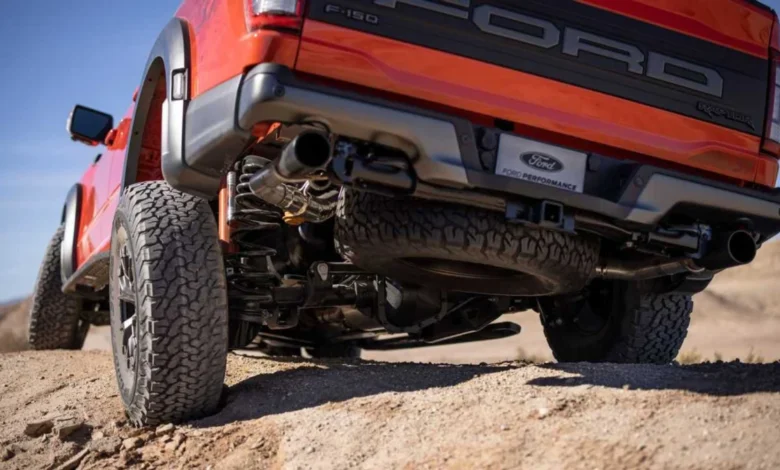
The current industry standard for body-on-frame vehicles, such as pickup trucks and large SUVs, typically involves securing the spare tire beneath the rear of the vehicle. This configuration often necessitates that the driver crawl underneath the chassis to operate a manual hand-crank winch system. This process is frequently complicated by environmental factors—such as mud, snow, or uneven terrain—as well as the significant physical effort required to manipulate a heavy, full-size tire and wheel assembly.
Ford’s patent describes a sophisticated pivot-and-extend rack system. Unlike conventional winches that rely solely on a vertical cable, the proposed mechanism incorporates a folding arm assembly. When activated, this arm articulates to guide the spare tire away from its stowed position under the frame, lowering it gradually until it rests near the ground alongside the vehicle. This design effectively removes the need for the driver to lie prone beneath the vehicle, significantly improving both the safety and the accessibility of the tire-change process.
Beyond merely lowering the tire, the patent highlights an integrated approach to the repair workflow. The folding rack assembly is designed to house a dedicated lug wrench, ensuring the necessary tools are always in proximity to the spare. Furthermore, the mechanism includes a positioning function, which serves as a mechanical assistant during the re-mounting process. The arm can hold the replacement wheel at the correct height and orientation against the hub, allowing the driver to thread the lug nuts without needing to manually support the weight of the tire—a task that is notoriously difficult for a single person, particularly with the heavy-duty tires common on modern trucks.
Chronology and Development Context
The filing of this patent on March 18, 2024, marks a recent milestone in Ford’s ongoing commitment to intellectual property development. While the document has only recently gained public attention, it is part of a broader, long-term trend of automotive manufacturers seeking to refine vehicle utility.
Ford has maintained a consistent strategy regarding its patent portfolio, frequently noting that while it files for a high volume of patents annually, these filings represent a protective measure for research and development rather than a definitive roadmap for production. The company’s engineering teams are tasked with exploring diverse solutions for vehicle ergonomics, and this movable spare-tire mount is an example of the firm’s focus on the "human-machine interface" of heavy-duty vehicle ownership.
Industry Context and the Changing Landscape of Spare Tires
To understand the significance of this patent, one must examine the broader trends in the automotive industry regarding spare tires. Over the last decade, there has been a marked decline in the inclusion of full-size spare tires in passenger vehicles. According to data from various automotive consumer reports, a growing percentage of new vehicles are now sold without a spare tire of any kind, replaced instead by tire inflation kits (sealant and a portable compressor) or run-flat tire technology.
The primary drivers for this shift are weight reduction and fuel efficiency. By removing the spare tire, the jack, and the mounting hardware, manufacturers can reduce the overall vehicle weight by 30 to 50 pounds, contributing to better fuel economy ratings and lower CO2 emissions. Additionally, the space previously occupied by a spare tire can be repurposed for larger battery packs in electric vehicles (EVs) or increased cargo capacity.
However, the "full-size spare" remains a cornerstone of the pickup truck and off-road SUV segment. For owners of vehicles like the Ford F-150, Super Duty, or Expedition, a temporary inflation kit is often insufficient for the rugged conditions these vehicles are designed to traverse. Consequently, while the rest of the industry moves away from the spare tire, the segment served by Ford remains heavily reliant on them. This creates a unique niche where innovation in storage and deployment systems—like the one proposed in the March 2024 filing—retains significant consumer value.

Analysis of Technical and Practical Implications
The implementation of a mechanical, articulating spare-tire rack would introduce several engineering challenges and potential benefits. From a manufacturing standpoint, adding an articulated arm and motorized or geared assembly adds complexity and weight to the undercarriage. Automotive engineers must account for the structural integrity of the rack, ensuring it can withstand the vibrations, debris, and corrosion common to the underside of a truck.
From a user experience perspective, the benefits are substantial. Roadside safety is a critical concern, particularly on high-speed roadways. Reducing the time a driver must spend in a vulnerable position—crawling under a vehicle or struggling to lift a 60-to-80-pound tire—directly correlates to a lower risk of accidents. By automating the extraction and mounting process, Ford could theoretically reduce the time required for a tire change from an average of 20–30 minutes to under 10 minutes, while simultaneously mitigating the risk of back injuries or mechanical frustration.
Furthermore, the integration of a specialized mounting arm could serve as a differentiator in the competitive truck market. As customers increasingly demand vehicles that are both capable and user-friendly, features that solve "pain points" in vehicle maintenance become valuable marketing assets.
Official Stance and Future Outlook
While Ford has not provided a formal comment on whether this specific technology will reach the assembly line, the company has historically utilized its intellectual property portfolio to gauge potential design directions. In the past, Ford has experimented with various tailgate designs, modular interior systems, and external storage solutions that have occasionally moved from patent drawings to showroom floors.
Experts in automotive design suggest that such a system would likely be marketed as a premium or "Pro" feature, perhaps initially appearing on high-end trims or specialized off-road variants where heavy-duty tires are standard equipment. As the industry continues to balance the transition toward electrification with the continued demand for high-capability combustion and hybrid trucks, the need for clever, space-saving, and labor-saving mechanical solutions will only grow.
Conclusion: A Potential Shift in Vehicle Maintenance
The Ford patent for a movable spare-tire mount represents a thoughtful response to the enduring frustrations of roadside vehicle repairs. By moving away from the "crawl-under" model and toward an articulated, assistive system, Ford is addressing the physical realities of owning and maintaining large, full-size vehicles.
Whether or not this specific mechanism enters mass production, the filing serves as a testament to the fact that even the most "solved" problems in automotive engineering—such as how to store a wheel—are still subject to innovation. As vehicles become more complex, the importance of intuitive, safe, and efficient maintenance features remains paramount for the consumer. Ford’s latest intellectual property filing highlights a persistent focus on enhancing the owner experience, ensuring that even the most inconvenient tasks, such as changing a flat tire, can be modernized for the 21st century.
As the automotive landscape continues to evolve, the integration of such mechanical aids could pave the way for a new standard in vehicle utility, bridging the gap between the rugged requirements of the off-road enthusiast and the comfort expectations of the modern commuter. For now, the concept remains a part of Ford’s vast library of potential innovations, representing a proactive approach to solving the logistical hurdles that define the ownership experience of the modern pickup truck.