Ford says 86 Mustang Mach-Es could unexpectedly lose power after replacement battery controllers incorrectly defaulted battery health to 100%

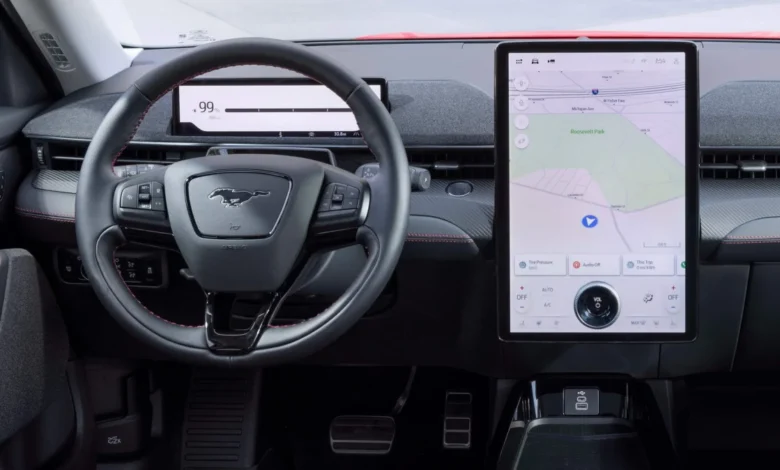
For any electric vehicle operator, the instrument cluster is a primary source of trust, relying on readouts to accurately convey remaining range, state of charge, and overall battery health. However, a newly announced recall reveals an unexpected failure mode in a small subset of Ford Mustang Mach-E crossovers, where a previous repair has inadvertently introduced a dangerous software flaw. Ford Motor Company has officially initiated a safety recall affecting 86 vehicles from the 2023 through 2025 model years, all equipped with lithium iron phosphate (LFP) high-voltage battery packs.
The issue stems from replacement Battery Energy Control Modules (BECMs) that fail to properly handshake with existing hardware during service intervals. Rather than adopting the true health parameters of the vehicle’s established battery pack, the newly installed control modules default to a pristine, factory-fresh 100 percent State of Health (SOH). This software glitch creates a cascade of miscalculations that can ultimately result in unexpected powertrain power limitations and a complete loss of motive power while out on the road.
Understanding the Technical Flaw: How a Control Module Fix Backfired
At the heart of the recall is the Battery Energy Control Module, an essential computer component tasked with monitoring cell voltages, pack temperatures, state of charge, and long-term battery degradation. When an LFP-equipped Mustang Mach-E undergoes servicing that requires a replacement BECM, the new module is programmed to oversee the vehicle’s high-voltage architecture.
Under normal operational protocols, the replacement BECM should query the high-voltage battery to inherit its historical usage data, accounting for natural capacity fade, internal resistance changes, and age. Instead, due to a software programming error within these specific replacement units, the BECMs fail to pull this historical data and arbitrarily default the State of Health to 100 percent.
Because the vehicle’s onboard computers operate under the assumption that the battery pack is in brand-new condition, the instrumentation displays an artificially inflated State of Charge (SOC). Drivers believe they possess significantly more usable energy than what is physically stored in the LFP cells. As the vehicle is driven and energy is depleted, the mismatch between the displayed range and the actual battery depletion leads to abrupt system corrections.
Once the battery’s real-world charge drops to critical thresholds that the car’s computer failed to anticipate, the powertrain management system initiates fail-safe measures. Drivers may be alerted by a "wrench" warning light or a "turtle" icon on the dashboard, followed immediately by severe power limitations. In worst-case scenarios, the vehicle can experience a total and unexpected loss of motive power in traffic, presenting a substantial safety hazard.
Secondary Risks: Lithium Plating and Thermal Concerns
Beyond the immediate threat of sudden power loss, the miscalculated State of Health introduces longer-term chemical and physical risks to the battery cells. Ford’s engineering analysis indicates that operating an LFP battery with an incorrect SOH parameter can disrupt charging algorithms—particularly during high-output DC fast-charging sessions.

Over time, repeated fast-charging cycles managed by a BECM that overestimates the battery’s health can accelerate a phenomenon known as lithium plating. This occurs when lithium ions fail to intercalate properly into the graphite or carbon anode structure during charging, instead depositing as metallic lithium on the surface of the anode. Severe lithium plating not only permanently degrades battery capacity and accelerates cell aging but can also increase internal resistance, elevating the risk of thermal venting and, in extreme cases, potential vehicle fires.
Fortunately, Ford has stated that it is not aware of any accidents, injuries, property damage, or thermal incidents tied directly to this defect. Furthermore, the automaker had received no field reports concerning the SOH overestimation problem prior to filing the recall with federal regulators, allowing the company to address the flaw preemptively before catastrophic failures manifest in the field.
Scope of the Recall and Affected Population
The recall remains remarkably localized, encompassing an estimated 86 vehicles in total across the United States. Ford’s internal database tracing and part-replacement records indicate a 100 percent defect rate among the targeted population, meaning every single vehicle that received the replacement BECM is impacted by the software calibration error.
The affected pool is strictly limited to select 2023, 2024, and 2025 model year Ford Mustang Mach-E crossovers built with lithium iron phosphate battery packs that have previously undergone service work involving the installation of a replacement BECM. Standard production models that have never required a BECM replacement are not subject to the recall.
The Remediation Process: Software Over Hardware
To resolve the issue, Ford dealerships will perform a targeted software update to the Battery Energy Control Module. Unlike the initial repair that necessitated physical hardware replacement, the remedy relies on digital calibration.
The forthcoming software patch is designed to command the replacement BECM to override its default 100 percent assumption and correctly read, download, and utilize the actual State of Health data recorded by the vehicle’s existing LFP battery pack. Once the software is successfully installed and calibrated, the instrument cluster will reflect accurate range and charge estimations, eliminating the risk of unannounced power drops and halting abnormal charging behaviors.
Ford plans to notify affected owners through official mail notifications, guiding them to schedule service appointments at certified dealership service centers. Given the small number of vehicles involved, the service campaign is expected to proceed rapidly. Dealerships will perform the software update free of charge to vehicle owners.
Broader Industry Implications: The Complexity of Modern EV Architecture
While a recall affecting only 86 vehicles is statistically negligible in the context of mass automotive manufacturing, the incident underscores a broader, critical narrative surrounding modern electric vehicle technology. As vehicles transition away from purely mechanical linkages toward heavily digitized, software-defined architectures, the interdependence of disparate electronic control units becomes absolute.

Modern EVs rely on millions of lines of code to orchestrate everything from thermal management to high-voltage energy distribution. When a single replacement module fails to synchronize properly with existing legacy hardware, the resulting safety ramifications can mimic mechanical failures of the past.
For legacy automakers like Ford, which are actively managing the complex transition from internal combustion engines to fully electric lineups, rigorous software validation during dealership service operations is vital. Ensuring that aftermarket replacement parts and service-center software flashes communicate seamlessly with onboard battery management systems will remain a top priority for quality control divisions industry-wide.
For the 86 Mustang Mach-E owners affected by this glitch, the resolution is straightforward, but the event serves as a stark reminder of the digital intricacies humming quietly beneath the sheet metal of today’s zero-emission vehicles.
Related posts: