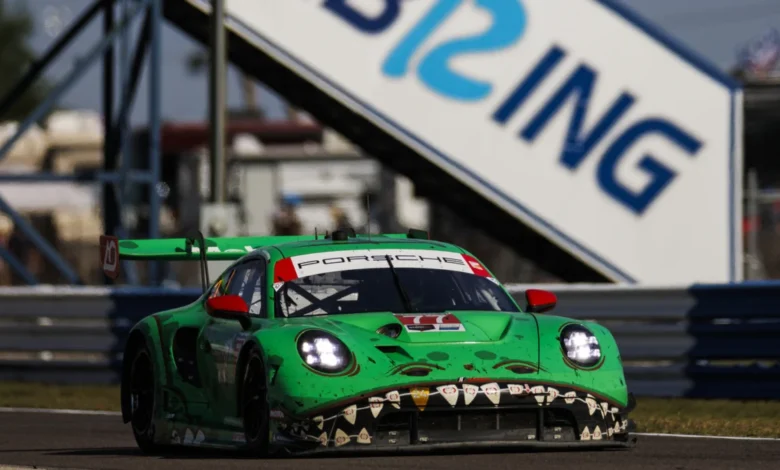
Automotive technology has advanced profoundly since the first motorized vehicles navigated public roads more than 140 years ago, evolving far beyond the confines of standard commuter research and development. While everyday consumer vehicles are subjected to rigorous safety standards, simulated crash testing, and millions of miles of public testing, the proving grounds of professional motorsport have historically served as the ultimate crucible for automotive engineering. High-performance racing pushes machines, materials, and human endurance to absolute extremes, providing an accelerated testing environment where structural designs, mechanical systems, and safety features are tested, broken, and perfected at high velocity.
Many of the mundane, everyday features found in modern passenger cars—from the mirrors drivers rely on during their morning commutes to the complex biomechanical research dictating airbag deployment timing—originated on race tracks around the world. Although some of these life-saving advancements were forged in the tragic wake of catastrophic accidents, the relentless dedication of automotive safety engineers, motorsports sanctioning bodies, and racing pioneers has transformed these track-side solutions into invisible guardians of daily highway travel. Understanding the journey of these technologies from the circuit to street duty reveals the deep, symbiotic relationship between competitive motorsport and consumer automotive safety.
From the Indy 500 to the Commuter Dash: The Evolution of Rearview Visibility
The integration of basic driver awareness tools into mainstream vehicles often has surprising roots in early competitive racing. Among the simplest yet most transformative inventions adopted from the track is the rearview mirror, which made its first recorded competition appearance at the Indianapolis 500 in 1911.
Prior to this innovation, racing regulations at major events frequently mandated that competitive cars carry both a driver and a riding mechanic. The mechanic’s role was multifaceted: they monitored vital oil and engine pressures, hand-pumped fuel systems, and continuously looked backward over the tail of the car to warn the driver of approaching competitors attempting to overtake. During the 1911 Indianapolis 500, driver Ray Harroun sought a competitive weight and aerodynamic advantage. By deciding to race solo without a riding mechanic, Harroun faced a significant blind spot regarding the rest of the 40-car field barreling down behind him.
To solve this dilemma, Harroun mounted a small piece of glass salvaged from a discarded vehicle onto brackets above his dashboard, creating the automotive world’s first makeshift rearview mirror. Although competing drivers initially protested the device, arguing it was a dangerous distraction that allowed Harroun to ignore traffic around him, Harroun went on to win the grueling 500-mile race from the 22nd starting position. The utility of the device was immediately undeniable. Within a decade, rear-facing mirrors transitioned from eccentric racing modifications to standard equipment on production automobiles, fundamentally changing how drivers monitor their surroundings.
Mastering Stopping Power: Disc Brakes and Hydraulic Systems
While seeing behind a vehicle prevented sudden collisions, stopping safely from high speeds demanded an entirely separate engineering revolution. Modern passenger car braking systems are marvels of hydraulic efficiency and thermal management, capabilities developed primarily to tame high-horsepower endurance race cars.
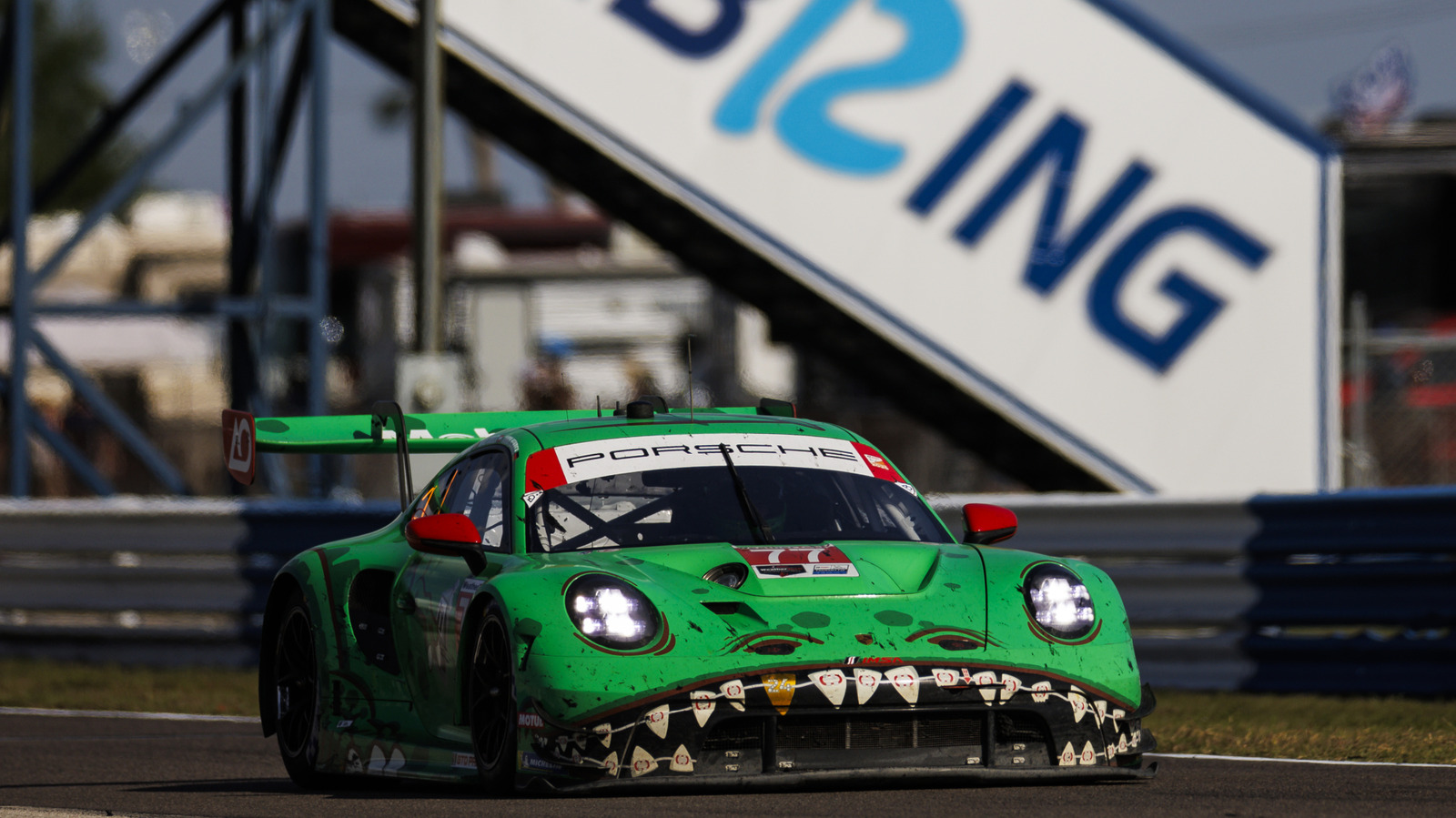
The hydraulic brake system, which uses fluid pressure to simultaneously apply stopping force to all four wheels, was championed by the Duesenberg brothers in American passenger cars as early as 1921, directly following its successful implementation in racing applications. Before hydraulic actuation, mechanical cable systems were prone to uneven tension, stretching, and rapid wear, making high-speed braking inconsistent and dangerous.
Decades later, the relentless pursuit of endurance racing victory birthed the modern disc brake. During the 1953 24 Hours of Le Mans, Jaguar fitted its revolutionary C-Type race cars with Dunlop disc brakes. Traditional drum brakes, which were standard at the time, relied on internal shoes pressing outward against a spinning drum. Under heavy braking from high speeds—such as the massive deceleration required at the end of Le Mans’ long Mulsanne Straight—drums accumulated immense heat, leading to catastrophic "brake fade" where stopping power diminished severely.
Disc brakes exposed the rotor to cooling airflow, offering superior heat dissipation, consistent pedal feel, and unmatched resistance to fade. The performance advantage was so decisive that Jaguar secured victory at Le Mans. The technology quickly trickled down to consumer markets, with the 1955 Citroën DS becoming the first production vehicle to feature disc brakes as standard equipment, permanently altering the benchmark for vehicle stopping distances.
Tire Technology and Environmental Resilience
Tire development represents another critical intersection between motorsport and consumer safety. The extreme lateral G-forces, high rotational speeds, and intense thermal loads experienced during professional racing require tire compounds and internal constructions capable of surviving catastrophic failure.
Innovations originally formulated for racing slicks and wet-weather racing tires have directly informed the all-season and winter tires utilized by everyday commuters. Tread pattern engineering designed to efficiently channel standing water away from the contact patch—mitigating the dangerous hydroplaning effect on rain-slicked highways—was heavily refined on motorsport circuits where wet-weather races demand uncompromising traction. Furthermore, advanced rubber compounding techniques, silica enhancements, and even the integration of durable synthetic fibers like Kevlar, initially tested under the brutal conditions of rally racing and endurance sports car events, now protect everyday drivers from punctures and structural tire degradation.
Biomechanical Research and Structural Integrity
Perhaps the most impactful, albeit somber, category of safety transfer involves biomechanical research aimed at protecting the human body during high-speed deceleration. The tragic history of motorsport accidents has frequently served as the catalyst for rigorous anatomical study and structural safety design.
The Head and Neck Support (HANS) device stands as one of the most significant safety advancements in modern racing history. Developed in the mid-1980s by biomechanical engineer Dr. Robert Hubbard and racing driver Jim Downing in the wake of fatal basal skull fractures, the carbon-composite collar restrains the driver’s head relative to their shoulders during a high-impact frontal collision. Without such a device, the body is restrained by the seatbelts while the head continues forward with immense kinetic energy, frequently resulting in fatal basilar skull fractures.
Although the adoption of the HANS device across professional motorsports was tragically delayed until after the deaths of racing icons such as Ayrton Senna and Dale Earnhardt in the 1990s and early 2000s, its ultimate universal enforcement successfully eliminated this specific mode of fatality from top-tier racing. Interestingly, Jim Downing was the creator, and racing legend Paul Newman was only the second driver ever to utilize the experimental safety device, helping to validate its design in competitive environments.
While everyday commuters do not strap themselves into a rigid HANS collar before driving to the grocery store, the biomechanical data, crash-test telemetry, and anatomical insights gathered during HANS research fundamentally transformed cabin safety. Engineers utilized this data to optimize head-restraint geometry, refine the dynamic relationship between modern seats and three-point seatbelts, and calibrate airbag deployment timing to prevent whiplash and severe cervical spine trauma in consumer vehicles.
Crumple Zones and Energy Management
Beyond localized restraint systems, the fundamental architecture of the modern passenger vehicle owes its life-saving capabilities to racing safety engineering. Early automobiles were constructed with rigid, inflexible frames designed to withstand impacts without bending. However, automotive researchers eventually realized that rigid frames transferred the full force of a collision directly to the vehicle’s occupants.
Drawing inspiration from open-wheel racing chassis and touring car safety cages designed to absorb kinetic energy progressively, automotive engineers introduced engineered crumple zones in the mid-20th century. These strategically weakened structural zones are designed to buckle, fold, and crumple in a controlled manner during an impact, effectively lengthening the duration of the crash pulse and dissipating destructive kinetic energy away from the passenger cabin.
Combined with high-strength steel intrusion beams, reinforced safety cells, modern airbags, and seatbelt pretensioners, these structural concepts ensure that modern commuter cars offer unprecedented levels of occupant protection.
Broader Impact and Future Implications
The pipeline from racetrack innovation to consumer automotive safety highlights the vital role that competitive motorsport plays in global transportation. Far from being merely a high-speed form of entertainment, professional racing operates as an aggressive research and development laboratory where ideas are tested under the harshest possible conditions.
As the automotive industry transitions rapidly toward electrification, autonomous driving, and advanced driver-assistance systems (ADAS), the racetrack continues to serve as the ultimate testing ground. Formula E, endurance hybrid prototypes, and autonomous racing series are currently stress-testing battery management software, regenerative braking algorithms, and advanced sensor arrays that will inevitably govern the next generation of consumer vehicles. Through the dedication of engineers, racing teams, and safety advocates, the lessons learned on the circuit will continue to safeguard millions of drivers on public roads for decades to come.