Ukraine: Oleshky ceasefire offers “hope” for civilians as attacks on aid vehicles continue

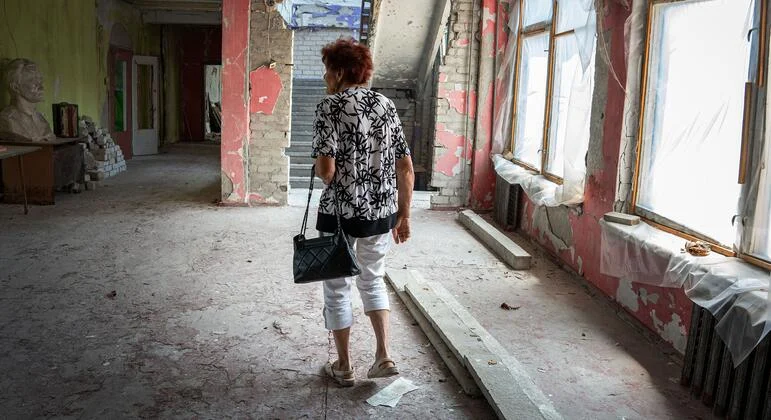
The ongoing temporary ceasefire in the strategic southern Ukrainian city of Oleshky has offered a fragile window of relief for trapped non-combatants, even as escalating aerial assaults across the country continue to endanger humanitarian workers, civilian infrastructure, and critical energy grids. United Nations officials have cautiously welcomed the cessation of hostilities on the Russian-controlled left bank of the Dnipro River, emphasizing that the preservation of human life and the facilitation of voluntary evacuations must remain paramount as winter approaches.
The localized ceasefire, which was brokered by United States First Lady Melania Trump and formally announced by the White House on October 23, 2026, was designed to alleviate a severe humanitarian emergency. Residents trapped in Oleshky—situated just across the river from the regional hub of Kherson—have faced immense hardships, including shortages of food, medical supplies, and safe drinking water, compounded by continuous military engagements. As the clock ticks down toward the expiration of the agreement on the evening of November 1, international observers and aid organizations are racing to assess the total impact of the pause and to prepare for potential waves of displaced persons.
UN Emergency Relief Coordinator Tom Fletcher underscored the critical nature of the temporary calm in a statement disseminated via social media and endorsed by the UN Secretary-General’s Spokesperson. "Let this pave the way for vital aid to get in, and more humanitarian access on both sides of the frontline," Mr. Fletcher stated, highlighting the urgent necessity of extending humanitarian corridors beyond this isolated agreement.
While the United Nations has confirmed that it did not directly broker or participate in the tactical evacuations of hundreds of civilians from Oleshky, UN agencies and local partners have established robust reception mechanisms on the Ukrainian-controlled side of the frontline. These teams are actively providing emergency humanitarian aid, psychological support, and temporary shelter provisions to evacuees as they arrive from the contested zone.
The Fragile Chronology of the Oleshky Truce
To understand the weight of the current situation in Oleshky, observers must look at the broader timeline of the Dnipro River frontlines, which have remained one of the most volatile sectors of the conflict. Since the autumn of 2022, when Ukrainian forces successfully liberated the right bank of Kherson, the wide expanse of the Dnipro River has served as a formidable natural barrier and a deadly line of contact.
For years, towns and villages on the Russian-occupied left bank—including Oleshky, Nova Kakhovka, and Hola Prystan—have endured systematic isolation, exacerbated by the catastrophic destruction of the Kakhovka Dam in June 2023. That ecological and humanitarian disaster displaced thousands and permanently altered the landscape, cutting off traditional supply lines and rendering daily survival precarious.
The announcement of the Oleshky ceasefire on October 23, 2026, marked a rare diplomatic breakthrough facilitated by high-level international mediation. Unlike sweeping national ceasefires that have repeatedly failed to materialize, this localized arrangement focused strictly on a designated pocket of humanitarian distress. Over the subsequent days, reports indicated that hundreds of vulnerable civilians—particularly the elderly and families with young children—utilized the brief window to cross toward safer territory. However, humanitarian agencies have continually stressed that a multi-day pause is insufficient to address the deep-rooted infrastructural collapse of the region, leading to intense diplomatic pressure for an extension of the agreement.
Escalation in Aid Vehicle Attacks Across the Frontline
Even as the Oleshky ceasefire provided a localized glimpse of hope, the broader security landscape across Ukraine deteriorated sharply during the final week of October 2026. The United Nations Office for the Coordination of Humanitarian Affairs (OCHA) reported a disturbing spike in direct kinetic strikes targeting humanitarian transport and civilian aid missions, actions that constitute severe violations of international humanitarian law.
On Thursday, October 29, two separate humanitarian missions came under direct drone attack in the Zaporizhzhia and Donetsk regions. In the Zaporizhzhia region, a clearly marked civilian transit bus was struck by an unmanned aerial vehicle. The attack resulted in the immediate death of one woman and left multiple passengers and the driver with varying degrees of shrapnel and blast injuries.
The targeted bus was not a makeshift vehicle; it was an integral component of a community transportation network supported by the OCHA-managed Ukraine Humanitarian Fund. This vital service provides essential mobility and evacuation links for a rural community comprising more than 1,600 residents who have been cut off from commercial transport networks.
Simultaneously, in the frontline city of Sloviansk within the Donetsk region, an armored evacuation vehicle operated by aid workers was struck. Although the specialized armor prevented catastrophic loss of life, two evacuees sustained injuries during the blast. These incidents underscore the rapidly escalating risks faced by humanitarian personnel who operate in close proximity to active combat zones.
"Attacks against civilians, attacks against civilian infrastructure, and attacks targeting humanitarians are unacceptable and must stop," stated Stéphane Dujarric, Spokesperson for the UN Secretary-General, during a regular press briefing at UN Headquarters. The international community has repeatedly reminded all parties to the conflict of their obligations under the Geneva Conventions to respect and protect humanitarian relief personnel and assets at all times.
Wider Devastation: Strikes in Chernihiv, Poltava, and Dnipro
The intensification of aerial bombardment has not been restricted to frontline logistical routes. Urban centers far from the immediate line of contact have experienced deadly multi-wave missile and drone strikes, compounding civilian casualties and paralyzing essential public services.
According to updates provided by Ukrainian regional authorities and corroborated by international monitors, a wave of strikes hammered the Chernihiv, Kharkiv, and Poltava regions. In the Chernihiv region, localized impacts resulted in the deaths of two children and left 37 other individuals injured over a compressed 24-hour period. Concurrently, in the industrial city of Kremenchuk within the Poltava region, a high-precision strike struck populated areas, killing three people and injuring 28 others.
Humanitarian organizations have mobilized emergency response teams to these northern and central regions, distributing hot meals, cash assistance programs, emergency shelter materials, legal aid, and heavy-duty plastic sheeting for temporary repairs to shattered residential properties. Yet, the sheer frequency of the attacks threatens to overwhelm local response capacities.
Of particular concern to international monitors is the systematic targeting of Ukraine’s energy infrastructure as winter weather sets in. OCHA reported that a devastating drone strike on the main railway station in the major central city of Dnipro on Thursday claimed multiple civilian lives. Initial media reports and municipal updates placed the death toll at 15 individuals, including several children who were either waiting for transport or sheltering near the transit hub.
Addressing the Dnipro railway station bombing, Spokesperson Dujarric noted that the incident was far from an anomaly. "This is not an isolated case," Dujarric emphasized, pointing to a coordinated series of recent strikes targeting metropolitan areas such as Kyiv, Kharkiv, Odesa, and Zaporizhzhia. "All of these attacks are violations of international humanitarian law, and they must stop."
The destruction of energy nodes has had immediate cascading effects on civilian populations. In the Dnipro region alone, power grid disruptions resulting from strikes left approximately 190,000 consumers entirely without electricity by Friday morning. Utility repair crews working under freezing conditions face constant threats of secondary strikes, severely delaying the restoration of heat and power to hospitals, schools, and residential apartment blocks.
Humanitarian Implications and International Responses
The convergence of the Oleshky ceasefire and the nationwide escalation of drone and missile attacks highlights the complex, dual-track reality of the war in Ukraine as it approaches its fifth consecutive winter of full-scale conflict.
From a strategic perspective, localized humanitarian pauses like the one negotiated in Oleshky demonstrate that targeted diplomatic interventions can yield tangible results for trapped non-combatants. Analysts note, however, that such arrangements remain exceptionally fragile unless backed by robust, verifiable monitoring mechanisms and a genuine commitment from military commanders on both sides to uphold the sanctity of humanitarian corridors.
Conversely, the rise in attacks on aid vehicles and energy infrastructure points to a deteriorating compliance with the rules of war. Humanitarian organizations are increasingly forced to weigh the imperative of delivering life-saving assistance against the unacceptable risk to staff and volunteer lives. The neutralization of transport networks—such as the targeted Zaporizhzhia bus and the Sloviansk evacuation vehicle—directly impedes the ability of vulnerable populations to escape active combat zones, effectively trapping them in areas prone to heavy shelling.
Furthermore, the destruction of civilian infrastructure ahead of the winter months represents a clear strategic effort to degrade societal resilience. With hundreds of thousands of civilians facing prolonged power outages and compromised heating systems, the humanitarian caseload is projected to expand significantly in the coming weeks.
As the Oleshky ceasefire approaches its scheduled expiration on the evening of November 1, the United Nations and various international humanrights bodies are calling for an immediate extension of the humanitarian pause, alongside universal guarantees for the safety of aid workers and critical infrastructure. Without sustained diplomatic engagement and strict adherence to international humanitarian law, the brief glimmer of hope offered to the residents of Oleshky risks being entirely overshadowed by the relentless expansion of hostilities across the country.