Canelo Alvarez and Christian Mbilli make weight for WBC super-middleweight world championship fight in Riyadh

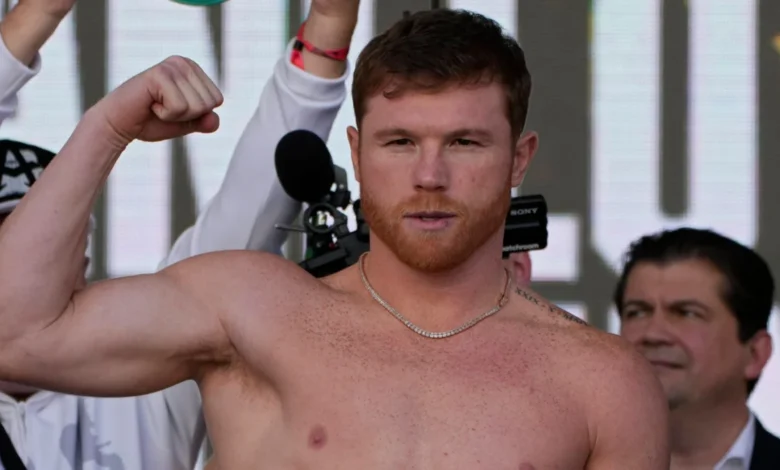
The weigh-in, held under the intense scrutiny of the boxing world, saw Mexican icon Saul "Canelo" Alvarez tip the scales at 167.6 lbs, while his opponent, the undefeated Frenchman Christian Mbilli, came in marginally heavier at 167.8 lbs. The bout, set to take place in the heart of Saudi Arabia, marks a pivotal juncture in the careers of both men: for Alvarez, it is a quest for redemption following a career-defining loss; for Mbilli, it is the opportunity to cement his status as an elite force in the 168-lb division.
The Road to Riyadh: A Contextual Overview
This showdown serves as the headline event in a series of high-profile boxing matches hosted by Saudi Arabia as part of the nation’s "Vision 2030" initiative, which seeks to establish the Kingdom as a premier global hub for international sports and entertainment. However, the event has drawn attention for reasons beyond the athleticism on display. The ongoing geopolitical instability in the region, characterized by periodic security threats, has cast a long shadow over the logistics of the event. Despite reports of drone and missile activity targeting infrastructure in the proximity of the capital, organizers have insisted that safety protocols remain robust and that the event will proceed as scheduled.
For Alvarez, the pressure to perform is unprecedented. His previous outing—a stunning, tactical defeat to Terence Crawford—sent shockwaves through the sport, ending his long-standing dominance as the undisputed champion. With the subsequent retirement of Crawford, the WBC title became vacant, paving the way for this contest. Alvarez, ever the pragmatist, has eschewed "tune-up" fights, choosing instead to test his mettle against the formidable and aggressive Mbilli immediately.
The Challenger’s Mentality and the Champion’s Rise
In the build-up to the weigh-in, the psychological dynamic between the two fighters has been stark. Alvarez, a veteran of dozens of championship bouts, spoke with the quiet confidence of a man who has experienced the highest peaks and the lowest valleys of the sport. "I’m the challenger now, but in my mind, I’ve always been the champion, ever since I was a little kid," Alvarez remarked during the pre-fight press conference. He emphasized that he has no interest in soft touches or easy paths to recovery, stating, "I don’t believe in shortcuts. I want to become a world champion again, and that’s why I want to face the best."
Conversely, Christian Mbilli enters the ring with the hunger of a man looking to dismantle an era. With a professional record of 30 fights and zero losses, the Cameroonian-born French boxer has earned a reputation for a high-volume, relentless pressure style. Mbilli’s camp has been vocal about his readiness to transition from a top-tier contender to a bona fide pound-for-pound superstar. "I have a lot of respect for Canelo and his career, and I congratulate him on everything he has achieved," Mbilli stated. "But inside the ring, it will be a different story, and I’m coming to win. I’m ready to shock the world."
Statistical Breakdown and Tactical Implications
From a technical standpoint, the fight presents a clash of styles. Alvarez remains one of the most defensively sound and counter-punching-oriented fighters in history, relying on head movement, feints, and explosive power. His performance against Crawford, while losing, showcased his ability to go the distance against elite opposition, though it also highlighted a potential vulnerability to superior hand speed and tactical discipline.
Mbilli, by contrast, thrives in the pocket. His statistical profile shows a high output of punches per round, a stark contrast to the more patient, calculated approach favored by Alvarez in recent years. Analysts suggest that if Mbilli can force a "dogfight" and sustain his high-intensity output, he may be able to stifle Alvarez’s ability to set his feet and land power shots. However, the veteran instinct of the Mexican superstar cannot be discounted. Alvarez has spent over a decade dismantling various styles, and his ability to adjust mid-fight is widely considered his greatest asset.
The Legacy Debate
The narrative surrounding this fight has inevitably drifted toward the concept of "legacy." Former world champion Matthew Hatton, who faced Alvarez in 2011, provided a sobering perspective on the stakes involved. Speaking on the Toe2Toe podcast, Hatton suggested that while Alvarez remains a formidable force, the risks of continuing to compete at this level are significant.
"I do think he’s still got enough left to beat Mbilli. I think it’s an interesting fight," Hatton noted. "But I know people say it doesn’t tarnish their legacy, but for me, slightly, it does. If he were to lose to Mbilli on the weekend, for me, it does tarnish that a little bit. We all look at that differently. I would like to see him retire now. Personally, I would like to see Canelo stop now; he’s had such a good career, he’s had a fantastic legacy, and I think it’s a shame when they go on too long."
This sentiment reflects a growing discussion in the boxing community regarding the "twilight" years of legendary fighters. The history of the sport is replete with icons who lingered too long, often suffering losses to younger, hungry contenders that retroactively affected how fans viewed their peak years. For Alvarez, a victory on Saturday would silence critics and reinforce his status as the division’s kingpin. A loss, however, would force an immediate and difficult conversation about his future in the sport.
The Geopolitical and Economic Backdrop
The decision to host the fight in Riyadh is indicative of the shifting geography of professional boxing. As traditional markets like Las Vegas and New York continue to host massive events, the influx of capital from the Middle East has changed the economic landscape for fighters. The financial incentives offered by Saudi organizers are often significantly higher than those available in traditional arenas, which is a major factor for veteran fighters looking to maximize their earnings in the final stages of their careers.
However, the hosting of these events has not been without controversy. Human rights organizations have often criticized the use of high-profile sporting events to improve the image of the host nation, a process often referred to as "sportswashing." Furthermore, the regional security climate adds an element of unpredictability to any major event held in the area. Security teams for both camps have reportedly been working closely with local authorities to ensure that the fighters and their entourages remain insulated from the regional volatility.
Looking Ahead: The Post-Fight Horizon
Regardless of the outcome, the aftermath of this fight will have a cascading effect on the super-middleweight division. Should Alvarez win, the calls for a rematch with high-level contenders or a potential move to a different weight class will intensify. The WBC has indicated that the winner will be mandated to defend the title against the top-ranked contenders in the organization’s rankings, ensuring that the division remains active and competitive.
For Mbilli, a victory would catapult him into the conversation for "Fighter of the Year" and make him the most targeted man in boxing. It would represent a changing of the guard, a moment where the next generation finally supplants the established icon.
As the fighters head into the final hours before the opening bell, the atmosphere is electric. Both men have fulfilled their contractual obligations, the weight is made, and the tactical game plans are set. What remains is the reality of the ring—a place where statistics, legacies, and geopolitical concerns vanish, leaving only two men to determine who is the rightful heir to the WBC throne. For the fans watching globally, this is not just a fight; it is a referendum on the career of a modern legend and a test of the resolve of a hungry, undefeated challenger. The world waits to see if Canelo Alvarez can recapture his former glory or if the era of Christian Mbilli has officially arrived.