The legal battle over border security construction in West Texas has escalated to the U.S. Supreme Court, setting the stage for a landmark decision that could pit national security mandates against the preservation of one of America’s most rugged and ecologically sensitive landscapes. At the center of the conflict is a federal injunction, currently in place, that has brought the Trump administration’s plans for road building, surveillance infrastructure, and physical barriers within and around Big Bend National Park to a standstill. As the administration petitions the high court to vacate this stay, a coalition of conservationists, local business owners, and regional stakeholders are fighting to ensure that the environmental and economic integrity of the Chihuahuan Desert remains protected from what they describe as permanent, irreversible industrialization.
The Genesis of the Dispute
The current impasse is the result of a contentious effort by the Department of Homeland Security (DHS) and Customs and Border Protection (CBP) to extend, fortify, and modernize the border barrier system in the Big Bend sector. While the federal government views the area as a potential "blind spot" that could be exploited by transnational criminal organizations, local residents and environmental advocates argue that the region’s natural geography—marked by 1,500-foot limestone canyons and harsh, waterless desert terrain—serves as a sufficient natural barrier.
The litigation, which originated in federal district court, centers on the government’s attempt to bypass traditional environmental review processes—such as those required by the National Environmental Policy Act (NEPA)—by invoking emergency waivers. On October 2, 2026, U.S. District Judge Kathleen Cardone issued a pivotal order halting construction, citing a lack of justification for bypassing standard oversight and noting that the Big Bend sector consistently records the lowest apprehension rates of any border sector in the United States.
Chronology of a Regulatory Clash
The escalation of the current standoff follows a series of administrative and judicial maneuvers that began earlier this year:
- May 2026: Customs and Border Protection acknowledges in public filings that the topography of Big Bend, characterized by the Chisos Mountains and deep, inaccessible canyons, acts as a significant deterrent to foot traffic.
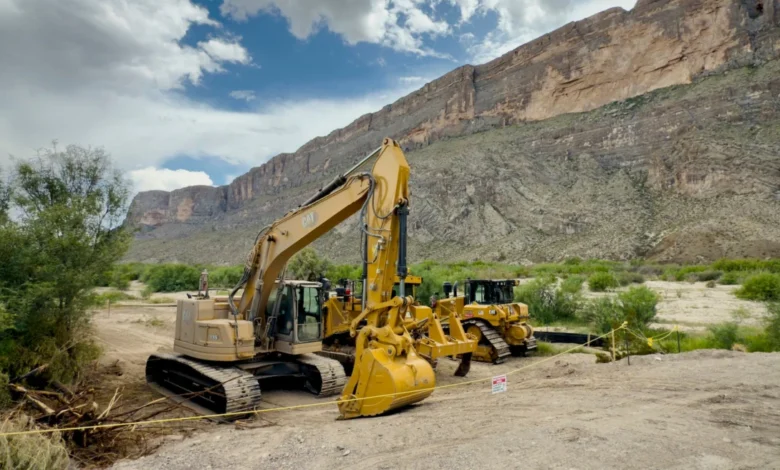
- August 13, 2026: Photographic evidence captures heavy machinery, including excavators and bulldozers, clearing land near Santa Elena Canyon, signaling the start of intensive construction work.
- October 2, 2026: Judge Kathleen Cardone issues a temporary injunction blocking further construction, citing potential irreparable harm to the ecosystem and the lack of a clear security imperative for the specific site.
- October 21, 2026: The Department of Justice files an emergency appeal, arguing that the injunction hampers national security and leaves a "300-plus-mile gap" in the nation’s border defenses.
- October 29, 2026: A coalition of plaintiffs, including the Center for Biological Diversity and local river guides, files a 50-page response urging the Supreme Court to uphold the injunction.
- October 30, 2026: The administration issues a final reply to the Court, maintaining that the judiciary lacks the authority to override executive branch decisions regarding border security.
Environmental and Economic Stakes
The environmental arguments against the project are rooted in the fragility of the Chihuahuan Desert. Jeffrey Renfrow, an ecologist and director of Rio Bravo Restoration, has provided extensive testimony regarding the long-term degradation of the region’s hydrology and soil health. According to Renfrow and supporting data from the U.S. Forest Service, the biological soil crusts—delicate living mats that stabilize the desert floor—can take up to a century to recover once disturbed by heavy machinery. The destruction of these crusts does not merely strip the land of vegetation; it initiates a cycle of erosion that alters the flow of water during flash floods, potentially causing lasting damage to riparian habitats along the Rio Grande.
Beyond the environmental impact, the local economy faces a distinct existential threat. The Big Bend region thrives on a tourism model built on wilderness, solitude, and the unique, untamed nature of the park. Billy Miller, a veteran rafting guide, has been vocal about the transformation of the landscape into a "military-industrial complex." For towns like Terlingua, Presidio, and Marfa, the loss of this wilderness aesthetic could lead to a decline in the very tourism that sustains their communities. The concern is that the installation of 30-foot walls and permanent surveillance roads will irrevocably shatter the "Big Bend experience," effectively deterring the visitors who sustain the local economy.
Security Claims and Statistical Context
The government’s primary justification for the project remains the presence of the Sinaloa and Juarez cartels in Northern Mexico. Government attorneys argue that criminal syndicates are inherently opportunistic, and that any perceived weakness in border infrastructure will invite illicit activity. In their filing to the Supreme Court, the administration emphasized that the absence of a physical barrier creates a strategic vulnerability that jeopardizes the safety of the interior.
However, statistics compiled by Border Patrol tell a more nuanced story. Despite the administration’s assertion that the region is a high-risk corridor, the Big Bend sector has historically maintained the lowest apprehension rate per mile among all southern border sectors. This discrepancy between the government’s stated threat level and the statistical reality on the ground forms the backbone of the plaintiffs’ case. Judge Cardone’s original ruling noted that the government’s plan, which includes 17 miles of vehicle barriers and various surveillance technologies, appears disproportionate to the actual patterns of border crossing observed in this specific sector.
Broader Implications for Administrative Law
The Supreme Court’s eventual ruling in this matter will have implications that reach far beyond the borders of Texas. At its core, the case addresses the limits of executive power when it comes to suspending environmental regulations in the name of national security. The government’s use of legislative waivers to expedite construction projects has been a point of contention for decades, but the scale and location of the Big Bend project have brought the issue to a head.
If the Supreme Court sides with the administration, it will effectively signal that national security concerns can almost unilaterally override the environmental safeguards established by Congress, regardless of the unique ecological status of the land in question. Conversely, if the Court upholds the injunction, it would force the government to go through the standard environmental review process, likely delaying construction for months or years while impact studies are conducted.
Voices from the Field
The human element of the conflict is perhaps most poignantly expressed by those who live in the shadows of the planned construction. Bill Guerra-Addington, a local rancher, has provided testimony describing the emotional and physical toll the work has already taken on his land. He reports that the increase in heavy vehicle traffic has led to a spike in wildlife fatalities and a fundamental change in the character of his property. For residents like Guerra-Addington, the debate is not merely an abstract legal argument about sovereignty or regulation; it is an intimate struggle to preserve a home and a way of life that has existed for generations.
Looking Ahead
As the nation waits for the Supreme Court’s decision, the status quo remains in a delicate state of flux. The construction equipment sits idle near Santa Elena Canyon—a silent testament to the ongoing deadlock between federal authorities and the local interests determined to keep the desert wild.
The outcome will be a defining moment for public lands management in the United States. Should the justices rule in favor of the administration, the landscape of the Big Bend region will be permanently altered by the introduction of steel and pavement. If they support the lower court’s decision, it will mark a rare but significant victory for those who advocate for the prioritization of ecological and cultural preservation over rapid infrastructure development. Regardless of the decision, the tension between securing the nation’s boundaries and honoring the integrity of its most protected landscapes is likely to remain a central challenge for policymakers for years to come. The case serves as a reminder that even in the most remote corners of the country, the clash between policy, environment, and community identity remains as potent as ever.
Related posts: