The Skeletal Aesthetic: How Human Anatomy Became the Blueprint for Architectural Innovation

"It should be harsh and cruel, as if made of bones," Antoni Gaudí wrote in his notes while sketching the Passion Façade of the Sagrada Família. This directive was not merely a stylistic choice; it was a profound shift in the philosophy of construction. While his Nativity Façade embraced the lush, pictorial imagery of life, the Passion Façade sought to evoke the stark, visceral reality of Christ’s suffering through the geometry of the human frame. Gaudí’s obsession with skeletal structure was a departure from the ornamental use of death in architecture, moving instead toward a functional emulation of the body as a self-supporting, load-bearing system. This evolution of design, where the skeleton serves as both form and foundation, represents a pivotal moment in architectural history, bridging the gap between ancient symbolic practice and modern structural engineering.

A Chronology of the Memento Mori in Design
The human fascination with the skeleton as an architectural motif is not a modern phenomenon, but a thread that weaves through millennia of human history. The practice of integrating skeletal remains into the built environment has served various purposes, from ancestral veneration to the stark reminder of mortality known as memento mori.
- 7,200 BCE: Early Neolithic communities in the Levant, specifically sites such as Jericho and Tell Aswad, began the practice of skull cults. Excavations have revealed human skulls plastered with lime and decorated with shells, displayed prominently in domestic spaces to maintain a tangible connection with deceased kin.
- 1300–1521 CE: The Aztec Empire utilized the tzompantli, or "skull rack," a massive wooden structure used to display the skulls of sacrificial victims. These structures were not merely macabre; they were calculated displays of political power and religious devotion, signaling the state’s authority over life and death.
- 1347–1351 CE: The arrival of the Black Death in Europe fundamentally altered the psychological landscape of the West. As death became an omnipresent reality, architecture responded with the proliferation of ossuaries—spaces designed to house the overflow of overcrowded churchyards.
- 1500s–1800s: Notable ossuaries like the Capela dos Ossos in Évora, Portugal, and the Sedlec Ossuary in Kutná Hora, Czech Republic, transformed human remains into decorative elements, featuring vaulted ceilings and pillars constructed entirely from bone.
- 1883–1926: The career of Antoni Gaudí marked a transition from the literal use of bone to the metaphorical and structural application of anatomy in civil architecture. Projects such as Casa Batlló and Casa Milà moved the skeleton from the crypt to the streetscape, challenging the traditional definition of a load-bearing wall.
Gaudí and the Anatomy of the Built Environment
Antoni Gaudí’s contribution to the "skeletal aesthetic" was rooted in a meticulous study of nature, which he famously described as the great book open for all to see. In Casa Batlló, often referred to as the "House of Bones," Gaudí utilized thin, arched stone columns that mimic the appearance of femurs and vertebrae. These were not mere aesthetic flourishes; they were structural necessities that allowed the building to maintain an open-plan interior without the need for traditional, heavy internal partitions.

Similarly, Casa Milà—frequently called "La Pedrera" or "The Stone Quarry"—features a self-supporting stone façade and a complex internal system of steel and brick arches that function similarly to a mammalian rib cage. By shifting the structural load to these "skeletal" columns, Gaudí allowed for the undulating, organic floor plans that define his work. Historians and structural engineers have noted that Gaudí was ahead of his time in applying biomimicry to architecture; his designs effectively distributed weight in a way that modern computer-aided design (CAD) software would later confirm as highly efficient.
Supporting Data: The Efficiency of Skeletal Design
Modern structural engineering has increasingly validated the intuitive genius of Gaudí’s skeletal approach. According to a 2018 study on structural biomimicry published by the Journal of Building Engineering, structures that replicate the branching and load-bearing patterns of human bone exhibit a higher strength-to-weight ratio than traditional rectilinear designs.

Data indicates that by mimicking the trabecular (spongy) bone structure—which consists of a lattice of interconnected plates and struts—architects can reduce the amount of concrete or steel required for a project by up to 20% without sacrificing structural integrity. This has profound implications for sustainable construction, as the reduction of raw material usage directly correlates to a lower carbon footprint for large-scale urban developments.
Institutional Perspectives on Skeletal Architecture
The architectural community remains divided on the application of skeletal forms, balancing the aesthetic benefits against the technical challenges of implementation. Architects who advocate for these designs, such as those influenced by parametricism, argue that skeletal structures represent the future of urban architecture.

"The skeleton is nature’s most refined engineering solution," notes Dr. Elena Vance, a scholar of structural aesthetics. "It is a system that grows and adapts to the loads placed upon it. When architects attempt to replicate this, they are not just creating a ‘look’; they are attempting to solve the fundamental problem of how to span space with the least amount of material."
Conversely, critics argue that the "skeletal" style can become overly self-indulgent, leading to designs that prioritize visual drama over functional, cost-effective housing. Furthermore, the maintenance of non-standard, curved, or organic forms remains significantly more expensive than standard orthogonal construction, which limits the viability of these designs to high-budget cultural or private commissions.

Broader Impact and Modern Implications
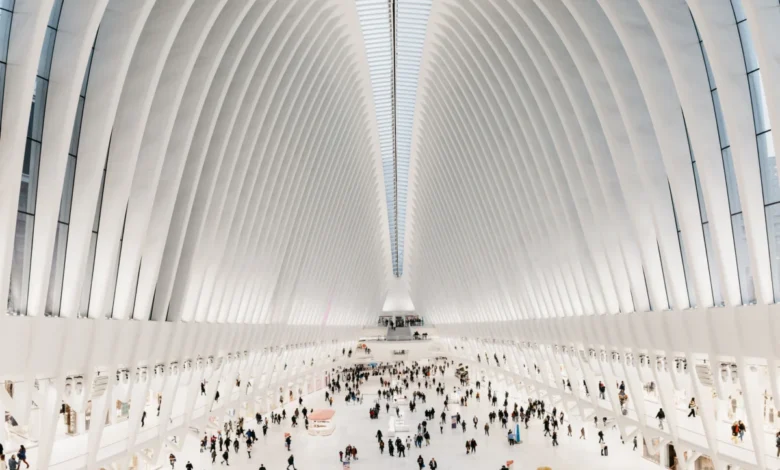
The movement away from the "box" in architecture has seen a resurgence in the 21st century. Contemporary firms, utilizing advanced 3D-printing and generative design tools, are now able to realize complex, skeletal forms that were previously impossible to calculate or construct. Projects such as the Heydar Aliyev Center by Zaha Hadid Architects or the various experimental pavilions produced by ETH Zurich demonstrate that the interest in skeletal anatomy is not a historical relic but a living field of inquiry.
The implication for the modern city is significant. As urban density increases, the demand for high-performance buildings that are lightweight and visually expressive becomes more pressing. The skeleton, as a template for stability and adaptation, offers a framework that resonates with both our biological history and our technological future.

The transition from the literal skull racks of the Aztec Empire to the high-tech, structurally optimized "bone-buildings" of the 21st century highlights a fundamental human drive: the need to project our own physical reality onto the world we inhabit. Whether through the somber reflection of mortality in an ossuary or the bold, structural ingenuity of a basilica, the skeleton remains a potent symbol. It reminds us that our structures, like our bodies, are temporary, yet the systems that hold them together—the bones of the building and the bones of the culture—are what allow us to endure. As architecture continues to evolve, the skeletal form will likely remain a foundational muse, proving that the most advanced technology is often that which has been staring us in the face since the dawn of our species.