The Intersection of Architecture and Athletics
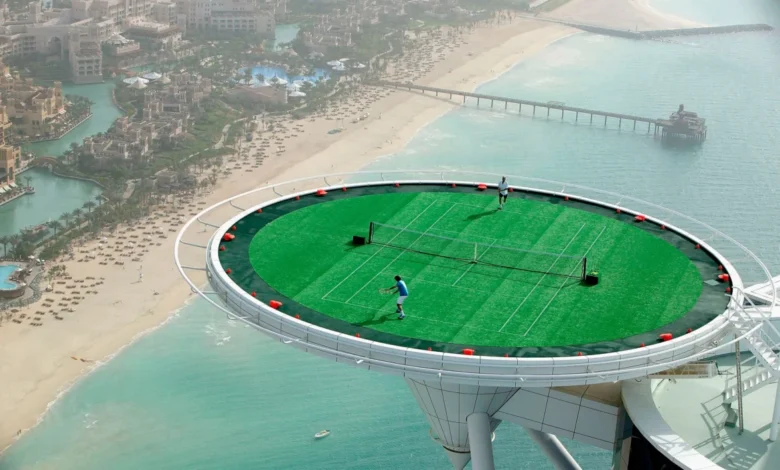
The design of a tennis court is rarely considered a pursuit of high architecture, yet the world’s most breathtaking facilities challenge this notion. When a playing surface is integrated into an extreme environment—whether carved into a mountainside or perched atop a skyscraper—it transforms from a mere recreational space into a site-specific installation. These courts transcend the basic geometric requirements of the sport, incorporating materials and sightlines that reflect their natural surroundings.

For architects and landscape designers, the challenge lies in balancing the rigid, high-performance requirements of a professional-grade court with the aesthetic demands of a luxury landscape. The regulation size of a standard tennis court is 78 feet by 27 feet for singles, and 78 feet by 36 feet for doubles. Adhering to these dimensions while navigating complex topographical challenges—such as drainage on a cliffside or wind mitigation on a rooftop—requires engineering precision that rivals the construction of major infrastructure projects.
.jpg)
A Historical Chronology of Venue Evolution
The evolution of tennis court design has mirrored the history of the sport itself. During the 19th century, tennis was primarily played on natural grass, favoring the aesthetic of the English lawn. As the sport transitioned into the modern era, the demand for more durable, consistent surfaces led to the widespread adoption of clay (crushed brick) and synthetic materials.

- Late 1800s: The standardization of the court at the All England Croquet and Lawn Tennis Club established the lawn court as the gold standard for prestige.
- 1970s: The US Open made a pivotal shift from grass to clay and eventually to hard courts (DecoTurf), reflecting the sport’s need for faster, more predictable play.
- The 21st Century: The modern era has seen a rise in "experiential design," where high-end resorts and private residences prioritize the view and the atmosphere of the court as much as the bounce of the ball.
Today, the most stunning facilities are no longer confined to major tournament sites. They are often found in private residences or boutique luxury hotels that view the tennis court as a centerpiece of lifestyle design.

Data-Driven Trends in Recreational Facility Design
Market research into luxury real estate suggests that tennis courts remain a top-tier amenity, particularly in the high-net-worth individual (HNWI) segment. According to recent industry reports, residential properties featuring custom-designed, multi-surface, or scenic tennis courts see a valuation premium of approximately 5% to 12% in key luxury markets such as the Mediterranean, Southern California, and the Caribbean.

The "immersive experience" trend has also led to a rise in sustainable court design. Designers are increasingly using porous paving systems that allow for better water management in coastal or mountainous regions. Furthermore, the integration of ambient, non-intrusive LED lighting allows for late-evening play without disrupting the natural environment—a critical consideration for courts located in ecologically sensitive areas.

The US Open Context: A Standard for Comparison
As the US Open currently commands the attention of the sporting world, it serves as the ultimate point of comparison. The USTA Billie Jean King National Tennis Center is a masterclass in urban planning and fan experience. With Arthur Ashe Stadium holding over 23,000 spectators, it represents the industrial, mass-market pinnacle of tennis architecture.

However, the contrast between the sheer scale of the USTA facility and the intimate, cliffside courts of the Amalfi Coast is stark. While the US Open is designed for broadcast, corporate sponsorship, and maximum throughput, these smaller, hidden courts are designed for the individual experience. They prioritize the sensory input of the player: the sound of the ocean, the scent of Mediterranean pines, or the silence of a high-altitude mountain retreat.

Industry Perspectives on Venue Integration
Architects specializing in luxury sporting facilities emphasize that the "best" courts are those that do not fight their environment. "When you are designing for a client who wants a tennis court on a cliffside, you aren’t just building a slab of concrete," says one lead designer from a top-tier international firm. "You are managing a geological and structural relationship. The court must feel as though it grew out of the landscape, not as though it was dropped onto it."

Reactions from players who frequent these unique venues often highlight the psychological benefit of the surroundings. Athletes competing in environments with panoramic vistas report a higher degree of focus and a reduction in the "tunnel vision" often associated with indoor, windowless training facilities.

Implications for Future Development
The trend toward hyper-specific, beautifully designed tennis courts has broader implications for urban and landscape design. As land becomes increasingly scarce in major metropolitan areas, we are seeing a shift toward "vertical tennis"—courts located on rooftops or integrated into the structural tiers of buildings. This evolution allows for the preservation of green space on the ground level while maximizing the utility of the building’s footprint.

Moreover, the emphasis on design serves as a marketing tool for the hospitality sector. Hotels that invest in architecturally significant tennis facilities report higher guest engagement and longer stay durations. The court is no longer a "check-the-box" amenity but a destination in itself.

The Global Top 30: An Architectural Tour
While the full list of the 30 most beautiful courts spans continents, the common thread among them is their refusal to settle for mediocrity. From the turquoise-rimmed courts of the Maldives, where players can transition from a serve to a swim in seconds, to the brutalist-inspired concrete courts of the Swiss Alps that provide a sharp contrast to the surrounding snow-capped peaks, these venues redefine the sport’s identity.

In summary, the next time the cameras pan to the iconic blue courts of New York, it is worth remembering that the true breadth of tennis architecture extends far beyond the professional tour. It reaches into the cliffs, the skies, and the private sanctuaries where the game is played for the sake of the environment as much as for the love of the sport. The design of these courts serves as a testament to human ingenuity, proving that even the most standardized games can be transformed into extraordinary spectacles when framed by the right landscape. As architectural trends continue to lean toward the blending of indoor luxury and outdoor majesty, the tennis court will undoubtedly remain a focal point for design innovation in the decades to come.