Julian Ward has been appointed as Liverpool’s sporting director for a second time following the departure of Richard Hughes to Al-Hilal.

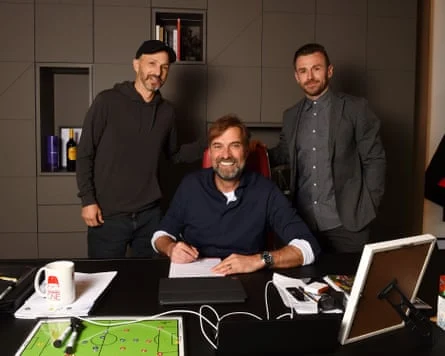
This strategic homecoming marks a significant pivot for the Merseyside club as they navigate a period of intense structural transition. Julian Ward, a figure deeply embedded in the Anfield ecosystem for the better part of 14 years, returns to the sporting director’s chair after serving the last two years as the technical director for Fenway Sports Group (FSG). His reappointment is viewed by the ownership as a stabilization measure, designed to restore institutional memory and operational continuity within the club’s footballing hierarchy.
A Chronology of Leadership Flux
The path to this appointment follows a turbulent period in Liverpool’s front office. Richard Hughes, who assumed the role of sporting director after a successful tenure at Bournemouth, departed for the Saudi Pro League shortly after the conclusion of the summer transfer window. His exit, following a two-and-a-half-year term at Anfield, necessitated an immediate and high-level search for a successor.
The recruitment process was spearheaded by FSG president Mike Gordon, who has been the primary architect of Liverpool’s behind-the-scenes reorganization. The timeline of this transition is critical to understanding the current climate at the club:
- 2010–2022: Julian Ward serves in various roles, including European scouting manager and assistant sporting director, eventually succeeding Michael Edwards as the primary sporting director in 2022.
- 2023: Ward steps down from his role for personal reasons shortly after overseeing the acquisition of high-profile talents like Darwin Núñez and Cody Gakpo.
- 2024: Michael Edwards, the former chief executive of football at FSG, concludes his involvement with the club, leaving a void in leadership.
- Late 2026: Richard Hughes departs for Al-Hilal, triggering the formal search that concludes with Ward’s return.
Contextualizing the Return
Ward’s first stint as sporting director was marked by a transition in power dynamics. While he took the helm in 2022, the influence of the then-manager, Jürgen Klopp, had increased significantly following the departure of Michael Edwards. Ward’s return now occurs under a different set of circumstances, with a newly established leadership team and a more integrated, data-driven approach to squad development.
During his two-year absence from the direct sporting director role, Ward served as FSG’s technical director. In this capacity, he was instrumental in overseeing a global talent strategy that shifted the club’s focus toward identifying and acquiring elite young prospects before they hit the peak of their market value. This period of "background work" has left Ward with a comprehensive understanding of the current academy-to-first-team pipeline, making him the most logical candidate for a seamless transition.
The Financial and Ownership Landscape
The administrative changes at Liverpool are occurring in tandem with potentially seismic shifts at the ownership level. The club is currently in the process of offloading a 38% stake to 1892 Holdings in a deal valued at approximately £2bn. This consortium, led by Amit Bhatia and featuring backing from Amazon founder Jeff Bezos, brings a new dimension to the club’s long-term financial security.
Importantly, the agreement includes an option for a full takeover, should Fenway Sports Group elect to divest their remaining interest. This looming possibility of a full change in control adds a layer of complexity to Ward’s remit. He is not merely managing a football squad; he is serving as the primary bridge between the legacy of the FSG era and the potential arrival of a new ownership structure. The stability provided by a familiar face like Ward is expected to reassure stakeholders and prospective investors that the footballing operations remain insulated from boardroom volatility.
Data-Driven Recruitment and Squad Strategy
Ward’s mandate involves steering the footballing operation alongside a reinforced senior leadership team. His immediate colleagues will include:

- David Woodfine: Assistant sporting director, tasked with day-to-day operations and logistics.
- Barry Hunter: Chief scout, responsible for the ongoing evaluation of global markets.
- Pedro Marques: Director of football development, who focuses on the transition of youth players into the senior setup.
- Andoni Iraola’s senior leadership team: The coaching staff, which will now work in closer synchronization with the recruitment department than in the previous cycle.
The shift toward a more "committee-based" approach to transfers—a move away from the manager-heavy influence of the past—is central to Liverpool’s current philosophy. Ward’s expertise in global scouting and his intimate knowledge of the FSG "moneyball" philosophy, which prioritizes statistical efficiency and long-term asset appreciation, will be tested against the backdrop of a highly competitive Premier League landscape.
Implications for the Future
The decision to reappoint Ward is as much about psychological stability as it is about professional competence. In modern football, the sporting director role has become the fulcrum upon which a club’s fortunes pivot. By choosing an internal candidate who has already proven his ability to navigate the specific pressures of the Anfield environment, FSG has opted for a "safe pair of hands" to mitigate the disruption caused by the departures of Edwards and Hughes.
However, the challenges facing Ward are substantial. The squad is in a phase of renewal, requiring careful management of aging assets and the integration of the next generation of talent. Furthermore, the pressure to remain competitive at the highest level of the Champions League while balancing the books is an perennial requirement for any Liverpool sporting director.
From an industry perspective, this appointment signals a return to a more structured, centralized hierarchy. The era of the "all-powerful manager" has largely concluded at Liverpool, and in its place is a highly specialized, collaborative model. Ward’s challenge will be to ensure that this model functions with enough agility to react to the rapid fluctuations of the transfer market, while maintaining the long-term vision that has characterized the club’s recent history.
A Professional Mandate
Official statements regarding the appointment have been limited, focusing on the need for a cohesive structure. Internally, sources suggest that Mike Gordon has expressed confidence in Ward’s ability to "hit the ground running." Unlike an external hire, who would require months to understand the nuances of the club’s internal processes, Ward possesses a plug-and-play capability.
The immediate tasks on his agenda are expected to include:
- Contractual Review: Evaluating the long-term status of key squad members whose contracts are approaching their final 18 months.
- Scouting Alignment: Reintegrating with the recruitment department to finalize the strategy for the upcoming January and summer windows.
- Owner Communication: Serving as the primary conduit for the transition of interest between FSG and 1892 Holdings, ensuring that the sporting project remains the priority during any potential ownership shift.
As the 2026-27 season progresses, the scrutiny on Ward will be immense. He is tasked with proving that the institutional decline seen during previous periods of transition was an anomaly, rather than a symptom of a larger, systemic issue. His return is a testament to the fact that in the high-stakes world of elite football, the value of experience, institutional knowledge, and established relationships cannot be easily quantified, yet remains the most vital asset a club can possess.
Ultimately, Julian Ward’s tenure will be defined by his ability to navigate the intersection of high-finance ownership changes and the unpredictable nature of on-pitch performance. By returning to the post, he has accepted the responsibility of not just building a team, but safeguarding the identity and operational integrity of one of the world’s most storied football institutions during its most uncertain chapter in recent memory.