The integration of robotic augmentation into everyday fitness routines has transitioned from the realm of science fiction to a tangible commercial reality with the launch of the Hypershell X Ultra. This consumer-grade exoskeleton represents a significant milestone in wearable technology, marking the shift of powered gait assistance from highly specialized clinical rehabilitation environments into the mainstream outdoor and athletic markets. As wearable robotics become increasingly accessible, the implications for personal health, athletic performance, and the aging population are profound, necessitating a closer examination of how these devices function and what they signal for the future of physical activity.
The Engineering of Augmented Locomotion
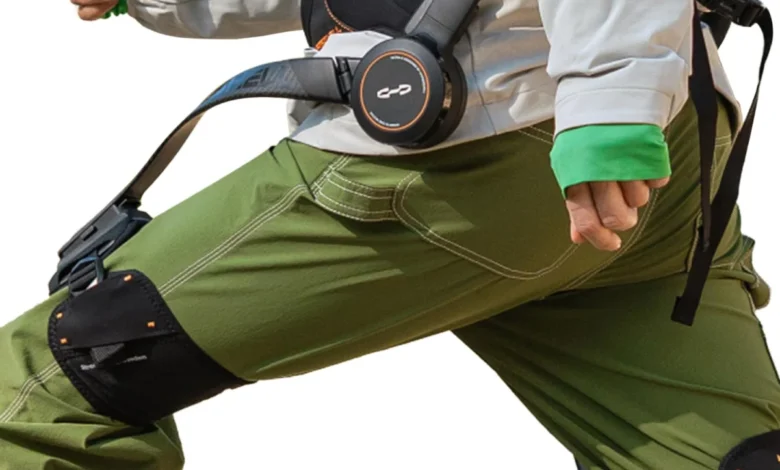
The Hypershell X Ultra functions through a sophisticated blend of sensor-driven mechanical assistance and battery-powered torque. The device consists of a lumbar-mounted power unit that serves as the system’s center of gravity and energy source, connected to dual motorized hip actuators. These actuators drive articulated braces that run parallel to the thighs, terminating just above the knee.
The core of the technology lies in its real-time gait-sensing algorithm. By monitoring hip rotation and foot-strike timing, the system identifies the precise moment of maximum muscle load during a stride. At this juncture, the motors deliver a burst of torque that effectively offsets the gravitational load on the user’s lower extremities. This process mirrors the assistance provided by pedal-assist e-bikes, where the machine supplements, rather than replaces, human effort. The device features multiple operational profiles: assistive modes for hiking and climbing, and a resistive "Fitness" mode that utilizes the motor to create drag, thereby increasing the metabolic demand of standard movements.
Historical Context and Technological Evolution
Exoskeleton technology has historically been bifurcated into two primary categories: industrial applications and medical rehabilitation. In industrial settings, heavy-duty exoskeletons have been utilized for years to reduce musculoskeletal strain on workers performing repetitive lifting tasks. In the clinical sector, devices such as the ReWalk or Ekso Bionics systems have enabled patients with spinal cord injuries or neurodegenerative conditions to regain mobility.

The Hypershell X Ultra represents a third, emerging category: the "performance consumer" sector. Unlike its clinical predecessors, which are designed to support complete weight-bearing for users with limited mobility, this device is engineered for individuals with full functional independence who seek to augment their stamina. The transition toward consumer adoption is driven by advancements in battery density, lightweight carbon-fiber materials, and miniaturized motor efficiency, all of which have converged to make a wearable device that weighs only a few pounds feasible for long-duration use.
Data-Driven Performance and Physiological Impact
Preliminary observations suggest that the primary benefit of such devices is the reduction of metabolic fatigue during high-incline movement. In a standard human gait, the quadriceps and calves must work in tandem to overcome both the inertia of the body and the resistance of gravity. By providing a mechanical assist at the hip, the device reduces the work-per-step ratio, potentially allowing hikers to maintain a higher average pace over longer durations with less lactic acid buildup in the lower limbs.
While empirical studies on the specific performance metrics of the Hypershell are currently in their infancy, biomechanical research on similar active lower-limb exoskeletons has shown that these devices can reduce the metabolic cost of walking by 10 to 15 percent. This reduction can be the difference between reaching a summit and turning back for recreational athletes, particularly those navigating challenging terrain or carrying heavy packs. The braking function, utilized during descent, also provides a novel application for consumer gear: by applying controlled resistance, the device mitigates the eccentric loading on the knees—the primary cause of joint pain and fatigue during downhill treks.
Market Implications and Official Perspectives
The launch of the Hypershell has sparked a broader conversation regarding the philosophy of fitness. Critics argue that the introduction of motorized assistance into self-powered activities like hiking or running risks undermining the very essence of the sport—the "suck" or the physical struggle that defines the reward. Conversely, proponents argue that such devices represent a democratization of accessibility.
From a public health perspective, the implications are particularly interesting for the aging population. As individuals enter their 60s and 70s, the decline in joint health and muscle power often leads to a sedentary lifestyle, creating a feedback loop of further physical decline. An exoskeleton that provides just enough assistance to make a trail manageable could enable a significant segment of the aging population to remain active, thereby improving cardiovascular health and psychological well-being.

Industry analysts suggest that we are entering a "hybridization" phase of human movement. Much like the transition to GPS-assisted navigation or heart-rate-monitored training, the use of wearable robotics is likely to follow a trajectory of normalization. As these devices decrease in price and size, they may become standard equipment for long-distance backpackers, mountain rescue teams, and older athletes who wish to maintain an active lifestyle without the debilitating impact of joint wear.
The Future of Human-Machine Integration
The success of the Hypershell will largely depend on the refinement of its "intent recognition"—the software’s ability to interpret a user’s desire to change pace or direction without perceptible lag. Current iterations are highly responsive, yet they still require a learning curve for the user to trust the machine’s timing.
Furthermore, the integration of these devices into competitive sports and public trail etiquette remains an open question. Similar to the initial resistance against e-bikes on mountain biking trails, the introduction of powered legs into hiking spaces may prompt land-management agencies to establish new guidelines. However, if the history of technological integration into sports is any indicator, the utility of such tools often outweighs the initial hesitation.
Ultimately, the Hypershell X Ultra is not merely a piece of gear; it is an early indicator of a shift in human capability. By lowering the barrier to entry for extreme physical activity, it challenges the traditional definition of "earned" movement. As we move toward a future where mobility can be augmented, the conversation will shift from whether we should use such technology to how we can leverage it to extend the duration and quality of our physical lives. Whether the user is a weekend warrior looking to crush a personal record or an older adventurer seeking to defy the limitations of aging, the message is clear: the semi-bionic future has arrived, and it is ready to hit the trail.