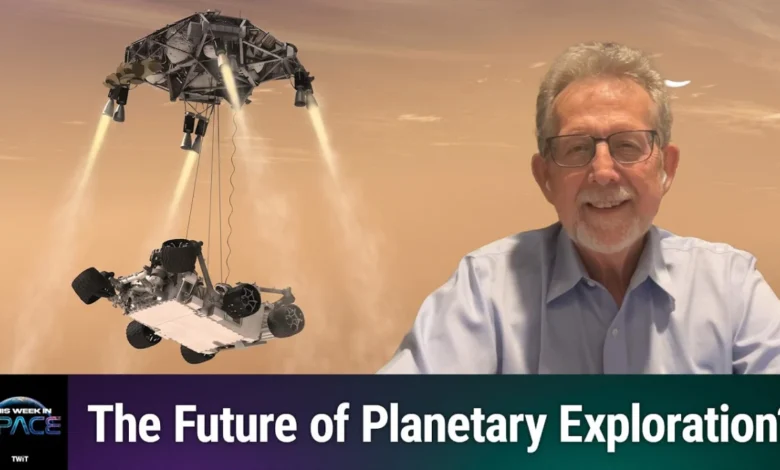
The landscape of planetary exploration has undergone a fundamental transformation over the past several decades, shifting from purely telescopic observation to the direct, mechanical probing of the solar system’s most inhospitable environments. On Episode 235 of the TWiT.tv podcast This Week In Space, hosts Tariq Malik and Rod Pyle welcomed former NASA Chief Scientist Dr. Jim Green to discuss the historical milestones, present-day methodologies, and future horizons of space discovery. Central to their discussion was the indispensable role of robotic emissaries—autonomous systems designed to brave the dark, freezing, and often treacherous frontiers that remain entirely inaccessible to human explorers for the foreseeable future.
For decades, Dr. Green oversaw many of NASA’s most ambitious scientific endeavors, serving as a primary architect and advocate for planetary science missions. During the podcast episode, Green emphasized a recurring theme in modern astrobiology and aerospace engineering: robotic probes are, and always will be, the vanguard of humanity’s expansion into the cosmos. These mechanical scouts act as the eyes, ears, and scientific laboratories for researchers on Earth, enduring extreme radiation, crushing atmospheric pressures, and absolute zero temperatures to answer fundamental questions about our place in the universe.
The Evolution of Planetary Robotics
The history of robotic space exploration dates back to the dawn of the Space Age, when rudimentary probes like the Soviet Luna program and NASA’s Ranger and Surveyor series first mapped the lunar surface. These early missions paved the way for more complex voyages, including the Viking landers on Mars, the Voyager grand tour of the outer planets, and the Cassini-Huygens mission to Saturn and its moons. Each successive generation of robots has brought unprecedented autonomy and resilience to deep-space operations.
In recent years, the paradigm has shifted from flyby missions and static landers to highly mobile rovers and sophisticated orbiters. NASA’s Perseverance rover on Mars, equipped with advanced sample-caching capabilities and autonomous navigation systems, represents the pinnacle of contemporary planetary robotics. Meanwhile, missions to the outer solar system—such as the upcoming Europa Clipper, designed to investigate the subsurface ocean of Jupiter’s icy moon—demonstrate how engineering continues to push the boundaries of what automated systems can endure and achieve.
Dr. Green, whose tenure at NASA spanned significant advancements in Mars exploration and outer planet ocean worlds, has long championed the search for biosignatures beyond Earth. During his conversation with Malik and Pyle, Green expressed optimism regarding the potential discovery of extraterrestrial life. He noted that improvements in sensor technology, spectrographic analysis, and subsurface drilling techniques significantly increase the probability that humanity might find definitive evidence of past or present microbial life within our solar system during the coming decades.
Current Landscape of the New Space Age
The discussion on This Week In Space also reflected the broader realities of the contemporary aerospace sector, often referred to as "Space 2.0." This era is characterized by a democratization of access to orbit, driven heavily by commercial enterprise. While institutional space agencies like NASA, the European Space Agency (ESA), and JAXA continue to spearhead deep-space scientific missions, private aerospace companies have revolutionized near-Earth operations, launch economics, and the deployment of satellite constellations.
SpaceX, under the leadership of Elon Musk, remains a central figure in this modern space race. Through the rapid development and utilization of reusable rocket systems like the Falcon 9 and the heavy-lift Starship, launch costs per kilogram have plummeted. This commercial acceleration has not only altered how governments and private entities place payloads into low-Earth orbit but has also trickled down into popular culture and educational outreach, allowing space enthusiasts to interact with the mechanics of rocketry on a tangible level.
Reflecting this intersection of space exploration culture and public engagement, the aerospace hobbyist market has expanded to offer sophisticated hardware replicas. Notably, model rocket manufacturer Estes recently introduced a detailed, launchable scale model of the SpaceX Falcon 9 rocket. Retailing at $149.99, the model provides enthusiasts with an accurate, aerodynamically tested reproduction of the commercial launch vehicle, bridging the gap between professional aerospace engineering and public enthusiasm for modern rocketry.
Background and Context of This Week In Space
This Week In Space is produced weekly by TWiT (This Week in Tech) and is co-hosted by prominent space journalists and authors Rod Pyle and Tariq Malik. The podcast aims to decipher the complexities of the modern space economy, covering everything from international lunar return initiatives to commercial Mars colonization timelines.
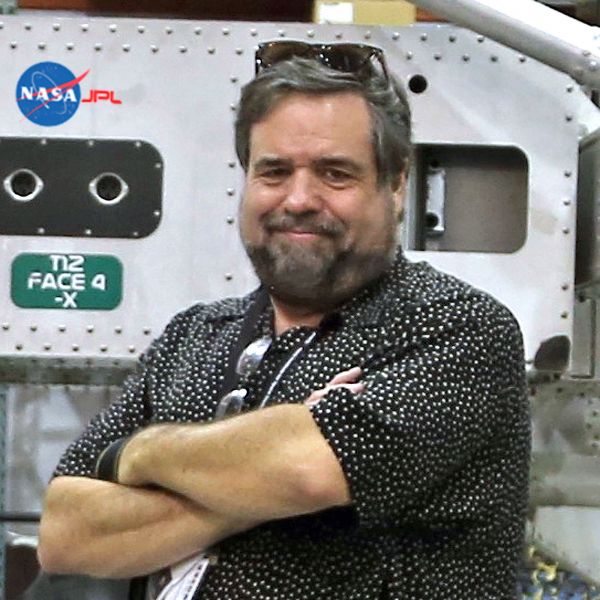
Rod Pyle brings decades of experience as an author, journalist, and Editor-in-Chief of Ad Astra magazine. Having authored 18 books on space history and exploration—including Space 2.0, Innovation the NASA Way, and Interplanetary Robots—Pyle frequently draws upon his background in television production and documentary filmmaking to provide historical context to current aerospace developments. His previous work with historical networks and visual effects industries informs a deep understanding of both the science and the cultural impact of spaceflight.
Tariq Malik, who has served as the Editor-in-Chief of Space.com since 2019, contributes nearly two decades of frontline journalism experience covering human spaceflight, astronomy, and planetary science. An active voice in science communication, Malik’s career spans extensive coverage of NASA shuttle missions, commercial crew programs, and international space station operations, complemented by appearances across major national media outlets. Together, Pyle and Malik use the platform to interview key figures in the scientific community, offering listeners a granular look at the decisions and discoveries shaping future space policy.
Broader Implications and Future Outlook
The insights shared by Dr. Green on the necessity of robotic exploration underscore a critical strategic reality for international space programs. While public imagination is frequently captivated by human spaceflight milestones—such as NASA’s Artemis program aiming to return astronauts to the lunar south pole, or commercial proposals for crewed missions to Mars—uncrewed missions remain the primary workhorses of scientific discovery.
Robotic probes can enter environments that would prove instantly fatal to humans, operating for years in high-radiation belts, extreme thermal variances, and toxic atmospheres. As space agencies turn their attention toward the ocean-bearing moons of the outer solar system—such as Europa, Enceladus, and Titan—the reliance on autonomous systems capable of ice-penetration and sample analysis will only grow. These missions hold the key to answering humanity’s most enduring astrobiological questions, determining whether life is a unique terrestrial anomaly or a common phenomenon throughout the galaxy.
Ultimately, the dialogue on This Week In Space highlights the synergistic relationship between human curiosity, technological innovation, and robotic endurance. As commercial ventures lower the economic barriers to space access and scientific pioneers continue to push mechanical explorers into the darkest corners of the solar system, humanity stands on the precipice of a new era of discovery—one where the tools we build will likely be the first to reveal that we are not alone in the universe.