Donald Trump Offers White House Press Secretary Position to UFC CEO Dana White in Unorthodox Social Media Announcement

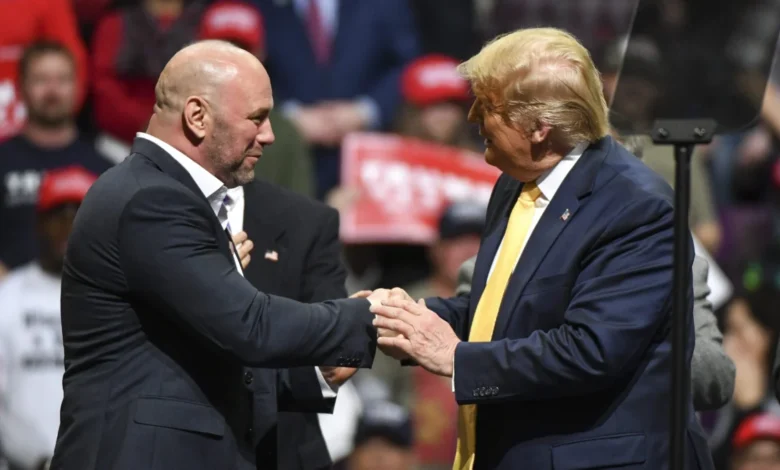
WASHINGTON — In a move that has confounded political observers and media analysts alike, President Donald Trump announced on social media that he has offered the position of White House Press Secretary to Ultimate Fighting Championship (UFC) President and Chief Executive Officer Dana White. Characterizing the prominent sports executive as a "violent Fighter and Warrior," the president’s public declaration has ignited intense speculation regarding whether the offer is a serious administrative appointment, an elaborate political stunt, or a calculated effort to manipulate the media cycle.
The announcement, broadcast via Trump’s proprietary platform Truth Social, follows a tumultuous period for the White House press office. The vacancy was created last month following the high-profile dismissal of Katie Zacharia, whose tenure as press secretary lasted a mere five days. Zacharia, a conservative media commentator, was terminated after significant background discrepancies emerged, most notably her misrepresentation of her legal credentials. Having never passed a state bar exam, Zacharia presided over just a single, widely criticized press briefing before administration officials swiftly severed ties.
Against this backdrop of administrative instability, Trump’s public overture to White underscores a continuing pattern of unconventional staffing decisions and a penchant for blurring the lines between politics, pop culture, and combat sports. As of press time, White has neither publicly accepted nor declined the offer, and representatives for both the White House and the UFC have declined to provide immediate clarification.
The Anatomy of the Announcement and the UFC Contingent
Trump’s Truth Social statement went beyond merely offering White the podium, outlining an expansive vision for the daily press briefing that drew heavily from the world of mixed martial arts.
"I am pleased to announce that the Great Dana White, a violent Fighter and Warrior, has been offered the job of Press Secretary of the United States," Trump wrote. He added a unique roster of requested subordinates, stating, "I have requested that he bring with him assistants, even though some are not from our Country, of Islam Makhachev, Khabib Nurmagomedov, Justin Gaethje, Daniel Cormier, Amanda Nunes, and Kayla Harrison. We need these people to defend us against the Lunatic Left. Dana will be a Press Secretary like none other. Dana, please take the job!"
Every individual named by the president is a legendary or reigning figure in professional mixed martial arts. Champions such as Islam Makhachev, Khabib Nurmagomedov, and Amanda Nunes command international acclaim and athletic dominance, yet none possess formal experience in public administration, constitutional law, or executive branch communications. The inclusion of international athletes—several of whom reside and train outside the United States—further complicates the feasibility of assigning them official government duties within the West Wing briefing room.
Political analysts have noted that the proposal aligns with Trump’s historical affinity for combat sports personalities. Trump and White share a decades-long personal and professional relationship, frequently spotted ringside at high-profile UFC events. Their alliance was prominently displayed during Trump’s 80th birthday celebration, an unorthodox event that featured a sanctioned mixed martial arts cage fight staged directly on the grounds of the White House lawn, an unprecedented use of executive property that drew both awe and criticism from urban planners and political historians.
A History of Unconventional Personnel and Media Trolling
The invitation to Dana White is not an isolated incident of the administration utilizing high-profile entertainment figures to test the boundaries of political communication. Only weeks prior, Trump casually remarked during an informal exchange that appointing Grammy-nominated recording artist Nikki Minaj to the press secretary role would constitute "a good idea."
These public flirtations with celebrity appointments are viewed by veteran political strategists as a dual-purpose strategy: generating massive media engagement while simultaneously undermining the traditional mechanisms of political journalism. By floating names from outside the traditional political ecosystem, the administration consistently captures the news cycle, forcing media outlets to dedicate valuable resources to analyzing whether seemingly absurd propositions carry any validity.
However, these theatrical gestures stand in stark contrast to the administration’s serious, hard-line policy appointments. Just one day prior to the announcement regarding Dana White, the administration officially appointed Stephen Miller to the powerful position of White House Deputy Chief of Staff for Policy. Miller, widely recognized as the principal architect behind many of the administration’s most restrictive and polarizing legislative and executive actions, played a central role in shaping the platform that contributed significantly to the Republican Party’s substantial losses during the subsequent mid-term elections. The juxtaposition of Miller’s hardline policy appointment with the playful public courting of sports executives highlights the duality of the administration’s operational strategy.
Chronology of the Press Secretary Vacancy
The ongoing instability within the White House communications department has raised persistent questions regarding executive oversight and the vetting process for high-ranking officials. A review of the timeline highlights the rapid turnover that has plagued the press office:
- The Departure of the Prior Administration: Following the inauguration, the early communications team faced immediate friction with the White Press Corps over policy rollouts and transparency initiatives.
- The Appointment of Katie Zacharia: In an effort to shift messaging toward a more populist, digital-first approach, conservative commentator Katie Zacharia was tapped for the press secretary role, bypassing traditional diplomatic and bureaucratic vetting channels.
- The Five-Day Tenure: Zacharia delivered her inaugural press briefing, which quickly descended into verbal sparring with reporters over administrative transparency.
- The Dismissal: Investigative reporting and internal review revealed that Zacharia had misrepresented her professional background, claiming legal expertise without having ever taken a bar exam. She was dismissed before the conclusion of her first week.
- The Interregnum and Public Auditions: Following Zacharia’s departure, the press secretary role has remained effectively vacant while senior officials manage day-to-day briefings through rotating deputies, leaving the door open for unconventional public speculation, culminating in the invitation to Dana White.
Implications for the White House Press Office
Should Dana White hypothetically accept the position, the implications for the daily operations of the executive branch would be profound. The White House Press Secretary is traditionally tasked with serving as the primary conduit between the executive branch and the American public, translating complex legislative policies, foreign affairs developments, and economic data into clear, defensible, and accurate statements.
Historically, the role has been occupied by seasoned communications professionals, former journalists, or individuals with extensive backgrounds in public policy and government relations. Introducing a corporate executive accustomed to the promotion-heavy, hyper-competitive, and often combative environment of combat sports promotion would fundamentally alter the institutional norms of the West Wing briefing room.
Political scientists and media ethics experts have expressed concern over the degradation of traditional institutional roles. A briefing room managed by a sports promoter—let alone flanked by international MMA champions—would likely prioritize spectacle, high-engagement viral moments, and aggressive rhetorical parrying over substantive policy discussions. Conversely, supporters of the administration argue that traditional press briefings have become overly antagonistic and hostile, suggesting that an outside-the-box communicator like White could inject authenticity and disrupt what they view as a biased media establishment.
Broader Political Reactions and Future Outlook
Reactions from Capitol Hill and political committees have fallen along predictable partisan lines. Congressional Democrats seized upon the announcement as further evidence of what they characterize as an unserious approach to governance, pointing to the rapid firing of Katie Zacharia and the public musings regarding celebrities as symptomatic of administrative chaos.
"The American people expect the White House to be run with seriousness, competence, and respect for the institutions of democracy," said a senior Democratic leadership aide speaking on condition of anonymity. "Treating the position of Press Secretary as a reality television casting call is an insult to the office and to the citizens who rely on accurate, sober communication from their government."
Meanwhile, Republican defenders downplayed the literal interpretation of the tweet, framing it as a masterful display of media manipulation designed to keep political opponents and mainstream journalists constantly reacting to executive whims.
As the news cycle progresses, attention remains fixed on whether Dana White will issue a formal response to the public invitation or if the administration will pivot toward a more conventional candidate to permanently stabilize the beleaguered communications office. Until a permanent appointment is confirmed and sworn in, the White House press briefing room remains a focal point of unpredictability, capturing the intersection of modern politics, digital media culture, and athletic entertainment.
Related posts: