Bill Skarsgard expresses fatigue with villain roles and clarifies his status regarding the next James Bond film

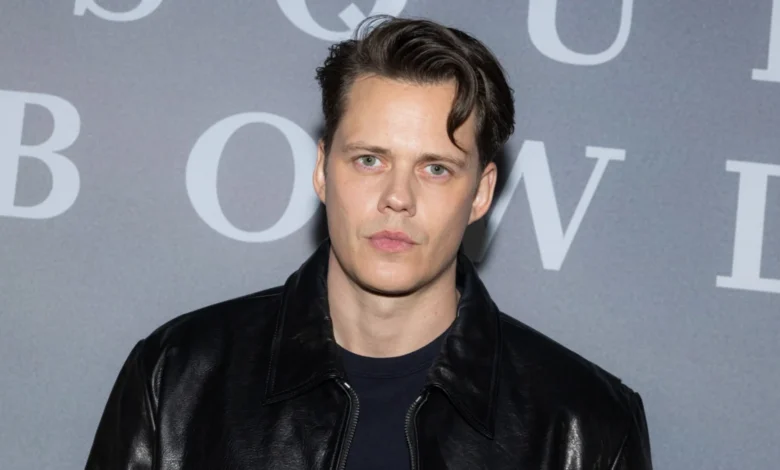
The landscape of modern cinema is heavily defined by the iconic performances that anchor its most successful franchises, and few actors have carved out as distinct a niche in recent years as Bill Skarsgard. Renowned for his chameleonic ability to portray unsettling and complex antagonists, the 36-year-old Swedish actor has become synonymous with the darker side of storytelling. However, in a candid appearance on the popular Happy Sad Confused podcast, hosted by Josh Horowitz, Skarsgard revealed that he is reaching a creative saturation point regarding villainous roles, while simultaneously addressing the persistent, albeit unfounded, rumors surrounding his potential involvement in the next iteration of the James Bond franchise.
For many, Skarsgard’s name is inextricably linked to the chilling portrayal of Pennywise the Dancing Clown in the blockbuster adaptation of Stephen King’s It. This performance, which relied heavily on physical transformation and psychological intensity, served as a springboard for a career defined by menace. His filmography reflects this trajectory: from the Marquis Vincent Bisset de Gramont in the high-octane John Wick: Chapter 4 to the titular, terrifying presence in Robert Eggers’ recent reimagining of Nosferatu, and the tragic, tortured spirit of Eric Draven in The Crow. Each of these roles demanded a high level of emotional and physical investment, contributing to a body of work that is as critically lauded as it is dark.
The Case for Creative Evolution
During his discussion with Horowitz, Skarsgard offered a rare glimpse into the internal deliberation process that accompanies his career choices. When pressed about his future in the genre, he admitted to feeling "spent" regarding the current archetype of the villain. The actor emphasized that the allure of such roles has diminished unless the character offers a genuinely novel challenge.
"For a villain, it would have to be something that felt original to me, that was something that I hadn’t done before," Skarsgard explained. He elaborated that while the prospect of portraying a villain remains theoretically enticing under the right circumstances, he is no longer inclined to pursue these roles for the sake of working alone. This sentiment suggests a pivot in his career, indicating that audiences may see a shift toward more nuanced, perhaps lighter, or more diverse character studies in the coming years. His desire to avoid typecasting is a common professional milestone for actors who achieve early success in specialized genres, signaling a transition toward broader range and character versatility.
The Bond Question: Myth vs. Reality
The conversation inevitably veered toward the James Bond franchise, an intellectual property that remains one of the most guarded and speculated-upon entities in Hollywood. For years, fan theories and industry rumors have frequently placed Skarsgard in the conversation, whether as a potential candidate for 007 or as a formidable adversary.
Skarsgard addressed these rumors with a mix of humor and blunt clarity. "Yeah! Well, because they didn’t call me about James Bond. I don’t know what that was about," he quipped, dismissing the idea that he had been in serious contention for the iconic role. "Maybe they were like, ‘We can’t do a Swede for this guy.’ I wasn’t even thrown into the mix."
This clarification serves to dampen the speculative fervor that often surrounds casting for the Bond films. Furthermore, Skarsgard expressed a preference for the "villain-of-the-week" model rather than the grueling, long-term commitment of playing the lead protagonist. Referencing the legacy of actors like Mads Mikkelsen and Javier Bardem, he acknowledged that a one-off, high-profile villainous turn in the Bond universe would be a compelling career opportunity, should the invitation ever arise. His acknowledgment of the long-term franchise commitment—often spanning a decade or more—highlights the pragmatic nature of his current career planning, as he seeks to maintain a work-life balance that does not tether him to a single character identity for the better part of his prime acting years.
Industry Context and the Search for 007
The search for the successor to Daniel Craig, who concluded his tenure with 2021’s No Time to Die, has been one of the most protracted casting processes in recent film history. The studio, Eon Productions, has maintained a disciplined silence, allowing for a cycle of rumors to swirl.
The current landscape of potential candidates is wide-ranging. Recent reporting from The Hollywood Reporter indicates that the casting process has moved into the stage of active screen testing. Names such as Callum Turner, Jack Lowden, and Josh O’Connor have reportedly been involved in the formal assessment process. The inclusion of high-profile talent like Robert Pattinson, who has also been linked to testing for the role, underscores the prestige and weight attached to the 007 title. Furthermore, the mention of Nicholas Hoult as a contender points to the studio’s interest in actors who possess both the dramatic depth required for the character’s emotional arc and the star power necessary to carry a global franchise.
This search is complicated by the shifting requirements of the modern action hero. With Denis Villeneuve attached to future projects involving the franchise, the expectation for the next Bond actor is to embody a blend of classic suave charisma and contemporary, gritty realism.
Current Projects and Future Trajectory
While he reflects on his past, Skarsgard is firmly focused on the present. He is currently garnering attention for his role in Peter Berg’s war drama, The Mosquito Bowl. The film, which explores the intersections of sports and the harsh realities of the Second World War, offers a stark contrast to the high-concept genre films that have dominated his recent resume.
The project, which is currently in theatrical release and scheduled for a November 25 debut on Netflix, serves as an example of the kind of grounded, ensemble-driven storytelling that Skarsgard may be prioritizing as he moves away from the "villain-centric" phase of his career. By engaging with historical narratives, he is diversifying his portfolio and positioning himself as a versatile performer capable of navigating prestige drama as effectively as he handles the demands of major blockbusters.
Implications for the Actor and the Genre
The "exhaustion" expressed by Skarsgard is not necessarily a rejection of the genre, but rather a commentary on the state of villain archetypes in contemporary cinema. As major franchises lean heavily into sequels, spin-offs, and shared universes, the role of the antagonist often risks becoming a caricature—a hurdle that skilled actors must work twice as hard to overcome.
For the industry, Skarsgard’s stance is a reminder of the need for innovation in writing. When actors of his caliber begin to feel "spent" by the limitations of a specific type of character, it serves as a signal to casting directors and screenwriters that the industry must move toward more complex, multi-dimensional antagonists.
As for the James Bond franchise, the lack of an offer to Skarsgard should not be viewed as a reflection of his talent, but rather a reflection of the specific—and often highly guarded—direction the studio intends to take the character. Whether the next 007 is a established star or an emerging talent, the casting decision will undoubtedly reshape the franchise for the next decade.
In conclusion, Bill Skarsgard stands at a crossroads. Having established himself as one of his generation’s most effective purveyors of on-screen menace, he is now signaling a desire for evolution. Whether through historical dramas like The Mosquito Bowl or a future role that defies the villainous stereotypes he has mastered, his career continues to be a focal point for industry watchers. As the film world awaits the announcement of the next 007, the discourse surrounding casting remains a testament to the enduring power of the Bond brand, even as talented actors like Skarsgard navigate their own professional paths independently of its gravitational pull.
Related posts: