Simulating Mars on Earth: Inside the SEA STAR Underwater Space Mission at Jules Undersea Lodge

The pursuit of interplanetary exploration has long driven humanity to seek out the most inhospitable environments on Earth to prepare astronauts for the vast emptiness of space. From the high-altitude volcanic slopes of Mauna Loa in Hawaii to the frozen expanses of the Antarctic, terrestrial analog missions provide invaluable insights into the physiological and psychological toll of long-duration spaceflight. Among the most unique of these testing grounds is a submerged habitat resting twenty-two feet beneath the surface of a lagoon in Key Largo, Florida: Jules Undersea Lab.
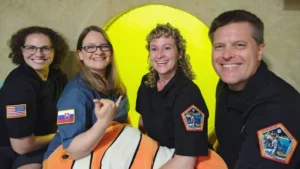
Recently, a four-person crew completed the SEA STAR simulated space mission inside this historic underwater station. Led by veteran astrobiologist and analog astronaut commander Dr. Michaela Musilova, the team spent five consecutive days cut off from the surface world, living under pressurized conditions specifically designed to mirror the challenges of future manned missions to Mars and operations aboard the International Space Station (ISS).
The Historical Evolution of Jules Undersea Lab
Originally constructed in the 1970s under the name "La Chalupa," the facility was revolutionary for its time. Designed as a mobile underwater habitat, the structure measured twenty feet wide by sixty feet long, encased within a submersible barge. Its original purpose was to allow divers to operate as aquanauts—individuals who spend more than twenty-four hours continuously underwater in a state of saturation, eliminating the need for repetitive decompression stops.
Aquanauts during the 1970s and 1980s could pilot the vessel to a chosen research site, flood the interior chambers to sink it to the seafloor, and later pump out the water to refloat and relocate the habitat. This unprecedented mobility made La Chalupa a marvel of marine engineering. However, as federal and private funding for oceanographic exploration shifted in subsequent decades, the operational model became unsustainable.
The habitat eventually found a permanent home in an Emerald Lagoon in Key Largo, Florida, where it was rechristened Jules Undersea Lab in honor of pioneering French oceanographer Jacques Cousteau and novelist Jules Verne. Despite its fixed location, the station maintained its rigorous scientific utility. Over the decades, it has hosted dozens of specialized aquanaut missions, including a landmark thirty-day project sponsored by NASA and multiple record-breaking endurance expeditions, such as missions where divers remained submerged for seventy-three and one hundred days respectively.
Anatomy of an Underwater Habitat
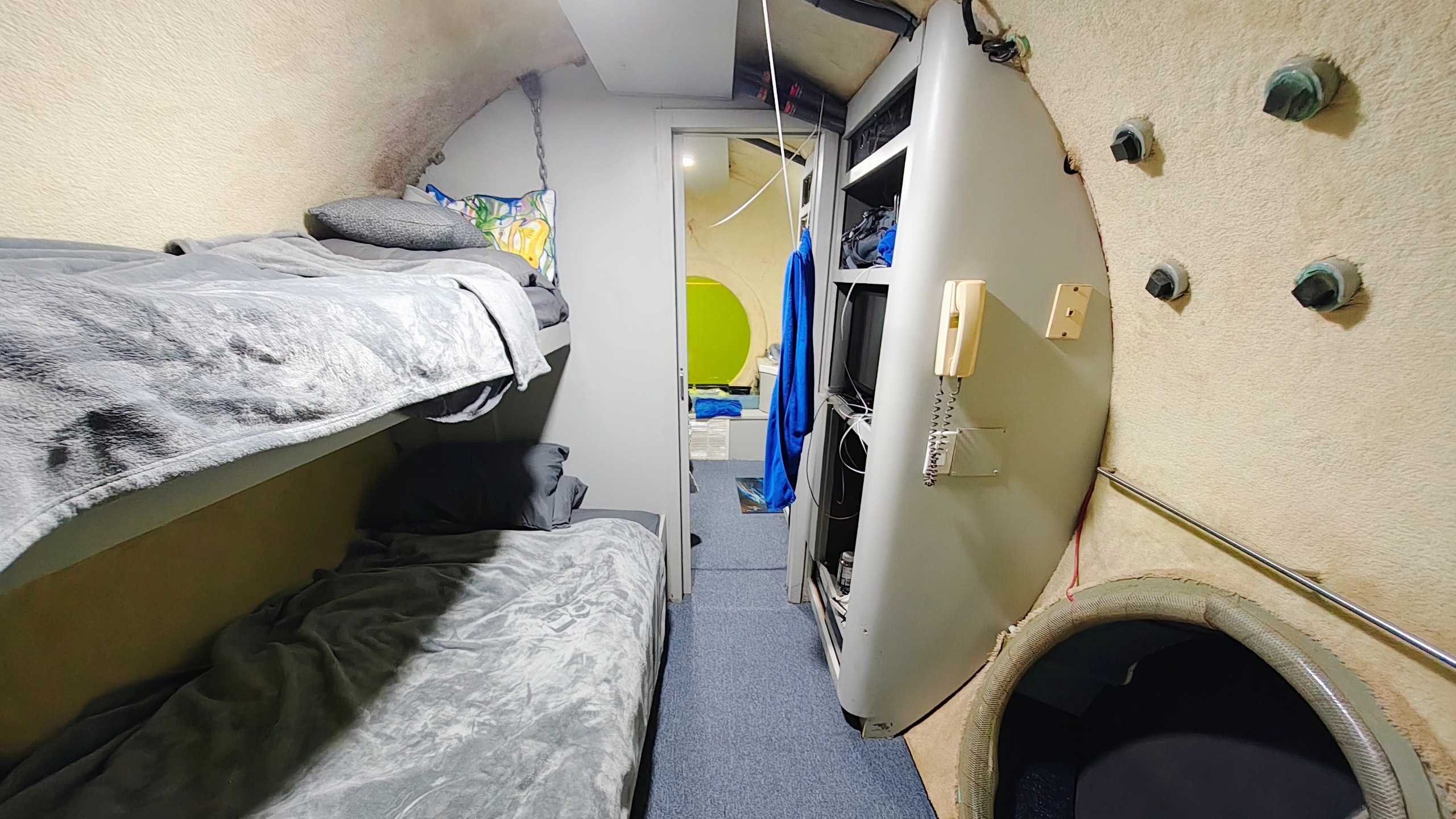
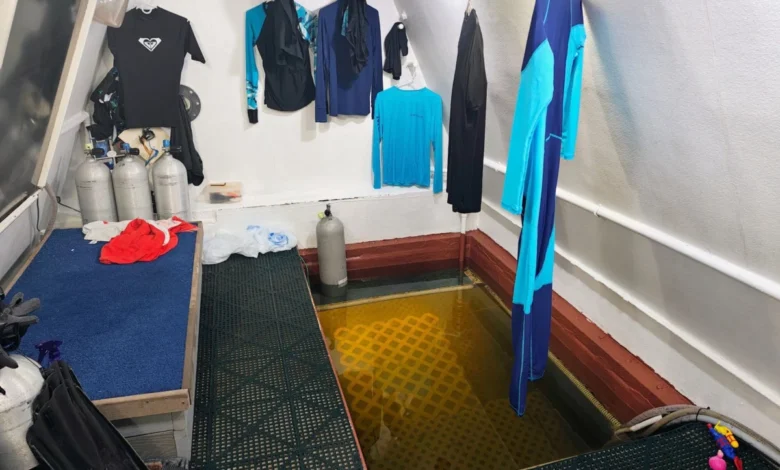
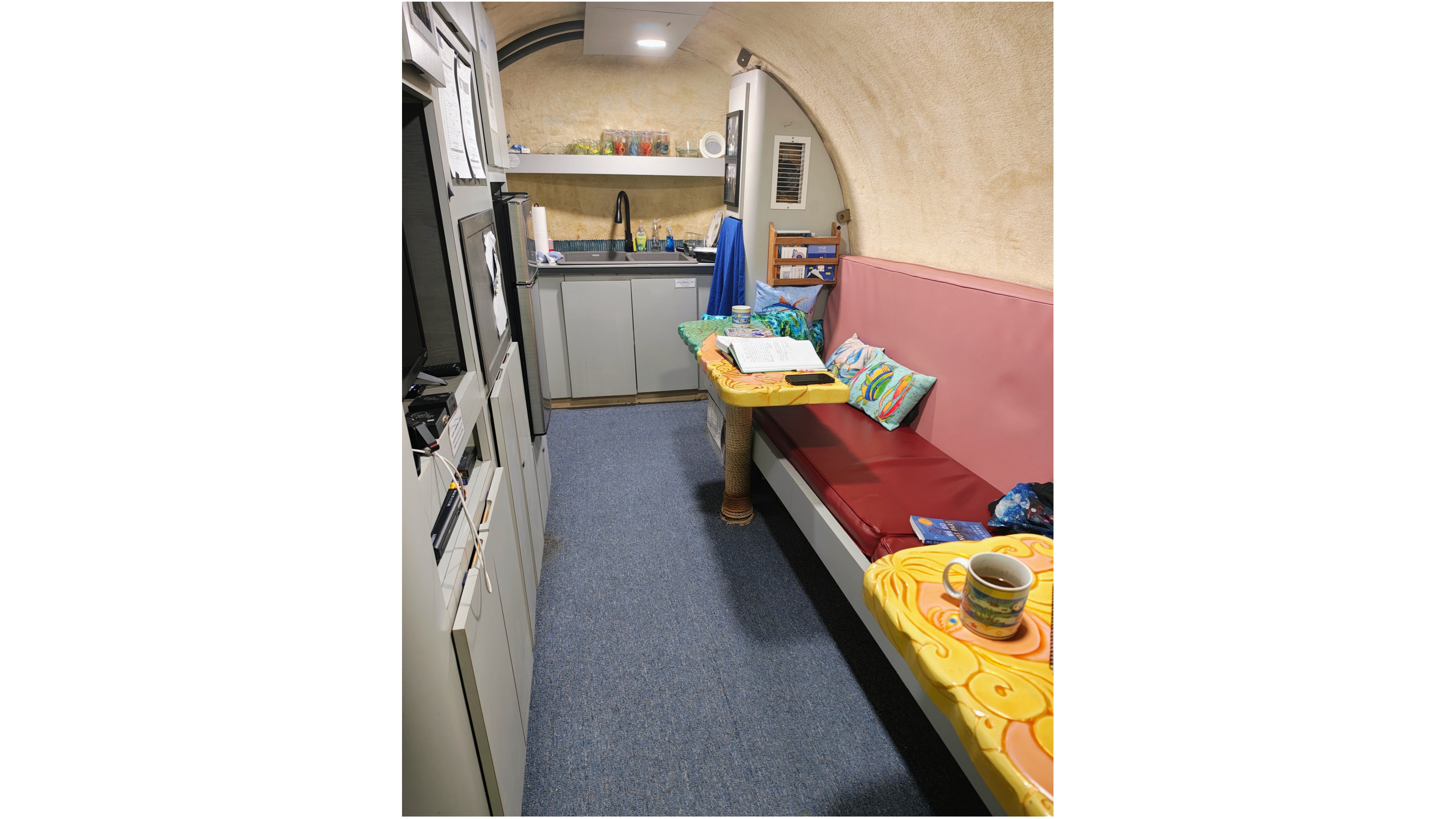
Living inside Jules Undersea Lab requires adapting to extremely confined quarters and hyperbaric conditions. The internal layout is compact yet functional, partitioned into distinct zones to support basic human survival and scientific research.
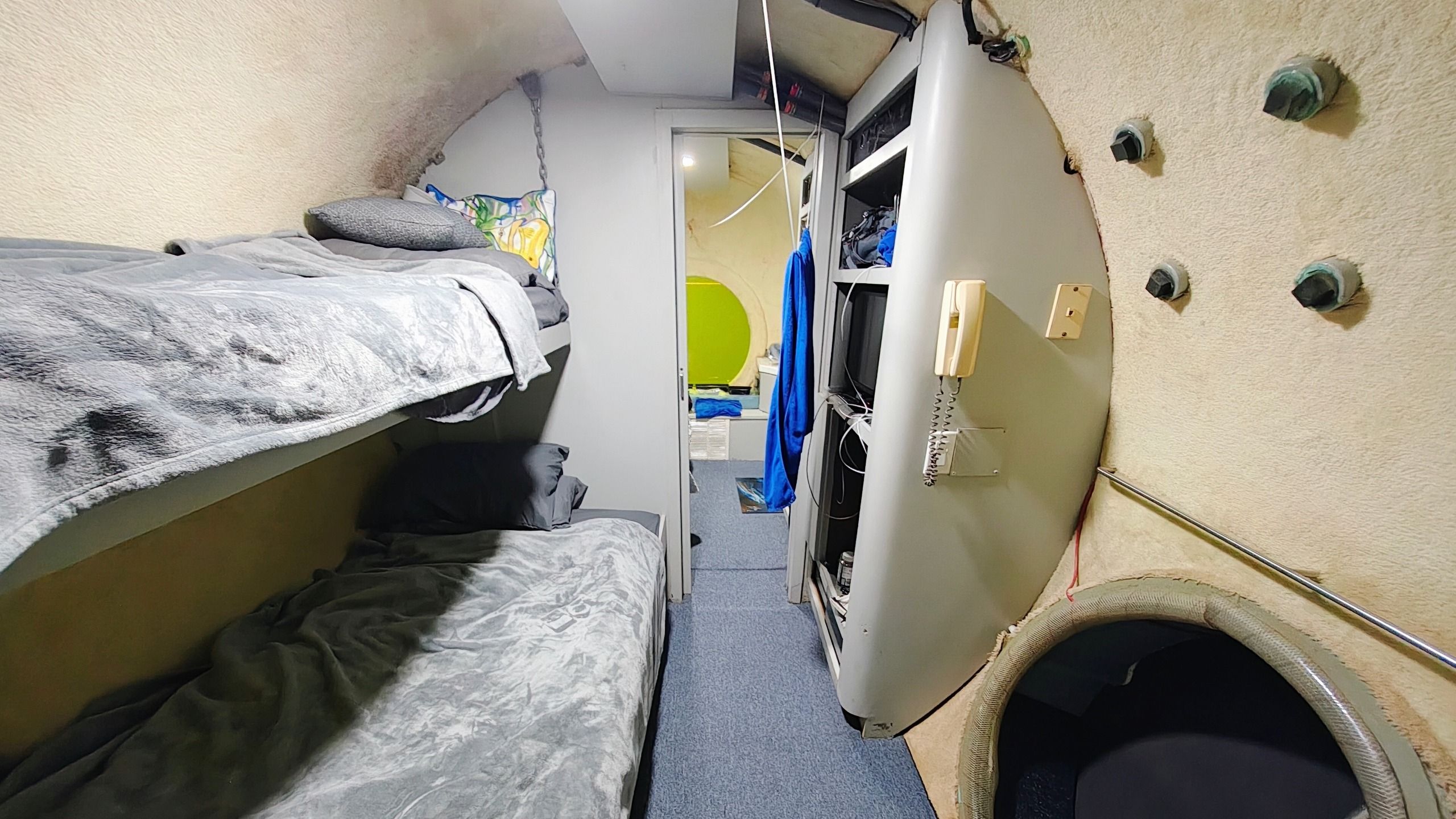
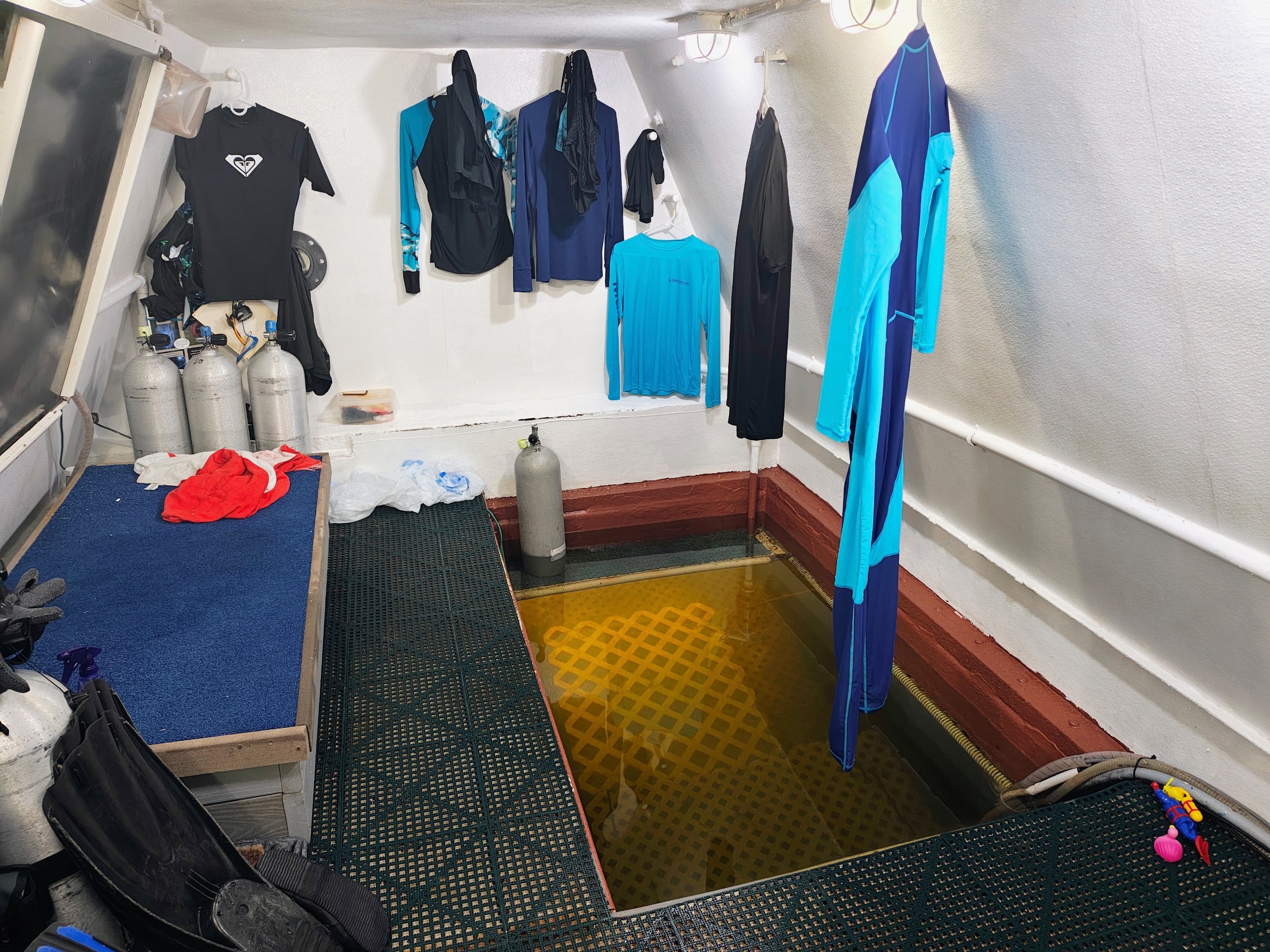
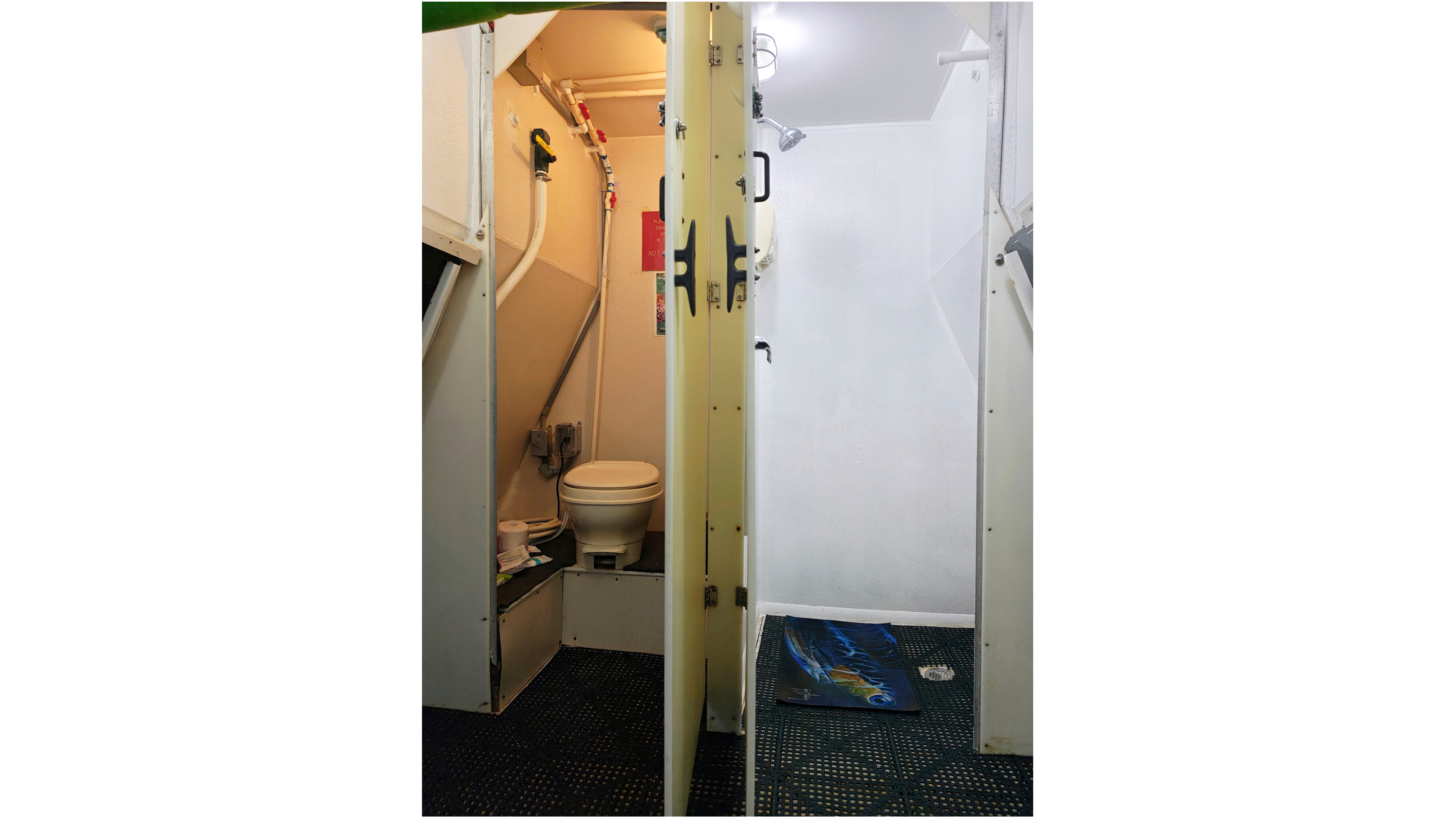
The central hub features a galley equipped with a modest kitchen, dining table, and workstation area. Adjacent to this communal space are a basic marine toilet, a shower facility, and the critical infrastructure known as the "moon pool"—a vertical opening in the floor of the habitat that serves as the primary air-to-water entry and exit point for divers. The sleeping quarters consist of a compact bedroom featuring two bunk beds, which can be physically divided by a central partition to create two private rooms, offering a semblance of personal space crucial for psychological endurance during extended isolation.
Three circular portholes pierce the hull, offering residents a view of the surrounding aquatic ecosystem. Rather than the black expanse of space viewed from the ISS, aquanauts are treated to a dense, green underwater landscape. According to participating researchers, this otherworldly vista plays a significant role in creating a psychological disconnect from normal terrestrial life, successfully mimicking the sensory deprivation and alien scenery reported by astronauts.
The SEA STAR Mission Chronology and Daily Operations
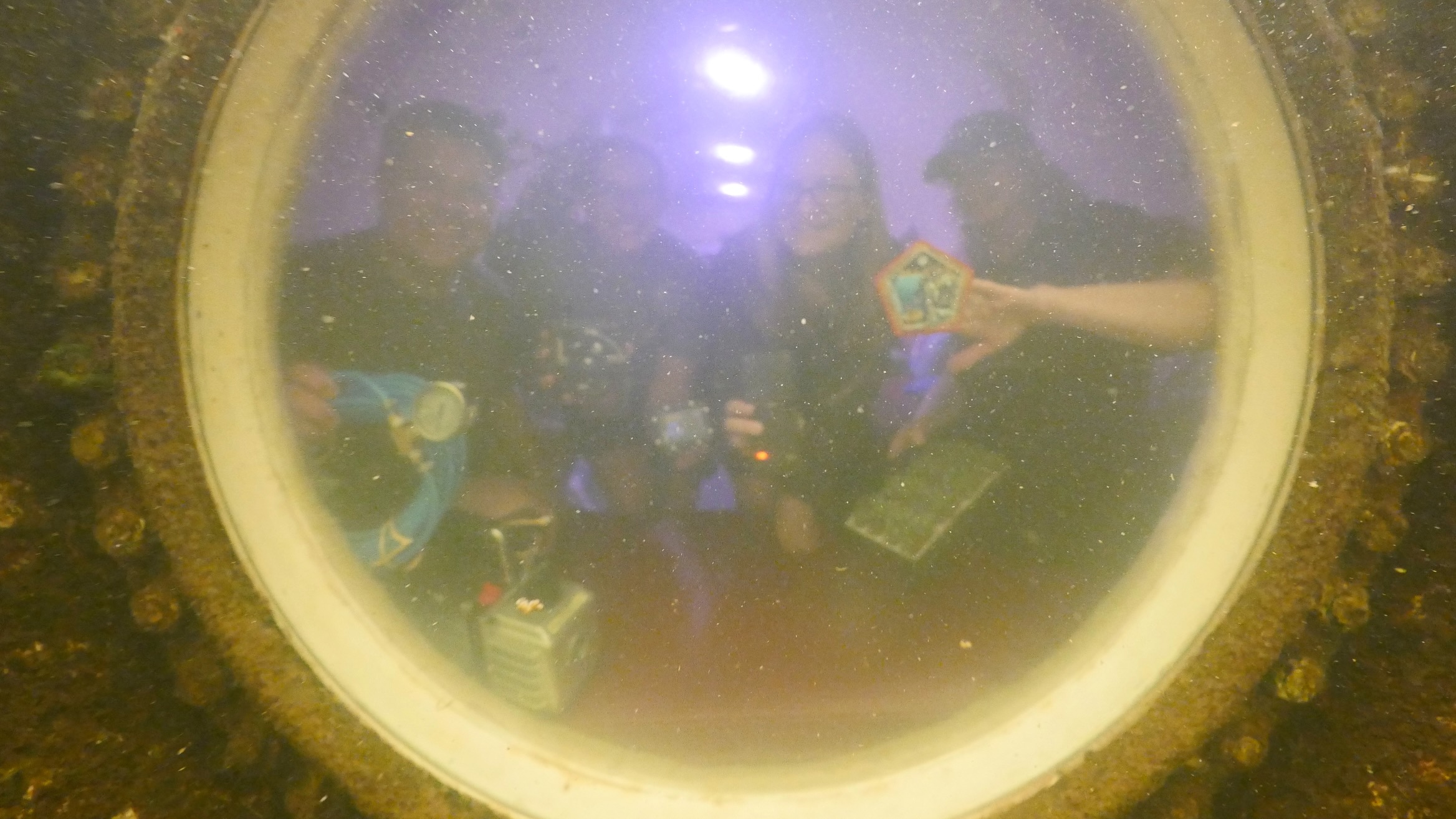
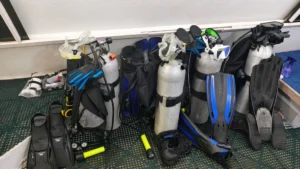
The SEA STAR mission commenced with a formal departure protocol. The four-member crew waved farewell to their support team at Mission Control before donning scuba gear and descending through the moon pool into the pressurized interior of the habitat. From that moment onward, the crew remained submerged for five days without returning to the surface.
Maintaining a rigorous schedule is paramount during analog missions to prevent the psychological decay associated with isolation and monotony. The SEA STAR crew operated under a heavily structured timetable mirroring the daily routines of astronauts on the ISS. Each crew member was assigned independent research projects alongside shared operational duties.
Daily responsibilities included meal preparation, rigorous medical self-assessments, cognitive testing, routine facility maintenance, and troubleshooting unexpected mechanical or life-support issues. As mission commander, Dr. Musilova oversaw crew synchronization, ensuring that all scientific objectives were met while swiftly addressing interpersonal or logistical friction.
Between indoor research tasks, the crew conducted regular "spacewalks"—extravehicular activities executed as scientific exploration dives using full scuba apparatus. These dives served as terrestrial equivalents for planetary surface excursions, demanding high levels of physical exertion in a neutral buoyancy environment.
Life Support Systems and Physiological Demands
Survival in an underwater habitat depends entirely on redundant, high-reliability life-support systems. Originally established with direct support and infrastructure from NASA, the facility receives continuous supplies of breathable air, fresh water, and electrical power via an umbilical cable network extending from the surface.
The internal plumbing and electrical fittings are carefully housed within the dry hull, protecting critical infrastructure from the corrosive marine environment and biofouling organisms such as barnacles and algae. A dedicated communication line maintained a constant, real-time link between the underwater habitat and surface-based Mission Control, providing an essential safety net for emergency management.
A notable physiological distinction of the SEA STAR mission compared to traditional high-altitude or arid analog environments was the ambient atmospheric pressure. Inside Jules Undersea Lab, the internal pressure is maintained at approximately twice that of standard sea-level atmospheric pressure. This hyperbaric environment places a unique, continuous physical burden on the human body, inducing low-level physiological stress even while at rest.
Because of this elevated baseline stress and the intense physical demands of daily underwater excursions, the crew elected to forgo the additional high-intensity exercise regimens typically mandated in other analog environments. In contrast, Dr. Musilova, who has commanded forty distinct simulated space missions in locations ranging from desert habitats to volcanic craters, usually enforces one to two hours of daily physical conditioning to combat muscle atrophy, mirroring protocols used by space agencies on the ISS.
Psychological Resilience and Adaptability
Despite the demanding work schedule, confined living spaces, and elevated atmospheric pressure, the SEA STAR crew reported surprisingly high morale and minimal interpersonal stress. Researchers attribute this positive psychological outcome to meticulous pre-mission planning, clear role delineation, and the inclusion of psychological comforts.
Dietary satisfaction played an unexpected role in maintaining crew morale. Permitted to utilize a small slow-cooker within the galley, the crew frequently prepared warm soups, stews, and hot breakfasts. In extreme isolation environments, culinary variety and warm meals serve as significant psychological anchors, boosting emotional well-being and mitigating the fatigue of confinement.
Broader Implications for Space Exploration and Research
As space agencies and private aerospace companies look toward long-duration missions—including the establishment of permanent lunar bases and crewed expeditions to Mars—understanding the psychological and physiological dynamics of isolated crews is increasingly critical. Analog missions like SEA STAR provide cost-effective platforms for testing crew cohesion, technological resilience, and human adaptability under stress.
The convergence of marine and space research highlights a historical synergy. Early underwater habitats like Jacques Cousteau’s Conshelf programs directly influenced the development of closed ecological life support systems later adapted for orbital flight. By continuing to utilize facilities such as Jules Undersea Lab, researchers can refine protocols for autonomous living, emergency response, and psychological support, ensuring that future astronauts are prepared for the profound isolation of deep space exploration.