Rihanna reveals A$AP Rocky is behind her missing Fenty beauty products while reflecting on motherhood and the decade-long success of her empire

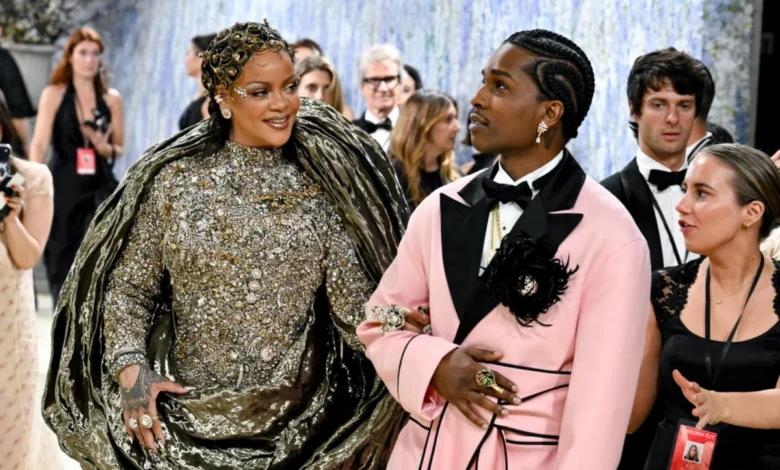
The intersection of global celebrity culture and the multi-billion-dollar beauty industry often centers on the personal habits of those who define its trends. Recently, during an exclusive engagement for Fenty Beauty, Robyn "Rihanna" Fenty offered a candid look into her domestic life, revealing that her partner, A$AP Rocky, has developed a persistent habit of utilizing her personal skincare collection. The disclosure provided a lighthearted moment during a broader discussion regarding the evolution of her brand, which is currently approaching its 10-year milestone.
As the mogul behind one of the most successful celebrity-led beauty ventures in history, Rihanna’s influence extends far beyond the recording studio. Her transition from a global pop icon to a titan of industry has been defined by a commitment to inclusivity, a philosophy that fundamentally altered the retail landscape when Fenty Beauty launched in 2017.
A Domestic Mystery: The Vanishing Body Wash
During the recent event hosted by The Cut, the conversation shifted from the strategic growth of Fenty Beauty to the singer’s daily routines. When prompted about which products from her line were most frequently appropriated by A$AP Rocky, Rihanna provided an anecdotal account of the rapper’s affinity for her specific body wash.
"Every time I go into the shower, somehow my body wash — vanilla flowers, that one in particular — is just going down by a quarter of the bottle," Rihanna noted. She emphasized that her awareness of the product’s depletion was not merely incidental, but based on a precise knowledge of the product’s volume. "I remember how many pumps I had. I know exactly where the bottle was at. And somehow, that bottle just is empty right now."
The lighthearted complaint highlights a common dynamic in high-profile relationships, where the boundaries between professional brand ownership and personal use become blurred. While Fenty Beauty’s products are designed for universal appeal, the singer’s humorous admission underscores the widespread popularity of the collection, even within her own household.
The Evolution of Fenty Beauty: A Decade of Disruption
The timing of these remarks aligns with a significant period for the Fenty brand. Launched in September 2017 in partnership with Kendo Brands, a subsidiary of LVMH, Fenty Beauty was initially met with intense scrutiny. At the time, the beauty industry was criticized for its lack of diverse shade ranges, particularly for darker skin tones.
Rihanna’s launch of 40 foundation shades—a number that has since expanded—was widely credited with sparking the "Fenty Effect." This industry shift compelled competitors to re-evaluate their own product offerings to ensure greater inclusivity. As the brand nears its 10-year anniversary in 2027, the focus has shifted toward technological innovation in formulas.
Rihanna noted that the newest foundation iterations are engineered for longevity, specifically designed to withstand the demands of a hectic lifestyle. "It stays perfectly airbrushed onto my face, even when I’m sweatily trying to wrangle all three of my kids," she remarked, highlighting the functional necessity of high-performance beauty products for modern, working parents.
Generational Beauty and the Future of Care
Beyond the commercial success of her brand, Rihanna also touched upon the future of beauty rituals within her family. When asked about the legacy she hopes to pass down to her daughter, Rocki, the artist redirected the focus toward the potential for mutual learning.
"I’m looking forward to Rocki passing up beauty rituals to me," she stated. "She is like a skin goddess. Her skin is so perfect. The elasticity, always moisturized, perfect complexion. These are the things that we want."
This perspective reflects a departure from the traditional mentorship model, suggesting that the singer views the next generation as a source of inspiration rather than just a recipient of established wisdom. It also emphasizes the importance of dermatological health—moisturization and skin elasticity—over the heavy application of cosmetic products, a sentiment that aligns with current trends in "skinimalism" and preventative beauty care.
Professional Synergy: Music and Commerce
While the Fenty brand continues to dominate market share, public interest remains focused on the status of Rihanna’s musical career. Her last studio album, Anti, was released in 2016, the same year she began laying the groundwork for her beauty empire.
The tension between her roles as a musician and a mogul has been a recurring theme in entertainment media. However, recent comments from A$AP Rocky suggest that the two pursuits may eventually converge. In an August appearance on The Jason Lee Show, the rapper confirmed that Rihanna is actively engaged in recording sessions.
"She in the studio right now," Rocky revealed. "Yeah, I said it. Sorry, babe. Like, bro, she working. She cooking, no funny s—t."
This confirmation provides a sense of continuity for fans who have awaited new material for nearly a decade. The fact that the couple is balancing family life, the expansion of a global retail powerhouse, and a return to music suggests a highly structured approach to their shared professional and personal lives.
Analytical Implications of the Fenty Model
The longevity of Fenty Beauty is a testament to the brand’s ability to remain relevant in a saturated market. According to recent market analysis, the celebrity beauty category has seen a surge in competition, yet Fenty remains a top performer due to its consistent adherence to its original brand pillars: shade inclusivity, high-quality formulations, and a strong digital marketing strategy.
The brand’s success has also provided a blueprint for other celebrities entering the beauty space. However, few have managed to achieve the same level of market penetration and sustained consumer loyalty. Analysts attribute this to the authenticity of the founder’s involvement. Unlike many celebrity beauty brands that rely solely on licensing deals, Rihanna’s active participation in the development process—from shade testing to public appearances—has created a narrative of personal ownership that resonates with her consumer base.
Chronology of Key Milestones
- 2016: Rihanna releases her eighth studio album, Anti. She begins active collaboration with Kendo Brands to develop Fenty Beauty.
- September 2017: Fenty Beauty officially launches globally, introducing 40 foundation shades and setting a new industry standard for inclusivity.
- 2018–2020: The brand expands into skincare (Fenty Skin) and experiences massive growth, contributing significantly to LVMH’s annual revenue reports.
- 2021: Rihanna is officially declared a billionaire by Forbes, with a significant portion of her net worth attributed to the valuation of Fenty Beauty.
- 2023–2024: The artist focuses on her family and the further expansion of her brand into global markets, including parts of Asia and Africa.
- October 2026: In the lead-up to the 10-year anniversary, the brand continues to focus on product innovation, with Rihanna highlighting the durability of her newest formulas.
Conclusion: A Legacy in Progress
As the 10-year anniversary of Fenty Beauty approaches, the brand stands as a symbol of how celebrity influence can be successfully translated into sustainable economic power. By navigating the complexities of parenthood, professional music production, and corporate management, Rihanna continues to influence the cultural zeitgeist.
Whether it is through the inadvertent product testing by A$AP Rocky or the anticipation of new music, the public remains captivated by the multifaceted nature of her career. As she looks toward the future—both in terms of her business portfolio and the legacy she hopes to share with her children—it is clear that her influence remains as potent as it was when she first entered the beauty arena. The upcoming decade of the Fenty brand will likely be defined by whether it can maintain its status as an industry disruptor while its founder potentially navigates a return to the music industry.