NASA’s Nancy Grace Roman Space Telescope Granted Extended 22-Year Lifespan Following Historic Fuel-Saving Launch and Trajectory Maneuvers

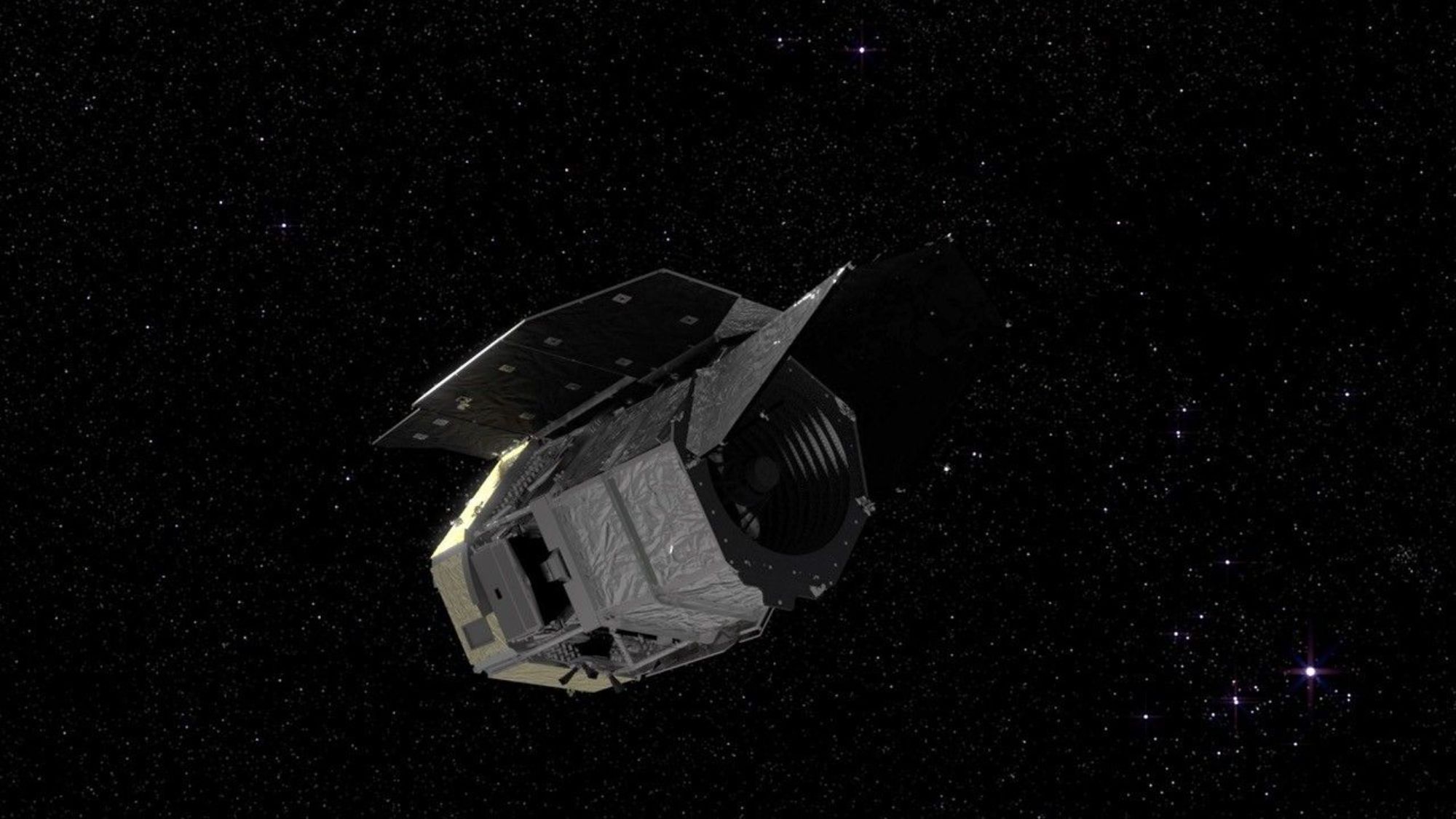
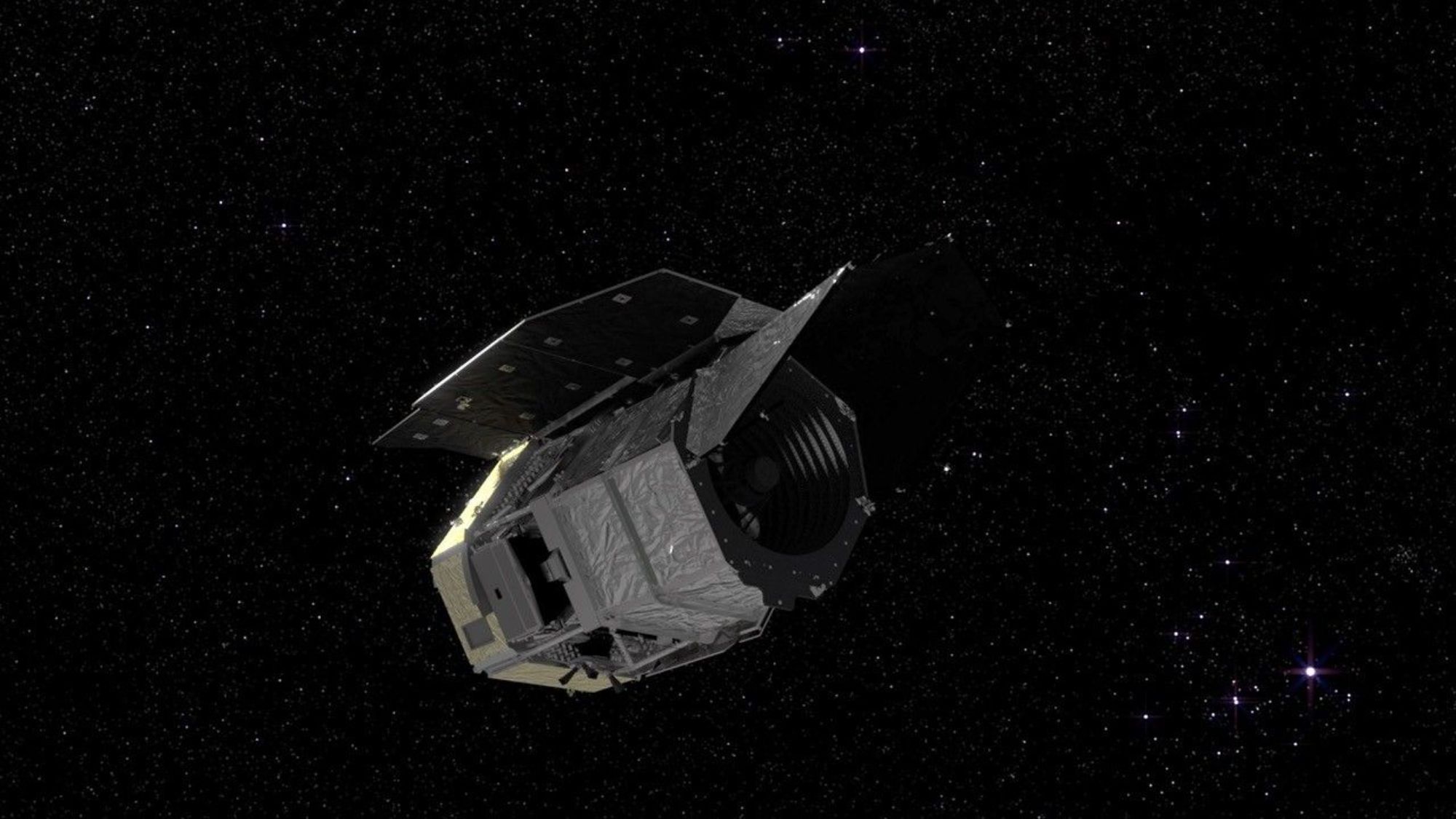
NASA’s newly launched Nancy Grace Roman Space Telescope is poised to radically expand its scientific legacy, with mission controllers confirming that precise engineering, meticulous orbital planning, and an exceptionally efficient launch have preserved enough propellant to sustain operations for at least 22 years. Originally engineered with a baseline lifetime of five years—with cautious optimism for a potential five-year extension contingent upon future funding—the observatory is now expected to scan the cosmos well into the late 2040s.
This unexpected longevity stems from a combination of a lighter-than-expected spacecraft structure and an extraordinarily accurate initial trajectory burn following its liftoff from Cape Canaveral. The development marks a monumental victory for NASA’s Astrophysics Division, ensuring that one of the agency’s next-generation flagship observatories will have ample resources to solve some of modern astrophysics’ deepest mysteries, including the nature of dark energy and the prevalence of exoplanets across our galaxy.
Launch and Journey to the Second Lagrange Point
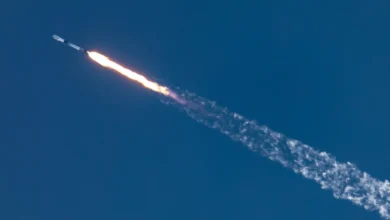
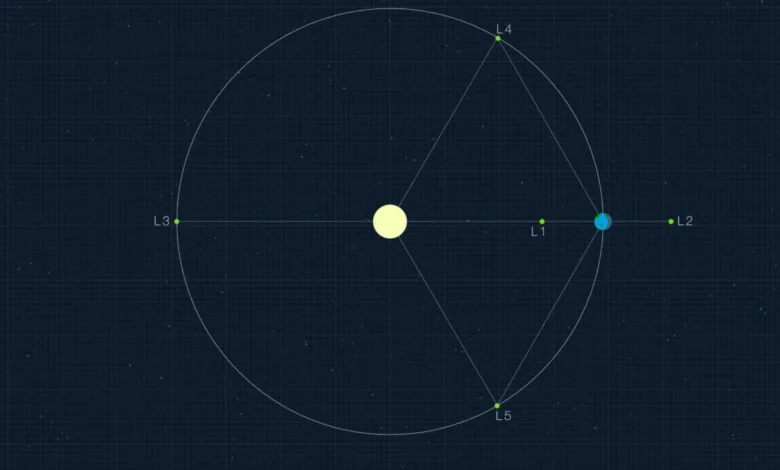
The Roman Space Telescope lifted off successfully on August 30 from Cape Canaveral, riding aboard a SpaceX rocket in a picture-perfect dawn launch that drew widespread praise from the aerospace community. The spacecraft is currently navigating toward its ultimate operational destination: the second Lagrange point (L2), a gravitationally stable region located approximately one million miles (1.5 million kilometers) away from Earth in the direction opposite the sun.
L2 has rapidly become the premier real estate for space-based astronomy. It offers an unobstructed view of the deep universe while allowing a spacecraft to maintain a stable thermal environment, shielded by the combined gravitational influence of the Earth and the sun. The Roman Space Telescope will join other premier assets at L2, most notably the James Webb Space Telescope (JWST), which has been operating successfully from its own halo orbit around the Lagrange point since early 2022. However, while JWST is optimized for deep-field infrared spectroscopy and ancient galaxy formation, Roman is designed for wide-field surveys, boasting a field of view that is 100 times greater than that of the Hubble Space Telescope’s infrared instrument.
The Mass Margin: How Lighter Design Translated to Extra Fuel
The foundation for Roman’s extended lifespan was laid years prior during the spacecraft’s design and manufacturing phase. When aerospace engineers begin building complex interplanetary and orbital spacecraft, they must establish a maximum budgeted mass to ensure that propulsion systems and launch vehicles are adequately rated.
During the initial design stages for the Roman mission, engineers established a maximum allowable mass threshold of 21,605 pounds (9,800 kilograms). Propellant capacity was calculated based on this theoretical upper limit to ensure the spacecraft would never run short of fuel during its operational life. However, as manufacturing, integration, and rigorous ground testing proceeded, the actual final mass of the spacecraft came in significantly lower than anticipated, weighing in at 17,760 pounds (8,065 kilograms)—a savings of nearly 4,000 pounds.
This substantial deficit in actual mass compared to the design budget created an unexpected windfall of payload capacity. Rather than launching with partially filled tanks tailored only to the baseline 10-year mission requirement, mission planners realized they could completely top off the propellant tanks.
"A spacecraft’s mass changes throughout the design and build process, so we base the propellant on a set maximum value so we won’t come up short," explained Alison Rao, who leads Roman’s propulsion systems at NASA’s Goddard Space Flight Center, in a formal statement. "We track the propellant needed based on actual mass throughout integration and testing as well, to make sure we have wiggle room. Since Roman’s mass was lower than we budgeted for, we were able to fill the propellant tanks to their capacity rather than only filling them as much as we needed to for the 10-year requirement."
By filling the tanks to maximum capacity, the baseline mission projection was immediately stretched from 10 years to at least 14 years before a single drop of fuel was even burned in space.
Precision Maneuvers Multiply the Savings
The windfall of fuel did not stop at the launchpad. Within 24 hours of clearing Earth’s atmosphere, the Roman Space Telescope executed a critical three-minute engine burn designed to insert the observatory onto its precise interplanetary transfer trajectory toward the L2 point.
Spacecraft trajectory corrections are notoriously delicate maneuvers, and mission planners routinely budget significant margins of error—and corresponding reserves of propellant—to account for potential deviations caused by atmospheric conditions, launch vehicle dispersion, or thruster inefficiencies. For Roman’s initial trajectory insertion maneuver, engineers had budgeted approximately 441 pounds (200 kilograms) of fuel.
However, the combination of SpaceX’s flawless launch delivery and the exemplary performance of Roman’s onboard propulsion system resulted in an insertion accuracy of 99 percent. The maneuver was executed with such surgical precision that it consumed a mere 40 pounds (18 kilograms) of fuel—less than 10 percent of the allocated budget. This single flawless execution instantly preserved enough propellant to buy the observatory an additional four years of operational life, pushing the projected lifespan to 18 years.
Furthermore, because the trajectory was established with such extraordinary accuracy, the secondary course-correction maneuvers required to guide the telescope smoothly into its final halo orbit around L2 in early December will similarly demand only a fraction of the originally estimated propellant. NASA orbital dynamics teams calculate that this downstream efficiency will unlock yet another four years of operational capability, bringing the total expected lifespan to a staggering 22 years.
Once the spacecraft officially enters its station-keeping orbit at L2, the fuel demands drop precipitously. Minor station-keeping burns will be required only once every 28 days to counteract gravitational perturbations, consuming a negligible amount of propellant over the course of a month.
Official Statements and Institutional Pride
The announcement of the extended mission timeline has generated immense enthusiasm across NASA leadership and the broader scientific community. Jamie Dunn, center director at NASA’s Goddard Space Flight Center, praised the cross-functional collaboration that made the milestone possible.
"As a result of exquisite planning by our orbital dynamics team, brilliant execution by the operations team, and a precise launch from SpaceX, Roman has fuel for at least 22 years of potential science operations," Dunn said in an official agency release.
The sentiment is echoed by engineers and principal investigators alike, who recognize that space telescopes of this scale are generational assets. Having a spacecraft operate continuously for more than two decades allows for longitudinal studies, deep-sky surveys, and follow-up observations that would otherwise be impossible under compressed mission timelines.
Broader Scientific Implications and Future Outlook
The Nancy Grace Roman Space Telescope—originally known as the Wide-Field Infrared Survey Telescope (WIST) before being renamed in honor of NASA’s first Chief Astronomer, often dubbed the "Mother of Hubble"—was designed to answer fundamental questions about the architecture of our universe.
With its immense field of view and high-resolution infrared instruments, the observatory is tasked with two primary scientific pillars: dark energy and exoplanet demographics. Dark energy remains one of the most confounding phenomena in modern physics, driving the accelerated expansion of the universe. By surveying billions of galaxies across cosmic time, Roman will help physicists measure the expansion rate with unprecedented precision.
Simultaneously, the telescope will pioneer new techniques in exoplanet research, utilizing advanced coronagraph technology to directly image cold, distant planets orbiting other stars. By blocking out the blinding glare of host stars, Roman will provide scientists with direct visual confirmation of planetary systems, paving the way for future atmospheric characterization.
With a guaranteed operational window stretching potentially to 2048, the Nancy Grace Roman Space Telescope has transformed from a planned decade-long endeavor into a cornerstone of twenty-first-century astronomy. The massive surplus in fuel not only mitigates the risk of premature mission termination but also ensures that successive generations of astronomers will have uninterrupted access to some of the sharpest, deepest views of the cosmos ever achieved.
Related posts: