Looking Back at Venus Express: Europe’s Historic Leap into the Solar System’s Most Hostile World

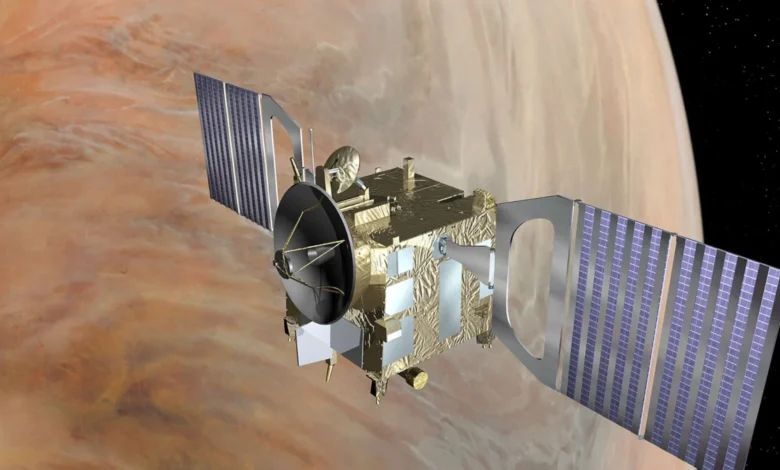
On November 8, 2005, the European Space Agency (ESA) officially inaugurated a bold new chapter in interplanetary exploration. Liftoff occurred at the Baikonur Cosmodrome in Kazakhstan, where a robust Russian Soyuz-Fregat rocket thundered into the autumn sky, carrying a precious and ambitious payload: the Venus Express spacecraft. This mission marked Europe’s very first voyage to Earth’s scorching, mysterious planetary neighbor, cementing ESA’s status as a major player in deep space exploration alongside the United States and the Soviet Union.
For more than nine years, the resilient spacecraft endured one of the most punishing environments in the solar system. Operating in a relentless bath of solar radiation and navigating the crushing atmospheric pressures of Venus’s orbit, Venus Express defied initial expectations. It outlived its primary mission profile by years, returning a treasure trove of scientific data that fundamentally reshaped how planetary scientists understand Venus. Ultimately, the mission met a fiery end in January 2015, when mission controllers deliberately directed the probe into the dense upper atmosphere during a daring, experimental aerobraking campaign.
The legacy of Venus Express extends far beyond a single orbital platform. By peering beneath the thick, sulfuric acid clouds of the second planet from the sun, the mission provided critical insights into planetary evolution, atmospheric dynamics, and the delicate balance of planetary climates—offering a stark and vital warning for Earth’s own climatic future.
Understanding the Adversary: The Harsh Reality of Venus
To truly appreciate the engineering triumph of Venus Express, one must understand the absolute hostility of its destination. Often referred to as Earth’s "twin" due to their similar size, mass, and bulk composition, Venus is in reality a nightmarish hothouse.
At the surface, temperatures soar to a blistering 900 degrees Fahrenheit (475 degrees Celsius)—hot enough to melt lead. The atmospheric pressure at ground level is a crushing 92 times that of Earth, roughly equivalent to the pressure experienced nearly a mile beneath Earth’s ocean waves. Above the surface lies a perpetual, global blanket of thick clouds composed primarily of concentrated sulfuric acid, driven by hurricane-force winds that whip around the planet every four days.
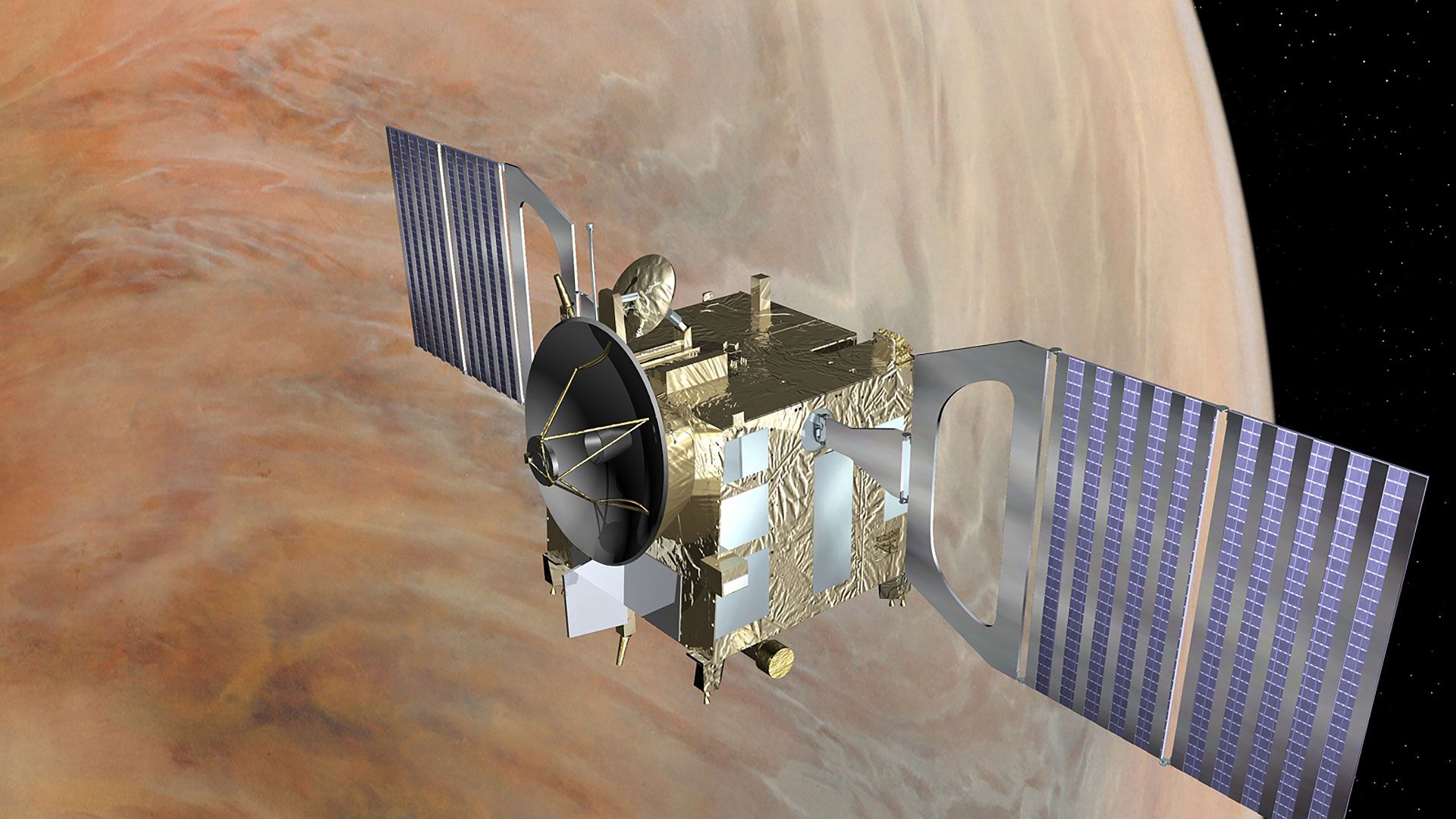
Even from the relatively safe sanctuary of orbit, Venus Express faced immense hurdles. The spacecraft had to contend with intense thermal radiation bouncing off the sun-baked planet below, as well as an unyielding onslaught of solar wind and cosmic rays unshielded by a strong planetary magnetic field. Despite these hurdles, engineers designed a robust thermal control system and utilized heritage technology from ESA’s earlier Mars Express mission to keep the spacecraft functioning.
Key Scientific Discoveries from Orbit
During its extended operational lifetime, Venus Express revolutionized planetary science through a series of groundbreaking observations. Operating a suite of specialized spectrometers, imagers, and plasma analyzers, the spacecraft peered through the veil of clouds to uncover several planetary mysteries.
Among its most striking discoveries was the documentation of a colossal, double-eyed atmospheric vortex swirling violently around the south pole of Venus. By tracking the movement of clouds over time, scientists watched as this atmospheric monster morphed and shifted, providing unprecedented data on the super-rotation of the Venusian atmosphere.
Furthermore, Venus Express provided some of the most compelling indirect evidence to date that Venus may still be volcanically active. By mapping thermal emissions from the surface, researchers identified localized hot spots near young volcanic structures, suggesting that molten rock may have erupted onto the surface within geologically recent history.
In a surprising revelation regarding the planet’s space environment, the mission discovered that Venus generates its own localized auroras. Unlike Earth, which channels solar particles along a powerful global magnetic field toward its poles, Venus lacks an intrinsic dipole magnetic field. Instead, its auroras are formed through a complex interaction between the solar wind and the planet’s induced magnetosphere, creating ethereal light shows in the night-side upper atmosphere.
A Daring Finale: The Aerobraking Campaign
As the spacecraft entered its ninth year of operations, its propellant reserves were steadily depleting. Rather than simply abandoning the aging orbiter to drift aimlessly or decay passively, mission planners devised a daring and unprecedented engineering test known as aerobraking.

In late 2014, controllers commanded Venus Express to dip deeper and deeper into the planet’s upper atmosphere, utilizing atmospheric drag to slow the spacecraft and lower its orbital altitude. This perilous maneuver pushed the structural integrity of the orbiter to its absolute limits. Originally designed to study the planet from a safe orbital distance, the spacecraft bravely skimmed through the fringes of the dense, acidic clouds.
The experiment was a technical success, providing scientists with invaluable data regarding the density and behavior of the upper atmosphere. However, the extreme frictional heating and atmospheric drag eventually took their toll. Communication with the spacecraft grew sporadic before failing entirely. Having exhausted its propellant and succumbed to the crushing forces of the atmosphere it sought to study, Venus Express officially burned up and disintegrated in January 2015.
Historical Significance and Global Context
The successful launch and execution of Venus Express marked a critical milestone for European space science. When the probe entered orbit around Venus in April 2006, ESA became only the third space agency in history to successfully send a mission to the planet, following decades of pioneering exploration by the United States and the Soviet Union. (Japan’s space agency, JAXA, would subsequently become the fourth in 2015 with its Akatsuki orbiter.)
The mission filled a significant gap in planetary exploration. Following NASA’s Magellan mission—which used radar to map the solid surface of Venus in the early 1990s—interplanetary focus shifted primarily toward Mars and the outer solar system. Venus Express revitalized the scientific community’s interest in Earth’s nearest planetary neighbor, proving that orbital spectroscopy and atmospheric sounding could unlock the secrets of an alien world without necessarily landing on its unforgiving surface.
Broader Implications: Venus as a Cautionary Tale for Earth
Why study a world as hostile and seemingly dead as Venus? According to organizations like The Planetary Society and planetary scientists worldwide, the answers are crucial for understanding the broader cosmos—and the future of our own planet.
Data gathered by missions like Venus Express strongly suggest that Venus was not always a sweltering hothouse. Geological models and isotopic measurements indicate that billions of years ago, Venus may have possessed liquid oceans on its surface, enjoying a temperate climate remarkably similar to early Earth.

However, a runaway greenhouse effect—triggered by massive volcanic outgassing and the accumulation of carbon dioxide in the atmosphere—fundamentally transformed the planet. As solar radiation increased over geological time, surface water evaporated, breaking down molecules and allowing hydrogen to escape into space while trapping heat permanently beneath a thick atmospheric blanket.
This evolutionary path makes Venus an indispensable natural laboratory. By studying how Venus-like planets change over time, climatologists can better refine complex computer models used to predict Earth’s climate trajectory. In essence, Venus serves as a profound planetary cautionary tale: a stark illustration of how delicate a planetary climate can be, and how dramatically a world can transform if greenhouse gases are allowed to accumulate unchecked.
Continuing the Legacy of Exploration
The scientific journey to Venus did not end with the demise of Venus Express in 2015. ESA maintained its connection to the planet years later when its BepiColombo spacecraft—a joint mission with JAXA designed to study Mercury—performed a carefully calculated gravity-assist flyby of Venus in 2018, using the planet’s gravitational pull to adjust its trajectory toward the innermost world of the solar system.
Looking forward, the global scientific community has renewed its commitment to unlocking the remaining secrets of Venus. NASA and ESA have both approved ambitious upcoming missions, including VERITAS, DAVINCI, and EnVision, scheduled to launch in the coming decade. These next-generation missions will build directly upon the foundational discoveries made by Venus Express, utilizing advanced radar, high-resolution imaging, and direct atmospheric descent probes to map the terrain, search for active geological processes, and hunt for chemical signatures of past habitability.
Two decades after that chilly November morning at Baikonur, the legacy of Venus Express endures. The mission proved that even the most extreme and inhospitable environments in our solar system can yield profound secrets, reminding humanity of the fragile beauty of Earth and the enduring value of interplanetary exploration.