The Box Office Year of the Unlikely Hit Continues as Godzilla Minus Zero Shatters Foreign Language Records With a Massive $31.6 Million Debut

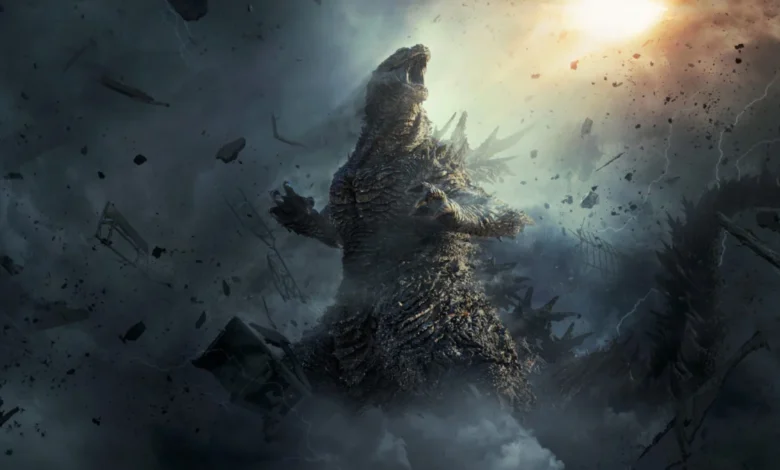
The 2026 box office landscape continues to upend decades-old industry conventions, proving that contemporary theatrical audiences are hungrier for distinct, non-traditional storytelling than traditional studio formulas suggest. Leading this charge is Toho’s latest kaiju epic, "Godzilla Minus Zero," which stormed North American theaters with a monumental $31.6 million opening weekend. This staggering debut obliterates previous benchmarks for live-action foreign-language films, easily eclipsing the 23-year-old record set by Zhang Yimou’s martial arts masterpiece "Hero," which opened to $17.8 million in 2002.
Global receipts for "Godzilla Minus Zero" have already surged to an impressive $63 million, signaling that the cultural appetite for high-concept, foreign-language spectacles has fully graduated from niche enthusiasm to mainstream dominance. The historic opening reflects a broader industry shift. While corporate-backed intellectual properties, long-running franchises, and traditional comic book adaptations—such as "Toy Story 5" and "Spider-Man: Brand New Day"—continue to command significant market share, the theatrical ecosystem has experienced a profound diversification of taste.
Cinemagoers have increasingly rejected the notion that only domestic mega-budget sequels can move the needle at the box office. Instead, audiences have demonstrated an overwhelming willingness to embrace original cinematic visions. Andy Weir’s hard sci-fi adaptation "Project Hail Mary" pulled in a massive $684.6 million worldwide; low-budget horror experiments spearheaded by twenty-something digital auteurs, including "Obsession" ($524.3 million) and "Backrooms" ($400.6 million), redefined profitability; a grand-scale adaptation of ancient Greek literature, "The Odyssey," raked in an astonishing $1.8 billion globally; and an unsparing three-hour documentary exploring corporate fraud in Silicon Valley, "You Can See Everything," quietly amassed $73.7 million and continues to climb.
A Chronological Evolution of the Franchise’s Modern Era
To fully understand the unprecedented trajectory of "Godzilla Minus Zero," one must examine the modern resurgence of Toho’s iconic monster. The current phenomenon is deeply rooted in the success of 2023’s "Godzilla Minus One," directed by Takashi Yamazaki. That film proved to be an unexpected sleeper hit domestically, eventually grossing $57.1 million in North America on a remarkably lean budget.
However, the domestic opening of that 2023 predecessor was a modest $11.4 million. Its true momentum was forged through word-of-mouth, critical acclaim, and downstream home entertainment consumption, which successfully cultivated a dedicated American fandom. Recognizing this swelling tide, distributor GKids strategically positioned "Godzilla Minus Zero" for a wider, more aggressive theatrical rollout.

Director Takashi Yamazaki returned to helm the project, exercising his dual mastery of narrative direction and cutting-edge visual effects. The resulting film has not only outpaced its predecessor’s opening weekend by nearly threefold, but it is also on track to surpass all historical records to become the highest-grossing live-action Japanese film released in North American history. Industry analysts note that this trajectory cements Toho’s strategic decision to treat international theatrical markets as primary revenue drivers rather than secondary afterthoughts.
The Demise of the Subtitle Barrier
The monumental success of "Godzilla Minus Zero" provides definitive proof that subtitles are no longer a deterrent for mainstream ticket buyers. For years, traditional Hollywood executives operated under the assumption that American audiences would actively resist foreign-language dialogue on the big screen. However, this outdated hypothesis was first dismantled by the streaming revolution, where platforms like Netflix demonstrated the immense global appeal of local-language programming, evidenced by the unprecedented cultural penetration of series such as "Squid Game," "Money Heist," and "Lupin."
The theatrical box office has since mirrored this paradigm shift. North American auditoriums have consistently filled for foreign-language cinematic releases, highlighted by Bong Joon-ho’s "Parasite," which grossed $53.8 million domestically; the animated juggernaut "Ne Zha 2," pulling in $23.2 million domestically; and the anime phenomenon "Demon Slayer: Kimetsu no Yaiba – The Movie: Infinity Castle," which shattered expectations with a staggering $136.9 million domestic haul.
The extraordinary financial performance of "Godzilla Minus Zero" ensures that this cultural exchange will continue to flourish. Given the film’s explosive debut and sustained audience enthusiasm, industry insiders widely anticipate that Toho will continue expanding its cinematic universe, ensuring the iconic radioactive leviathan remains a permanent fixture of global pop culture.
Casualties at the Box Office: Warner Bros. Struggles Continue
While "Godzilla Minus Zero" enjoyed a triumphant weekend, its primary direct competition suffered a steep and costly defeat. Warner Bros. Animation’s "The Cat in the Hat" stumbled out of the gate, grossing a disappointing $20 million domestically and a paltry $30 million globally.
The family-oriented adaptation carried a hefty production budget of $92 million, spelling significant financial losses for the studio. This misfire extends an increasingly troubling streak of commercial underperformances for Warner Bros., a legacy studio that recently finalized its high-profile acquisition by Skydance.

Financial analysts familiar with the studio’s internal balance sheets report that Warner Bros. has absorbed hundreds of millions of dollars in losses over the past year due to a string of high-profile box office disappointments, including "Digger," "Supergirl," "The Bride!," and now, "The Cat in the Hat." Studio executives had initially hoped the Dr. Seuss adaptation would function as reliable holiday-season counter-programming capable of righting the ship. Instead, the film’s soft commercial reception has done little to mitigate the mounting financial pressures facing the studio’s incoming leadership team.
Industry Implications and the Road Ahead
The contrasting fortunes of "Godzilla Minus Zero" and "The Cat in the Hat" offer a clear diagnostic of the current theatrical marketplace. Audiences are increasingly exercising discernment, actively penalizing recycled corporate properties that fail to offer creative innovation, while rewarding bold, director-driven visions—regardless of their language of origin or country of production.
For legacy studios like Warner Bros., the ongoing string of commercial misses underscores an urgent need to reevaluate development strategies, risk assessment models, and budgetary discipline. Conversely, independent distributors and international studios like Toho are reaping the rewards of cultivating distinct artistic voices and honoring audience intelligence.
As the 2026 box office calendar progresses into its next quarter, the historic triumph of "Godzilla Minus Zero" will undoubtedly serve as a watershed moment. It signals to Hollywood executives that the traditional rules of audience segmentation are obsolete, and that contemporary moviegoers are more than willing to follow compelling storytelling across language barriers, cultural divides, and traditional genre boundaries.
Related posts: