Ron Howard Unveils Definitive Documentary Avedon Capturing the Revolutionary Lens of a Twentieth Century Master

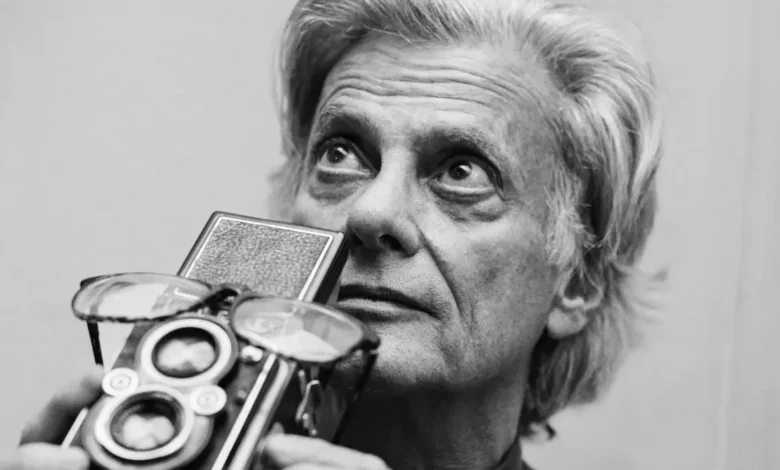
Director Ron Howard has returned with what critics are calling his finest documentary achievement to date: Avedon, a sweeping and masterfully crafted exploration of the life and career of legendary American photographer Richard Avedon. Featuring intricate editing by Andrew Morreale, the film weaves hundreds of the photographer’s most iconic images into a seamless visual narrative that explores how Richard Avedon permanently altered the metaphysics of modern photography and reshaped global visual culture.
The documentary presents a comprehensive portrait of an artist whose career spanned six decades, capturing the paradox at the heart of his work. Avedon was simultaneously the ultimate arbiter of high fashion and glamour, yet possessed the soul of a democratic humanist. Through rare archival footage, deep dives into his massive catalog, and contemporary interviews with cultural luminaries, the film contextualizes Avedon’s monumental footprint on art, media, and society.
Chronology and Early Influences: From Merchant Marine to Master
Born in New York City in 1923, Avedon developed an early obsession with visual preservation. As a child, he would momentarily close his eyes while walking down city streets to lock mental images into his memory—an instinctive precursor to formal photography. His formal training began when he enlisted in the United States Merchant Marines at the age of 19. Assigned to the photographic department, Avedon produced roughly 100,000 identification card portraits of enlisted personnel and laborers.
This seemingly mundane assignment served as his artistic crucible. By photographing thousands of bewildered faces against a stark, plain white background, Avedon discovered the profound power of stripping away contextual distractions. The stark backdrop served as an equalizer, forcing viewers to confront the raw individuality of each subject. This minimalist approach became his signature style, laying the foundation for a career defined by an existential, head-on classicism.
Following his military service, Avedon transitioned into the commercial and fashion spheres, rapidly rising to prominence in the mid-twentieth century. By the time Hollywood released the 1957 musical Funny Face—starring Fred Astaire as a fashion photographer explicitly modeled after Avedon—he had already achieved legendary status within the industry.
Supporting Data and Scale of Output
The scale of Avedon’s professional output is staggering. James Martin, executive director of the Richard Avedon Foundation, guides viewers through the labyrinthine archives that house the fruits of approximately 16,000 formal sittings conducted between 1944 and his death in 2004. Averaging out to roughly one sitting per day, Monday through Friday, across sixty years, this prolific output sustained an extraordinary visual archive.
The documentary illustrates that Avedon’s technical process was remarkably unorthodox. Rather than hiding behind complex camera setups or endlessly firing the shutter, Avedon prioritized psychological engagement. As recounted in the film by filmmaker and actress Isabella Rossellini, while other photographers captured hundreds of frames in rapid succession, Avedon would limit his sessions, often taking as few as ten total shots. He frequently spent the first portion of a scheduled hour in casual conversation, waiting until the final moments of a session to approach the white paper background and capture the definitive image.
Perspectives and Commentary from Cultural Luminaries
Ron Howard anchors the documentary with vintage clips of Avedon himself, whose piercing gaze and sharp articulation set the tone for the film. Avedon’s philosophy is captured early in the runtime when he declares, "I can say very little about photography. I follow no rules, no laws, and no advice."
To dissect this philosophy, Howard turns to an elite roster of artists, critics, models, and fashion icons. Contributors include Tina Brown, Larry Gagosian, John Lahr, Twiggy, Adam Gopnik, Hilton Als, Calvin Klein, and the photographer’s son, John Avedon. Each offers critical insights into how Avedon managed to bridge the seemingly disparate worlds of high-end commercial advertising and raw, unfiltered portraiture.
The film highlights famous sittings with cultural giants such as John Lennon, Orson Welles, Michael Jordan, Elizabeth Taylor, Groucho Marx, Anjelica Huston, Marilyn Monroe, Truman Capote, and J. Robert Oppenheimer. A standout sequence examines his 1957 session with Marilyn Monroe. After a grueling day of capturing the starlet in full, radiant glamour, Avedon secured his legendary portrait during a ten-second lull when Monroe dropped her defenses, revealing the vulnerable, complex woman behind the global icon.
Commercial Work and Creative Continuity
Avedon’s career was characterized by a distinct lack of artistic compromise between his commercial obligations and his fine art projects. To finance his lifestyle and ambitious independent projects, Avedon engaged heavily in commercial advertising, including iconic, surrealist television commercials for fragrances such as the Obsession perfume campaign.
The documentary argues that there was a seamless continuity between his fashion photography, commercial advertisements, and stark portrait series—such as his documentation of Oklahoma oil workers in 1980, American generals during the Vietnam War, the Chicago Seven, the members of Andy Warhol’s Factory, and the stark inhabitants of the American West. When first exhibited, his gritty vision of the American West was so challenging that several major New York museums initially rejected the collection, proving that Avedon remained perpetually ahead of his time.
Broader Impact and Critical Reception
Industry analysts and film critics have hailed Avedon as a masterclass in biographical documentary filmmaking, distinguishing it even among Ron Howard’s acclaimed catalog, which includes The Beatles: Eight Days a Week. By pairing dynamic editing with a sophisticated soundscape—such as setting a rapid-fire portrait montage to the martial rhythm of Spoon’s "I Turn My Camera On"—the film achieves a musical cadence that mirrors the rhythm of Avedon’s shutter.
Ultimately, the documentary posits that Richard Avedon’s enduring legacy lies not in his handling of aperture or lighting, but in his ability to use the camera as an instrument of psychological excavation. Whether photographing royalty, war generals, fashion supermodels, or everyday laborers, Avedon’s work consistently aimed to challenge perceptions and force viewers to truly see the individuals standing before the lens.
Related posts: