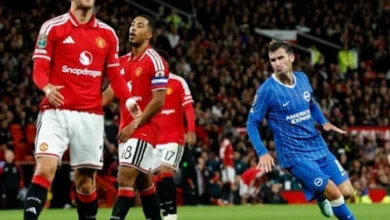
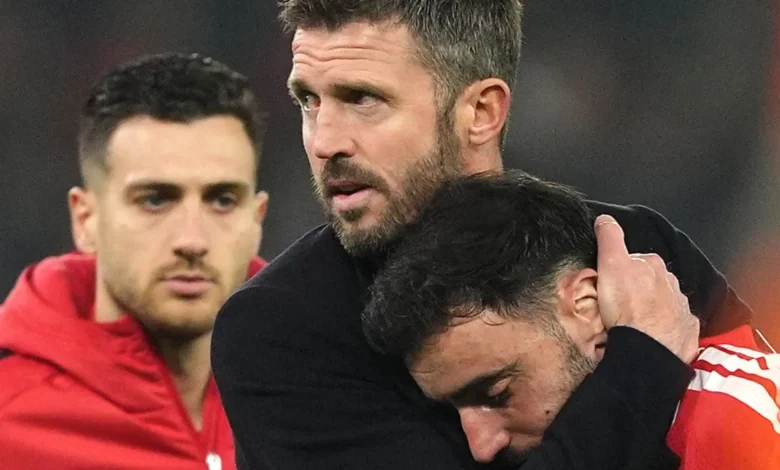
Michael Carrick: Manchester United boss ‘expects’ to stay on despite club sitting in relegation zone after Aston Villa draw

A Historic Slump in Performance
The statistical reality facing Manchester United is grim. To find a comparable start to a league campaign, one must look back nearly four decades. The current 18th-place standing is not merely a dip in form but a reflection of systemic fragility that has plagued the club across multiple regimes. The eight-game winless run represents an unprecedented collapse for a club of this stature, serving as a bleak marker of the distance between current performances and the expectations of the fanbase.
For context, the 1986/87 season was a transformative period for Manchester United, eventually leading to the arrival of Sir Alex Ferguson. While the current board faces different challenges in the modern era, the historical parallels serve as a stark reminder of the gravity of the club’s current trajectory. The inability to secure three points over nearly two months of competition has eroded the confidence of supporters and pundits alike, creating a climate of intense pressure for Michael Carrick.
The Post-Match Confrontation
In the immediate aftermath of the stalemate with Aston Villa, Carrick faced rigorous questioning regarding his future. During an exchange with Sky Sports’ Patrick Davison, the manager was pressed on whether he believed his position remained tenable given the lack of results.
The tension was palpable as the manager deflected inquiries about his expected future. When asked if he believed he would remain in charge, Carrick stated, "It’s not going to happen, no," firmly dismissing the notion of a voluntary resignation. He maintained that the focus must remain on the tactical adjustments required to stop conceding avoidable goals. "We understand the situation; we haven’t won enough games. But I expect to move forward and keep working on things we’ve been working on, showing a lot of the good in the game today, tighten up on a few mistakes and win football matches," he added.
Tactical Fragility and Defensive Vulnerability
Carrick’s assertion that the team played "pretty well" for the majority of the match highlights a disconnect between his assessment and the results on the pitch. While the offensive output was sufficient to score four goals, the defensive frailty remains a glaring issue. Conceding four goals at home against a side like Aston Villa underscores a lack of cohesion in the defensive third and an inability to manage high-pressure moments.
"Football is about moments, football is about what happens in both boxes in the end," Carrick remarked during his post-match press conference. "Take away the moments and the totally avoidable goals we’ve given away, I actually thought we played pretty well, we were the better team for the most part and I’m disappointed we haven’t won the game."
This emphasis on individual errors rather than structural failure suggests that the coaching staff believes the system is sound, provided the players can execute with greater discipline. However, repeating these lapses over an eight-game stretch indicates a deeper, more pervasive issue regarding player concentration and tactical awareness that has yet to be addressed effectively.
Institutional Failure: The Neville Critique
The discourse surrounding Manchester United has shifted from individual coaching decisions to a broader critique of the club’s institutional governance. Gary Neville, speaking on NBC, offered a scathing assessment that transcended the current manager’s tenure. Neville argued that the cycle of managerial turnover has obscured the underlying issues within the club’s recruitment and leadership structure.
"You can keep changing the manager and thinking that’s going to be the answer. But this has been proven now over eight managers in 12 years—that’s not the answer," Neville stated. He pointed to a pattern of poor decision-making at the executive level, citing a lack of alignment from the board down to the players on the pitch.
Neville emphasized that even the most accomplished managers—including those with world-class reputations—have failed to stabilize the club. This failure, he argued, stems from a lack of a cohesive strategy, a subpar performance department, and a recruitment policy that has failed to provide managers with the tools necessary to compete at the highest level. The presence of individuals in senior leadership roles who lack the relevant experience has, in Neville’s view, rendered the club’s sporting project fundamentally unstable.
A Dressing Room Lacking Leadership
Roy Keane, a former captain and vocal critic of the club’s current state, echoed sentiments regarding the lack of accountability within the squad. Keane suggested that the players appear to be "tiptoeing around each other" and lack the necessary internal drive to demand high standards.
"I don’t see that as an honest dressing room. The really top players put demands on each other. They all seem to be tiptoeing around each other," Keane observed. He was particularly critical of Carrick’s demeanor, describing it as "politician-like" and suggesting that the manager’s calm approach might be misaligned with the urgency required to address a relegation-threatened campaign.
Keane’s warnings extended to the fixture list, specifically highlighting the upcoming match against Liverpool. He questioned the squad’s ability to "roll their sleeves up," secure a clean sheet, or demonstrate the grit necessary to navigate difficult stretches. "How many chances are Liverpool going to get? I don’t think this is a top Liverpool team, but do you believe United are going to roll their sleeves up and get a clean sheet? Dig in deep? Be hard to beat? Start quick? Well, good luck with that one."
Implications of the November International Break
The upcoming two-week international break represents a critical juncture for Manchester United’s ownership. Historically, such periods are used by clubs in crisis to evaluate managerial performance and determine whether a change is necessary. With the team in the relegation zone, the pressure on the board to provide clarity on the club’s long-term direction has never been higher.
If Carrick remains in charge, he faces the daunting task of reshaping the defensive structure and restoring confidence in a squad that appears devoid of clear leadership. Should the results continue to stagnate, the board will face increasing demands from supporters and commentators to break the cycle of instability that has defined the post-Ferguson era.
The challenges are multifaceted. Beyond the immediate need for points, there is a requirement to convince a disillusioned fanbase that the club has a coherent strategy. The current situation is not merely a test of Carrick’s ability to motivate his players, but a test of the organization’s capacity to learn from past mistakes. The statistics—the lowest points total at this stage in nearly forty years and an eight-game winless streak—provide an objective baseline of failure that can no longer be ignored.
Conclusion
Manchester United stands at a crossroads. While Michael Carrick remains committed to the task of reversing the team’s fortunes, the evidence from the pitch and the harsh realities of the league table suggest that the situation is critical. The combination of defensive incompetence, a lack of on-field leadership, and deep-seated institutional issues has created a perfect storm for the club. As the Premier League pauses for the international break, the focus shifts from the pitch to the boardroom, where decisions made in the coming days may define the remainder of the season and, potentially, the future direction of the football club. Whether the current leadership can survive the mounting pressure or if the club will opt for yet another change in direction remains the most significant question facing English football today.