The Great MAGA Pivot: How Trump’s Inner Circle is Navigating the Aftermath of a Historic Electoral Collapse

Two days following the conclusion of a transformative midterm election that saw a sweeping democratic mandate, the landscape of the American right has undergone a sudden and jarring transformation. For the architects and loudest boosters of the Donald Trump movement, the crushing reality of the "blue wave" has necessitated an immediate pivot—from the fervor of absolute loyalty to a calculated, often frantic, search for a new political survival strategy.
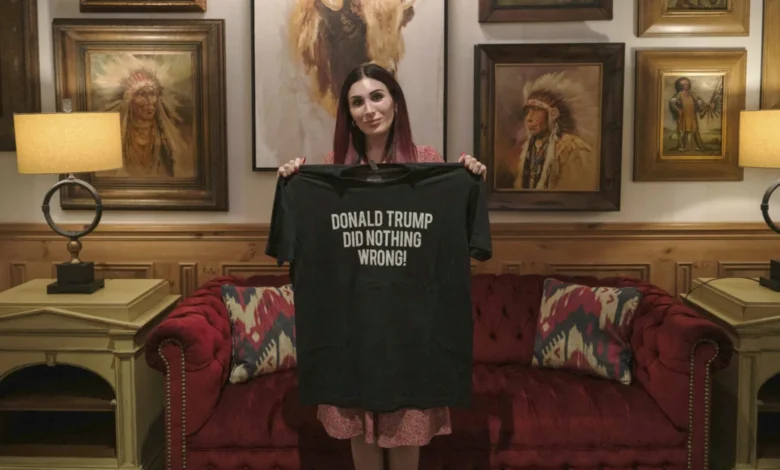
The shift is perhaps most visible in the sudden withdrawal of figures who, until 48 hours prior, served as the ideological vanguard for the former president. Laura Loomer, the firebrand conspiracy theorist and unabashed Islamophobe who had cemented her status as one of Donald Trump’s most influential, albeit controversial, inner-circle voices, signaled an abrupt change in posture. Following the confirmation of widespread Republican losses in both the House and the Senate, Loomer announced via her social media channels that she would be suspending her twice-weekly livestream, "Loomer Unleashed."
Citing a need to "recharge, refocus, and be present" with a focus on her upcoming wedding, Loomer’s departure from the digital stage arrived amidst mounting scrutiny. Just days before her announcement, the Washington Post reported that Loomer had allegedly been paid by private clients to disseminate political messaging on the platform X without disclosing these financial relationships. While Loomer has characterized her work as journalistic in nature, the timing of her retreat suggests a broader trend: the once-invincible MAGA influencer class is suddenly finding its footing on unstable ground.
A Chronology of the Electoral Reckoning
The current political climate serves as a direct, if unintended, consequence of the strategy employed by the Trump campaign throughout the autumn. In September 2026, Donald Trump explicitly framed the midterm cycle as a referendum on his own tenure and policy directives. By tying the party’s fate inextricably to his personal brand, he effectively ensured that the public’s dissatisfaction with his administration would translate into a systemic electoral wipeout for the Republican Party.
The chronology of the fallout began on the evening of the midterms, as early projections showed a massive surge in turnout favoring Democratic candidates. By the following morning, the scale of the defeat—resulting in the loss of key Senate seats and a significant contraction in the House—became undeniable.
Within 24 hours of the final tallies, the "reality distortion matrix" that had defined the campaign began to fracture. Benny Johnson, a prominent MAGA content creator, shifted from his standard boosterism to a critical appraisal of the administration’s foreign policy, specifically the war in Iran. In a stark departure from the party line, Johnson declared the conflict "not worth it," echoing a sentiment that has increasingly permeated the disillusioned base. This rhetoric—focused on the preservation of the nation over international interventionism—represents a significant ideological pivot for a cohort that previously demanded total adherence to Trump’s every directive.
Data and Policy Implications
The economic backdrop of this shift cannot be ignored. While Republican leadership initially sought to blame incumbent inflation on the Biden administration, recent data indicates that voters were far more concerned with the stagnation of their own purchasing power and the failure of GOP policy to address cost-of-living crises.
Texas Senator Ted Cruz, long a fixture of conservative orthodoxy, has begun a noticeable repositioning. In a recent podcast appearance, Cruz conceded that for millions of Americans, life had become demonstrably more difficult over the past two years. His pledge to "rebuild as a true blue-collar party" by emphasizing free-market principles rather than populist resentment is widely interpreted as a positioning move for the 2028 presidential cycle.
The data confirms the necessity of this shift. Exit polling suggests that independent voters—a demographic that swung decisively toward the Democratic ticket—cited the foreign policy entanglements in Iran and the persistent economic volatility as their primary motivators.
Official Responses and Internal Discord
Within the highest echelons of the Trump administration, the reaction to the loss has been uneven, ranging from total silence to tactical distancing. Vice President JD Vance has emerged as one of the few high-profile figures to openly acknowledge the underlying causes of the electoral catastrophe.
"The reason we lost is the war," Vance noted, specifically referencing the ongoing military engagement in Iran. His acknowledgement of the administration’s unpopularity, coupled with his concerns regarding inflation and the evolving nature of the U.S.-Israel relationship, signals a significant break from the monolithic messaging that previously characterized the executive branch.
Similarly, David Sacks, who played a central role as Trump’s AI and crypto "czar," echoed these concerns on social media. By framing the election result as a direct consequence of the war and its subsequent economic drag, Sacks is attempting to insulate the technocratic wing of the movement from the political damage inflicted by the administration’s broader foreign policy agenda.
The MAHA Movement’s Strategic Realignment
Perhaps the most curious development in the wake of the defeat is the evolution of the MAHA (Make America Healthy Again) movement. Co-president Tony Lyons, a key ally of Robert F. Kennedy Jr., has publicly signaled a willingness to cross the aisle, stating that the movement is interested in working with "good people across the political spectrum."
This represents a deliberate attempt to detach the MAHA agenda from the toxicity of the broader MAGA brand. As Mary Holland, president of the Children’s Health Defense, noted, "We’ve been associated with MAGA. But MAHA is not a political party per se. It’s about principles." By rebranding as a single-issue coalition rather than a partisan extension of the Republican Party, these figures are hedging their bets, hoping to preserve their influence regardless of which party controls the levers of government.
Broader Impact and Future Outlook
The current situation presents a classic political dilemma: how to maintain access to a polarizing leader while avoiding the reputational and electoral wreckage associated with his failed policies. For figures like Loomer, Vance, and Lyons, the "post-referendum" environment requires a delicate balancing act.
The electoral wipeout of 2026 serves as a stark reminder of the limits of personality-driven politics. When a campaign is constructed entirely as a referendum on a single individual, the results of that referendum become the defining legacy of that individual’s career. As the Republican Party moves forward, the internal debate will likely intensify between those who remain loyal to the core tenets of the Trump era and those who believe that the party must abandon the rhetoric of the last four years to survive.
Analysts observe that the "recharging" period announced by various influencers is likely a euphemism for a broader, necessary cooling-off phase. The political, economic, and social costs of the recent election have created a vacuum where, for the first time in nearly a decade, the unquestioned dominance of the MAGA movement is being challenged from within.
As the dust settles, the implications for the 2028 cycle remain unclear. However, one fact remains: the coalition that defined the American right for the better part of the 2020s is splintering. Whether this leads to a more moderate iteration of conservatism or a further descent into fragmented, single-issue movements remains the central question facing the American electorate in the coming years. For now, the "Trump referendum" has yielded its verdict, and the political class is left to interpret the silence that follows.