The Unpredictable Rise of Anthony Constantino and the Shifting Landscape of New York Politics

The election of Anthony Constantino to represent New York’s 21st Congressional District marks a departure from the traditional political norms of the region. A businessman and political newcomer, Constantino secured his seat by a slim two-point margin, a result that surprised analysts who had anticipated a more comfortable victory given the district’s historical Republican leanings. His campaign, defined by aggressive rhetoric, significant personal financial investment, and a populist platform aligned with the "America First" movement, has sparked intense debate regarding the future of the Republican Party in the Northeast.
A Campaign Defined by Unconventional Tactics
Constantino’s path to Congress was fueled by $17 million of his own capital, amassed through his tenure as the CEO of Sticker Mule. Unlike traditional candidates who rely on established political machinery, Constantino utilized a disruptive strategy that often bypassed local party institutions. His primary campaign was characterized by a direct, combative style—a strategy he maintained through the general election.
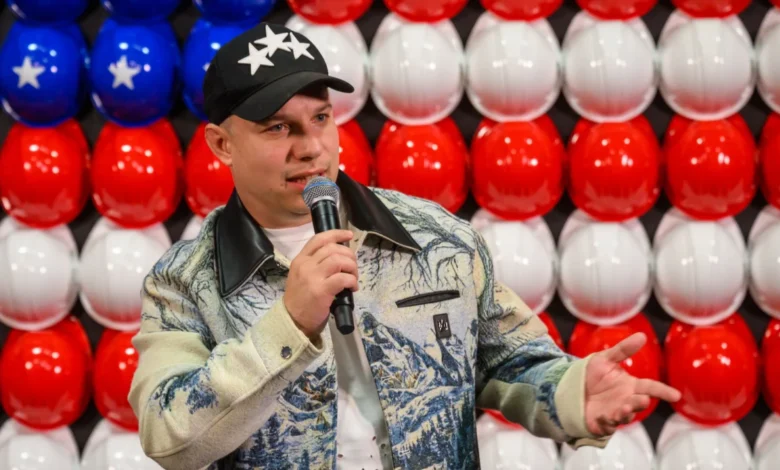
During his campaign, Constantino utilized his background as a rapper, comedian, and amateur boxer to craft a persona that resonated with a specific segment of the electorate while alienating local Republican leadership. His public appearances were frequently marked by verbal attacks on political opponents and media members alike. In one notable instance during an election-eve rally in an Amsterdam, New York airplane hangar, Constantino redefined the term "fake news" as "evil news," directing his supporters to photograph members of the press.
The Role of High-Profile Endorsements
The campaign’s intensity reached its peak in the final days before the vote, when the candidate was bolstered by appearances from Donald Trump Jr. and JD Vance. Their arrival via Air Force Two was intended to solidify support in a district that had previously supported the Republican ticket by a 20-point margin in 2024. Despite this high-level backing, the race remained a statistical dead heat until the final ballots were cast.
The presence of national figures, however, did not mask the internal tensions within the state party. Carol Constantino, the candidate’s mother, provided a rare glimpse into his formative years during the rally, acknowledging that her son had been a "stubborn" and "challenging" child following the death of his father. This narrative of a defiant, self-made man served as a central pillar of his campaign identity, framing his confrontational nature as a strength rather than a liability.
A Narrow Victory and Statistical Underperformance
The final results revealed a significant discrepancy between Constantino’s performance and that of his predecessors. Rep. Elise Stefanik, who held the district previously, had secured a 24-point victory in 2024. Constantino’s two-point win suggests a significant erosion of the party’s traditional coalition within the district. Political analysts point to his polarizing rhetoric and unconventional background as potential factors that may have suppressed voter turnout among moderate Republicans and independent voters who have historically been the backbone of the party’s success in Upstate New York.
The chronological progression of his campaign—from his primary victory over the establishment to his narrow general election win—highlights a growing schism between grassroots populist candidates and the traditional GOP establishment in New York. His victory now places him as one of only two Republican freshmen from the Northeast, a position that grants him outsized influence in a slimmed-down congressional caucus.
Institutional Friction and Post-Election Fallout
The friction between Constantino and the Republican establishment did not end with his victory. In the hours following the polls closing, the candidate engaged in a series of public confrontations, most notably targeting local party officials. His text message to Schenectady County GOP Chair Liz Joy, demanding her resignation, and his subsequent social media posts labeling New York Republican chairs as "scammers," underscore the volatility that has defined his political entry.
Bruce Blakeman, the former GOP nominee for New York governor, publicly characterized Constantino as the "worst candidate" he had encountered. This sentiment was echoed by the Albany Times Union editorial board, which had expressed concerns regarding his suitability for office well before the election. These critiques reflect a broader concern among political observers that Constantino’s legislative tenure may be as contentious as his campaign.
Policy Implications and Legislative Future
As Constantino prepares to take office in January, his legislative agenda remains largely undefined, overshadowed by his controversial public persona. His calls for executive action—including his suggestion that President Trump should consider clemency for hip-hop mogul Sean "Diddy" Combs—have drawn criticism from both sides of the aisle.
The primary concern for political observers is how such an unconventional figure will navigate the committee-based work of the House of Representatives. Historically, the legislative process relies on compromise and coalition building, two practices that have been conspicuously absent from Constantino’s public career. His reliance on social media to settle personal scores and his willingness to attack allies and adversaries alike could complicate his ability to secure committee assignments or influence legislation.
Furthermore, the legal and ethical controversies surrounding his associates continue to cast a shadow over his inauguration. With allegations involving fraud and criminal activity linked to his inner circle, his term in Congress will likely be subject to intense scrutiny from ethics committees and the federal judiciary.
The Broader Impact on New York Politics
The ascent of Anthony Constantino is symptomatic of a shifting political paradigm in which brand recognition and personal wealth often outweigh traditional political experience. By successfully challenging the New York GOP establishment, Constantino has demonstrated that the influence of local party leaders is waning in the face of well-funded, populist-driven campaigns.
However, the cost of this victory is a fractured party base. For the Republican Party in New York, the challenge moving forward is to bridge the gap between candidates like Constantino and the traditional electorate. If the party continues to nominate figures who rely on abrasive, anti-institutional rhetoric, it risks losing its foothold in a region that has become increasingly competitive.
As Constantino transitions from candidate to lawmaker, the focus will inevitably shift to his performance on the floor of the House. Whether he evolves into a pragmatic legislator or remains a disruptive force will determine his legacy and the future viability of the political movement he represents. For now, the 21st District stands as a case study in the modern political era: a region where national trends have collided with local traditions, resulting in an outcome that defies conventional wisdom and leaves the political establishment searching for answers.
The coming months will provide the first real evidence of how Constantino’s unorthodox style translates to the halls of power in Washington, D.C. With a slim majority and a fractured caucus, the Republican leadership will be forced to manage a freshman member who has already signaled his intent to operate outside the traditional boundaries of party loyalty. His tenure promises to be one of the most closely watched and unpredictable in recent congressional history.
Related posts: