The Most Walkable Cities in the United States and the Benefits of a Pedestrian-Centric Lifestyle

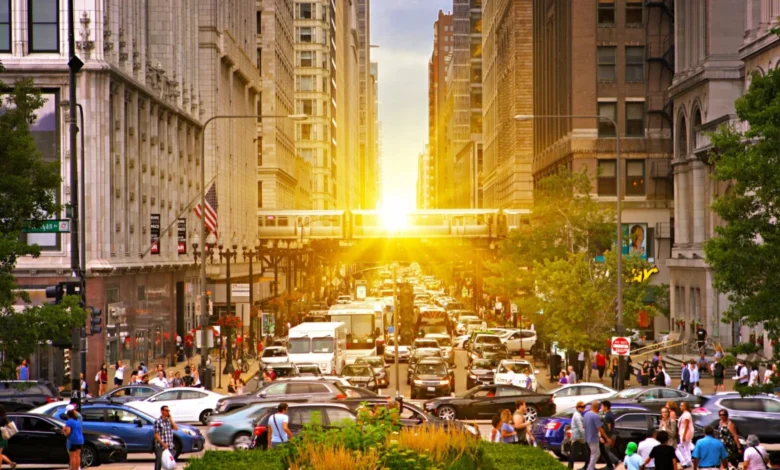
Rising fuel costs, the escalating expenses associated with vehicle maintenance and insurance, and a growing public focus on personal health and environmental sustainability have combined to reshape how Americans view urban mobility. For many residents in major metropolitan areas, the traditional reliance on the private automobile is being supplanted by a preference for walkable infrastructure. This transition is not merely a matter of convenience; it represents a fundamental shift in urban planning, real estate valuation, and public health policy. As Daryl Fairweather, chief economist at Redfin, notes, walkability serves as a multi-faceted catalyst for community well-being, impacting everything from household disposable income to the social fabric of neighborhoods.

The metrics used to define these spaces are becoming increasingly sophisticated. Organizations such as Redfin, through its Walk Score tool, and platforms like Only in Your State, have developed comprehensive scoring systems that evaluate urban environments based on the proximity of essential services, the density of mixed-use developments, and the accessibility of public transportation. These rankings, which have evolved over the last decade, reflect a growing consensus: neighborhoods that prioritize human-scale movement over high-speed traffic tend to experience higher property values and increased levels of civic engagement.
The Evolution of the Walkable City
The historical trajectory of American urban development in the mid-20th century was largely dictated by the expansion of the interstate highway system and the rise of suburbanization, which prioritized the automobile. However, the early 21st century has seen a reversal of this trend. Urban cores have become focal points for reinvestment, with cities prioritizing the "15-minute city" concept—an urban planning model where residents can access work, education, shopping, and healthcare within a short walk or bike ride from their homes.

This evolution is evidenced by the top-tier rankings of cities like Hoboken, New Jersey. Often cited as a primary example of modern, high-density planning, Hoboken’s near-perfect Walk Score of 97 is the result of a deliberate, long-term commitment to a dense street grid and integrated transit hubs. The success of the New Jersey region—with Union City, West New York, and Jersey City also frequently appearing in top-10 lists—suggests that regional planning initiatives are just as vital as city-specific improvements.
Data-Driven Rankings and Regional Highlights
The identification of the most walkable cities is now backed by granular data sets. According to recent analyses, the following cities consistently demonstrate high pedestrian accessibility:

- Hoboken, New Jersey: Recognized for its unique geography and dense residential-commercial integration.
- West Hollywood, California: Despite the broader Los Angeles region’s reputation for car dependency, this enclave serves as a model for concentrated, pedestrian-friendly nightlife and commerce.
- Boston, Massachusetts: Leveraging centuries-old infrastructure, Boston proves that historic layouts can often be more efficient for pedestrians than modern sprawl.
- San Francisco, California: High transit scores and a commitment to mixed-use neighborhoods compensate for the city’s challenging topography.
- New York, New York: As the country’s largest metropolis, the grid system remains the gold standard for navigating a major urban center without a vehicle.
- Washington, D.C.: A blend of national landmarks and high-density residential neighborhoods makes the capital one of the most accessible cities for pedestrians.
- Chicago, Illinois: The integration of transit, cultural landmarks, and local businesses creates a consistent, walkable experience throughout its diverse neighborhoods.
- Miami, Florida: Emerging pockets of density, such as Coconut Grove, demonstrate that even cities traditionally built for cars can adapt to pedestrian-first models.
- Philadelphia, Pennsylvania: High ratings from international tourism and pedestrian studies underscore the value of a walkable historic core.
Economic and Public Health Implications
The implications of living in a highly walkable city are significant. Beyond the obvious reduction in personal transportation costs—which can save households thousands of dollars annually on fuel, parking, and insurance—there are substantial public health outcomes. Kate Wollman-Mahan, a real estate agent at Christie’s International Real Estate, points to data indicating that life expectancy in cities like New York is higher than the national average, a phenomenon often attributed to the "passive exercise" of daily walking.
Economically, the "Walk Score premium" is a verified real estate trend. Properties located in highly walkable areas often command higher sale prices and retain their value better during economic downturns. This is because the desirability of "access" is a finite resource. When a home is located within walking distance of essential services, it becomes an attractive asset for a wider range of buyers, from young professionals to retirees.

Furthermore, the environmental impact is profound. A shift away from internal combustion engine vehicles in favor of walking or public transit is one of the most effective ways to lower a city’s per-capita carbon footprint. By reducing the number of vehicle miles traveled (VMT), cities can lower air pollution levels, decrease traffic congestion, and reduce the need for expansive, heat-absorbing parking infrastructure.
Perspectives from the Field: The Role of Local Businesses
Local commerce serves as the heartbeat of the walkable city. Sheldon Bishop, founder of BrewAtlas, argues that the density of specialty coffee shops and independent retailers is a reliable proxy for the health of a neighborhood. When residents choose to walk to a local cafe rather than drive to a chain, they are participating in a local micro-economy that fosters social cohesion.

This sentiment is echoed by Wendy Newman, a veteran real estate agent in San Francisco. For Newman, the act of walking is an experience that cannot be replicated by driving. The ability to encounter neighbors, observe local architecture, and stumble upon spontaneous community events creates a sense of place that is often absent in car-dependent environments.
Challenges to Universal Walkability
While the benefits are clear, the challenge remains in scaling these models to the rest of the country. Many American cities are constrained by legacy infrastructure that is inherently hostile to pedestrians. Wide arterial roads, lack of shade, insufficient lighting, and a lack of continuous sidewalks create "pedestrian deserts" that make walking dangerous or uncomfortable.

Governmental bodies and urban planners are increasingly looking toward the strategies employed by the top-ranked cities as a blueprint. This includes:
- Zoning Reform: Shifting away from single-use zoning to allow for mixed-use, high-density developments.
- Transit-Oriented Development (TOD): Concentrating housing and retail projects around public transportation nodes to ensure that the "last mile" of a commute is easily walkable.
- Public Space Investment: Prioritizing the creation of plazas, parks, and protected pedestrian paths that encourage residents to spend time outdoors.
Conclusion
The data confirms that the most successful cities in the 21st century will be those that prioritize the pedestrian. As public awareness grows, the demand for housing in walkable, transit-rich environments is expected to outpace supply, potentially driving further investment in urban renewal projects across the United States. Whether it is the historic corridors of Boston, the high-density grids of Hoboken, or the revitalized pockets of Miami, the message from residents, economists, and urban planners is uniform: walkability is the foundation of a modern, efficient, and healthy society.

As we look toward the future, the transition to pedestrian-friendly cities will likely become the primary metric for urban competitiveness. While the transition away from car-centric planning presents logistical and financial hurdles, the long-term rewards—greater economic resilience, improved public health, and enhanced social connectivity—position the walkable city as the most viable solution to the challenges of modern urban living. The integration of these principles into the national development agenda remains one of the most critical tasks for policy makers in the coming decades.