Moving Day for America’s New Governors: Inside the Historic Residences of the Nation’s Executive Leaders

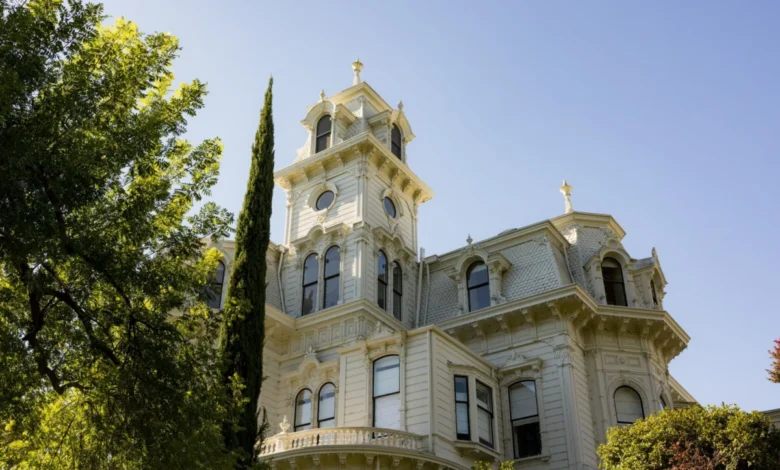
As the calendar turns to January, nineteen newly elected governors across the United States are preparing for a transition that involves more than just policy agendas and cabinet appointments; they are facing the logistical and ceremonial reality of moving into state-provided executive residences. While the presidency centers on the White House, the state-level equivalent—the governor’s mansion—serves as a vital intersection of private family life, public diplomacy, and state heritage. Of the 50 states, 45 maintain official residences for their chief executives, with Arizona, Idaho, Massachusetts, Rhode Island, and Vermont being the notable exceptions that do not provide a permanent housing facility for their governors.

The tradition of the governor’s mansion is deeply rooted in American civic history. These structures, often architectural landmarks, serve as symbols of executive authority and public accessibility. However, the modern era has seen a shifting dynamic in how these buildings are utilized. Some governors view the residence as an essential office and living space, while others, citing security, privacy, or personal preference, opt for private accommodations. This tension between tradition and modernity has created a diverse landscape of residency practices, ranging from the continuous, multi-century occupation in states like Virginia to the long-term abandonment seen in Nebraska.
The Evolution of Executive Living
The concept of the "People’s House" at the state level gained momentum during the late 19th and early 20th centuries, as states sought to formalize the dignity of the governor’s office. Architectural styles were selected to reflect the status of the state, resulting in a tapestry of Neoclassical, Greek Revival, and Colonial structures.

However, the maintenance of these aging mansions has become a fiscal and political challenge. Many of these buildings are over a century old, requiring significant capital investment for structural upgrades, modern security, and energy efficiency. When these costs collide with public budget constraints, the resulting disrepair can become a political liability. For instance, the Montana governor’s mansion currently sits in a state of disrepair, and the Nebraska governor’s mansion has remained unoccupied for over a decade, signaling a potential shift away from the model of state-funded executive housing in those regions.
Profiles of the New Residences
As the 2025-2026 cohort of governors takes office, their housing situations vary significantly based on state infrastructure and historical precedent.

Alabama: The Neoclassical Legacy
Republican Tommy Tuberville enters office with the keys to a 17-room neoclassical estate in Montgomery. Constructed in 1907 by architect T. Weatherly Carter, the residence is defined by its commanding Corinthian columns and a grand bifurcated staircase. For the incoming administration, the mansion represents a century of Alabama politics, serving as a backdrop for both formal state business and personal residence.
California: A Restoration of Tradition
In Sacramento, Democrat Xavier Becerra will transition into a 20,000-square-foot Victorian residence. The home has a tumultuous history; it was famously deemed "uninhabitable" by Ronald Reagan in 1967. After decades as a state historic site, it underwent a comprehensive restoration in 2015 to accommodate modern governors once again. Its amenities, including Italian marble fireplaces and a swimming pool, reflect the grandiosity of 19th-century luxury updated for contemporary needs.

Colorado: The "People’s Home"
Democrat Phil Weiser assumes office in Denver at the state’s official residence, a 1908 Colonial Revival structure. Known as "Colorado’s Home," the estate features 27 rooms and expansive grounds that include a carriage house and greenhouse. A unique touch added by previous administrations includes a selection of local craft beers on tap, underscoring the mansion’s role as a venue for fostering local industry and hospitality.
Florida: Historical Resilience
Governor-elect Byron Donalds, the first Black governor in Florida’s history, will reside in a Greek Revival mansion completed in 1956. This residence was built on the site of a previous 1907 structure that had succumbed to neglect. Today, the residence stands as a testament to the state’s investment in maintaining its executive heritage, offering modern amenities like a screened swimming pool and rose gardens.

Georgia: Grandeur in Atlanta
Democrat Keisha Lance Bottoms, breaking barriers as the first Black woman governor-elect in the U.S., will take up residence in an expansive 30,000-square-foot Greek Revival mansion. Built in 1967, the home spans three levels and serves as a significant administrative and social hub in Atlanta, reflecting the growth and stature of the state during the latter half of the 20th century.
Iowa: The Terrace Hill Institution
Terrace Hill, an 18,000-square-foot Second Empire-style mansion, will host Democrat Rob Sand. Dating back to 1869, the estate functions as both a private home and a public museum. Since 1976, the first two floors have been open to the public, a policy that balances the governor’s need for privacy with the public’s interest in historical preservation.

Comparative Data and Financial Implications
The decision to inhabit an official mansion versus a private home often carries financial and security implications. While a governor’s mansion is state-funded, the security requirements for a private home can create additional costs for taxpayers. According to recent budgetary reviews, the average annual cost to maintain a governor’s mansion can range from $200,000 to over $1 million, depending on the age of the structure and the level of public programming hosted at the site.
In contrast, California Governor Gavin Newsom’s recent decision to list his private $7.5 million home highlights the trend of high-net-worth individuals serving in office who may find official state residences restrictive or ill-suited to modern family life.

Official Responses and Public Sentiment
Public reaction to the occupation of these mansions is generally mixed. In states like Virginia, where the residence has been occupied continuously since 1813, the tradition is seen as an essential part of the state’s identity. However, in states where the mansion is viewed primarily as an office, residents often express concerns about the taxpayer burden.
Official state statements regarding these properties emphasize "preservation" and "the public trust." Governors are often encouraged to host state dinners, charity events, and diplomatic meetings within these walls, effectively turning the residence into a semi-public venue. This dual-use nature often justifies the substantial maintenance costs to the legislature.

Broader Impacts: The Intersection of History and Policy
The residency of a governor is not merely a logistical matter; it is an extension of their political platform. A governor who moves into a historic mansion often uses the setting to project stability, tradition, and continuity. Conversely, those who choose to live in private homes or move into more modest, modern facilities may be signaling a more pragmatic or populist approach to the office.
Furthermore, the state of these buildings can serve as a proxy for the state’s fiscal health. A well-maintained mansion suggests a legislature that values heritage and has the funds to support it, whereas an abandoned or dilapidated mansion can be interpreted as a failure of state management.

As we look toward the future, the trend toward "the people’s house" being used as a hybrid space—half-museum, half-home—appears to be the most sustainable model. By opening these doors to the public, states can increase the cultural value of the properties, making it easier to secure funding for their upkeep. For the nineteen governors moving in this January, the experience will be a defining aspect of their tenure, serving as a daily reminder of the history they are tasked with preserving and the future they are expected to shape.
As these leaders settle into their new surroundings, they join a long line of predecessors who have navigated the unique challenges of living in the public eye. Whether in a Victorian home in Sacramento or a Dutch Colonial in Tulsa, the governor’s mansion remains a powerful symbol of state leadership, bridging the gap between the private life of the individual and the public responsibilities of the office.