The Evolution of Motorsport Architecture: Inside the Engineering of the Madring Formula 1 Circuit

The realization of the Madring circuit marks a watershed moment in the history of Formula 1 infrastructure, representing the culmination of a grueling three-year odyssey for lead designer Jarno Zaffelli and his firm, Dromo. As the engines roar to life in Spain’s capital this weekend for the 2026 Spanish Grand Prix, the global motorsport community turns its collective gaze toward a track that promises to challenge the conventional wisdom surrounding urban street racing. Spanning 5.4 kilometers of both purpose-built asphalt and integrated public roads, the Madring circuit stands as a testament to the modern F1 ambition: bringing the world’s most elite racing spectacle directly into the heartbeat of a major metropolitan hub.
The Architectural Vision and Design Philosophy
For Zaffelli, whose 25-year career has seen the construction of over 200 motorsport facilities globally, the Madring project was never merely about laying pavement. It was a delicate exercise in urban integration and high-speed engineering. The circuit is designed to navigate the complex geography of the IFEMA convention center while weaving through the rapidly developing Valdebebas neighborhood, strategically located in the shadow of the Madrid-Barajas airport.

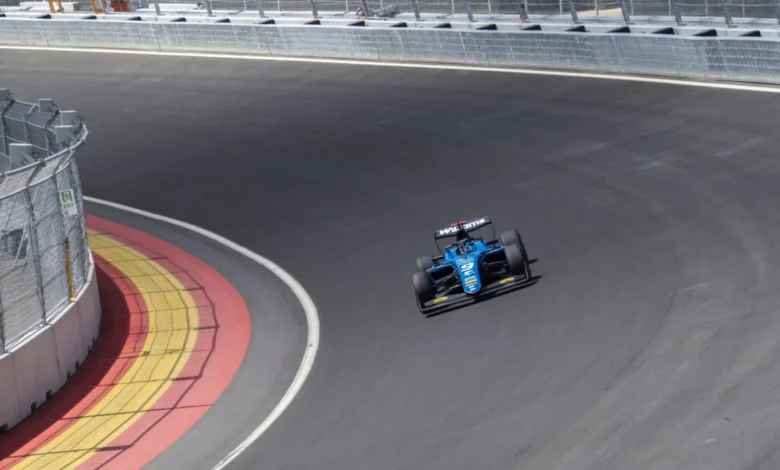
The design philosophy focused on overcoming the "street circuit stigma"—the prevailing belief that temporary tracks are inherently narrow, lack overtaking opportunities, and result in processional, uneventful races. To combat this, Zaffelli prioritized flow and elevation. The track features 22 corners, but it is the dramatic "La Monumental" turn—turn 12—that serves as the circuit’s centerpiece. With a 24% slope gradient and a 10-meter peak elevation, the turn represents one of the steepest corners in the entire Formula 1 calendar. It is engineered to force drivers to commit to high-speed lines, with speeds expected to exceed 300 km/h, challenging both the aerodynamic grip of the cars and the physical endurance of the drivers.
A Chronology of Construction
The transformation of the Valdebebas area into a world-class racing venue was a logistical marathon that spanned 17 months of intensive construction, commencing in April 2025. The project required the displacement of approximately one million square meters of earth, a feat of civil engineering that necessitated constant collaboration with over 50 municipal and federal entities. From environmental oversight agencies to air traffic controllers at the neighboring airport, the administrative burden of the project was, by Zaffelli’s admission, the most complex challenge of his career.
The project timeline was defined by rigorous testing phases. In July 2026, the Ferrari F1 team conducted an inaugural test, providing critical feedback on track surface adhesion and cornering dynamics. This was followed by a broader trial run by Formula 3 vehicles in August, which served as a stress test for the facility’s safety systems and corner configurations. These tests were vital in refining the final track surface and ensuring that the runoff areas met the FIA’s stringent Grade 1 safety requirements.

Data and Technical Implications
The technical specifications of the Madring circuit are designed to force mechanical adaptation. Unlike traditional permanent circuits such as Spa-Francorchamps or Silverstone, the Madring circuit incorporates 1.5 kilometers of public roads, meaning the surface texture and camber profiles are non-uniform.
Data analysts and team engineers have noted that the high-G forces generated at La Monumental will require teams to utilize stiffer suspension setups and higher ride heights than those typically employed on smoother permanent tracks. The potential for vertical oscillation—or "porpoising"—could become a significant factor as drivers navigate the rapid elevation changes leading into the banked corner. Furthermore, the proximity of the grandstands to the track is not merely aesthetic; it is a deliberate architectural choice intended to amplify the auditory experience for fans, placing them within meters of the action to heighten the sensory impact of the sport.
Industry Perspectives and Skepticism
While the anticipation surrounding the debut is high, the project has not been without its critics. Veteran track designer Robert Barnard, the architect behind the iconic Adelaide Street Circuit, has voiced concerns regarding the safety and racing quality of the layout. Barnard specifically pointed to the "blind" nature of several corners as a potential deterrent for aggressive driving.

The Formula 3 test run, which resulted in 19 red flags, has fueled speculation that the circuit’s complexity may be disproportionate to the margin of error allowed by the street-side barriers. "These drivers are brave, but they are not stupid," Barnard remarked, suggesting that in a high-stakes Grand Prix, the combination of new tarmac, lack of runoff, and restricted sightlines could lead to cautious racing rather than the high-speed spectacle organizers hope for.
Conversely, industry experts like David Hobbs argue that the red flags witnessed during junior testing are not necessarily indicative of a flawed design. Hobbs, who has analyzed Formula 1 since the early 1990s, suggests that the "rookie" nature of the F3 grid often leads to higher incident rates and that the premier class of Formula 1 will likely find the track manageable once they have completed the Friday practice sessions. He notes that the "vibe" of a new, city-based venue often outweighs the technical concerns of purists, as the event serves as a massive commercial and cultural engine for the host city.
The Broader Context: F1’s Global Expansion
The construction of the Madring circuit is part of a larger trend in Formula 1’s business model. Following the meteoric rise in popularity driven by the Netflix docuseries Drive to Survive, the sport has aggressively expanded its footprint into major metropolitan markets. The addition of high-profile street races in Miami, Las Vegas, and now Madrid, highlights a shift toward high-luxury, high-visibility events that leverage urban infrastructure to attract a new generation of fans.

This strategy is not without its critics, who argue that the sport is moving away from its historical roots. However, the commercial success of these events is undeniable. By placing the race within city centers, Formula 1 has successfully integrated itself into the lifestyle and tourism sectors of these cities, moving beyond the niche confines of traditional racing fans.
Future Outlook and Economic Impact
The implications of the Madring circuit extend beyond this weekend’s flag drop. The long-term success of the track will likely be measured by its ability to facilitate overtaking and its durability under the strain of a full-scale F1 race weekend. If the circuit proves capable of producing high-intensity racing, it could cement Madrid’s position as a permanent fixture on the F1 calendar for the next decade.
For Jarno Zaffelli, the goal is simple: to prove that a street circuit can offer the same technical challenge as a purpose-built track. As the cars take to the grid, the focus will shift from the blueprints and administrative challenges to the tarmac itself. The world will be watching to see if the Madring, with its dramatic banked turns and high-speed flow, can deliver on the promise of a new era for Formula 1 in Spain. As Zaffelli prepares to watch the race unfold, his hope remains that the audience, the drivers, and the critics alike will walk away with a redefined understanding of what an urban racetrack can achieve. The 2026 Spanish Grand Prix is more than just a race; it is a case study in the future of motorsport design.