Apple Unveils iPhone Duo Foldable, A20 Pro-Powered iPhone 18 Pro Lineup, And AirPods 5 at Annual Event


Apple Inc. hosted its highly anticipated annual product showcase, delivering a comprehensive lineup of hardware and software updates that largely aligned with industry leaks and insider reports while introducing groundbreaking form factors. Held at Apple Park in Cupertino, California, the event was spearheaded by Chief Executive Officer Tim Cook and key executive teams. The announcements spanned across multiple core categories, highlighted by the debut of Apple’s long-awaited foldable smartphone, the iPhone Duo, alongside the powerful iPhone 18 Pro series, upgraded AirPods 5, and the health-centric Apple Watch Series 12 and Ultra 4 models.
The launch event underscored Apple’s strategic push toward advanced artificial intelligence integration via iOS 27, next-generation mobile processing nodes, and enhanced health telemetry systems. As consumer tech markets face slowing upgrade cycles, these new products aim to stimulate hardware adoption through significant performance gains, thermal architecture overhauls, and entirely new device categories.
The Main Event: iPhone Duo Marks Apple’s Entry Into Foldables
The centerpiece of the presentation was the introduction of the iPhone Duo, marking Apple’s official entry into the foldable smartphone market. Long rumored by industry analysts, the device adopts a book-style folding mechanism designed to bridge the gap between traditional smartphones and tablet computing.

When closed, the iPhone Duo features an outer display measuring 5.4 inches with an unconventional aspect ratio that Apple compared to the dimensions of a passport. This exterior screen houses a front-facing selfie camera and incorporates an iPadOS-style Dock on the right side of the interface for rapid multitasking. Upon unfolding, users are greeted by an expansive 7.4-inch internal display that transforms the home screen layout into a tablet-grade operating environment while retaining the sidebar Dock.
Software adaptation remains a key selling point for the Duo. iOS dynamically responds to various physical orientations, allowing the device to operate in a tent configuration for media consumption or a laptop posture that shifts interface controls to the bottom half of the screen. Split-screen multitasking enables users to drag and drop content between applications, and a window-pairing feature preserves specific multi-app setups across sessions. To mitigate structural concerns, the Duo utilizes a nano-texture matte finish designed to minimize glare and reflections, paired with a custom hinge engineered from more than 100 precision components.
Powered by the A20 system-on-chip, the Duo incorporates a dual-battery architecture split across both halves of the chassis, delivering a rated 24-hour battery life under balanced dual-screen usage. Connectivity is bolstered by Apple’s proprietary C2 modem, which aims to improve data upload speeds and network reconnection reliability. Imaging capabilities are driven by a 48-megapixel primary shooter paired with a 2-fold telephoto lens, supporting advanced Photographic Styles and 4K time-lapse recording. Authentication shifts from Face ID to Touch ID, with secondary support for Apple Watch proximity unlocking.
Priced starting at $1,999 for the 256GB base configuration with storage options extending up to 2TB, the iPhone Duo will be available for pre-order beginning October 16, with retail availability scheduled for October 23.
iPhone 18 Pro and 18 Pro Max Push Thermal and Imaging Boundaries

Complementing the foldable debut, Apple announced the iPhone 18 Pro and iPhone 18 Pro Max, maintaining the familiar design language of their predecessors while introducing new colorways: Black, Silver, Glacier (deep blue), and Burgundy (dark red). Both models feature color-matched aluminum-to-glass chassis and a reduced Dynamic Island capable of managing up to three simultaneous interactive actions.
Performance leaps are driven by the A20 Pro chip, fabricated using a cutting-edge 2-nanometer manufacturing process. The silicon integrates a six-core CPU featuring two performance super-cores and four efficiency cores, yielding a reported 20% speed increase over the A19 Pro. Graphics processing is handled by a seven-core GPU delivering a 40% performance boost alongside seven dedicated Neural Accelerators and a 32-core Neural Engine. Total memory bandwidth has been increased by 50%.
Thermal management has received a major upgrade through a redesigned vapor chamber system boasting three times the surface area of the previous generation. This cooling architecture allows the iPhone 18 Pro series to sustain peak performance for extended periods, achieving a 40% improvement in sustained workloads compared to the iPhone 17 Pro and doubling the performance stability of the iPhone 16 Pro. Battery longevity sees substantial gains, with the iPhone 18 Pro Max offering what Apple describes as the largest single-generation battery expansion in iPhone history, translating to up to 45 hours of video playback. Fast-charging capabilities permit a 50% charge in 15 minutes via wired connections.
The camera system introduces physical variable apertures to regulate light intake dynamically, permitting up to 50% more light in low-light environments. Professional creators benefit from 60fps Cinematic Video, 4K Dolby Vision HDR time-lapses, and "Pro Controls," which grant direct manual adjustments over white balance, shutter speed, and aperture without requiring third-party software. Additionally, the introduction of Apple Reference Image provides a secure digital negative workflow to maintain asset verification even after AI-assisted editing.
The iPhone 18 Pro starts at $1,199 for 256GB, while the iPhone 18 Pro Max starts at $1,299. Pre-orders open on September 12, with units hitting shelves on September 18. Notably, Apple did not announce a standard base iPhone 18 model during the event.

Audio Enhancements: AirPods 5 Bring Active Noise Cancellation to the Baseline
In the audio category, Apple revealed the AirPods 5, engineered around a redesigned multi-port acoustic architecture and upgraded Adaptive EQ. Most notably, the baseline AirPods 5 now include Active Noise Cancellation (ANC), delivering a 50% reduction in ambient noise compared to the previous generation’s ANC-equipped models. These earbuds feature enhanced sweat and dust resistance, offering four hours of continuous playback with ANC enabled (extending to 20 hours with the charging case) at a competitive entry price of $129.
A secondary tier of the AirPods 5 introduces stem-based volume control, five hours of continuous ANC playback, and a wireless charging case priced at $149, positioning them $30 below the launch price of the preceding AirPods 4 with ANC.
Health Sensing System Powers Apple Watch Series 12 and Ultra 4
Wearable technology updates were anchored by a comprehensive new "Health Sensing System" integrated into the Apple Watch Series 12 and the rugged Apple Watch Ultra 4. The updated sensor array records continuous heart rate data every five seconds—representing a sixty-fold increase in sampling frequency over prior generations—and measures heart rate variability (HRV) every five minutes.

Data collected by the new sensors feeds into an updated "Readiness" metric, which evaluates physical activity, physiological vitals, and sleep patterns to categorize recovery status into actionable advice tiers: Recover, Pace Yourself, Ready, and Go For It. The accompanying Apple Health application has undergone a complete redesign, incorporating Apple Intelligence summaries, a "Health Age" metric, a Longevity tab, and dedicated injury recovery tracking tools.
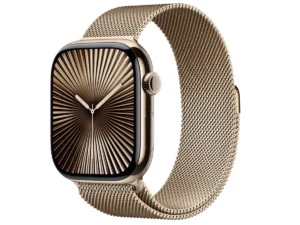
Processing these intensive health algorithms is the new S11 chip, built with a dual-core CPU, single-core GPU, and a quad-core Neural Engine derived from the A20 architecture. The Series 12 features a ceramic-shielded aluminum casing available in Space Gray, Black, Light Gold, and Dark Bronze, alongside premium titanium and ceramic finishes. Battery performance reaches 24 hours for the Series 12, while the Ultra 4 exceeds two days of continuous use. Pricing is set at $399 for the Series 12 and $799 for the Ultra 4.
Broader Industry Implications and Timeline
Apple’s 2026 hardware rollout illustrates the company’s aggressive integration of advanced silicon manufacturing and artificial intelligence across its entire ecosystem. By introducing the iPhone Duo, Apple enters the fiercely competitive foldable device sector currently dominated by rivals such as Samsung and Google, offering a luxury-tier alternative aimed at power users and enterprise adopters.
Concurrently, the democratization of Active Noise Cancellation in the AirPods 5 and the profound health telemetry integration in the Apple Watch Series 12 signal an ongoing strategy to capture market share through high-value feature additions at stable price points. As pre-orders for the iPhone 18 Pro series and AirPods roll out ahead of their mid-September release, followed by the October debut of the iPhone Duo, market analysts will closely monitor consumer uptake of Apple’s first foldable device and the real-world performance of its advanced thermal and AI architectures.