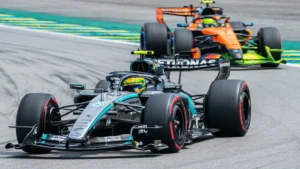
Charles Leclerc signals major Ferrari overhaul after grueling Friday practice at the Sao Paulo Grand Prix

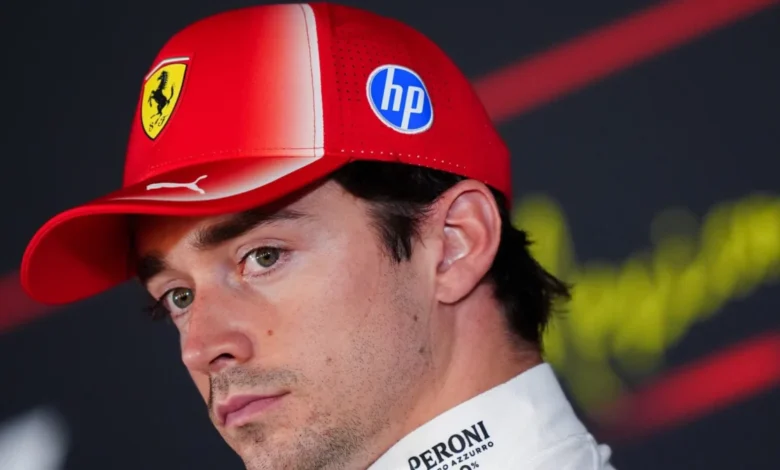
Ferrari driver Charles Leclerc has confirmed that the team will undertake significant setup changes to his SF-24 ahead of Saturday’s track action at Interlagos, following a Friday practice session that he described as one of the most challenging experiences of his current campaign. While the Scuderia has enjoyed a resurgence in recent weeks, securing podium finishes in each of the last four Grands Prix, the opening day of the Sao Paulo weekend proved to be a sobering reality check for the Maranello-based squad.
During the second practice session on Friday, Leclerc finished seven tenths of a second off the pace set by Mercedes’ Kimi Antonelli. His teammate, Lewis Hamilton, fared little better, clocking in nearly half a second behind the frontrunners as Ferrari struggled to maintain pace with the dominant Mercedes, McLaren, and Red Bull packages. The struggle for performance was compounded by the unique characteristics of the Autódromo José Carlos Pace, a venue known for its undulating, bumpy surface and high-altitude demands.
A Difficult Friday at Interlagos
The technical challenges facing Ferrari were immediate. Both Leclerc and Hamilton reported difficulties in finding a stable balance, particularly regarding tire management and mechanical grip. Interlagos is notoriously hard on tires, and with track temperatures fluctuating, the drivers struggled to keep their rubber within the optimal operating window.
"FP2 was very tricky," Leclerc remarked following the session. "Actually, if anything, it was one of the worst feelings I’ve had this year in the car. There is plenty to work on because it didn’t feel quite right. I’ve got some ideas on how we can rectify this, and we will change the car quite significantly overnight. I hope we can take a step forward because, even though I missed FP1, I don’t think there was much performance to be found in the current setup. The raw pace simply wasn’t there."
Lewis Hamilton echoed his teammate’s sentiments, noting that the track conditions were far from ideal for the current generation of ground-effect cars. "It was a challenging day," Hamilton said. "The track is very bumpy and slippery, which made it incredibly difficult to get the tires into the right window. FP1 was okay overall, but FP2 proved more difficult. We have gathered plenty of useful data, so we will work through that with the team tonight to understand where we can improve the car ahead of qualifying."
Weather Uncertainties and Technical Implications
The struggles encountered on Friday carry significant weight given the forecast for the remainder of the weekend. Meteorologists have predicted a high probability of rain for Saturday afternoon’s qualifying session, a scenario that would drastically alter the playing field. Furthermore, Sunday’s race is expected to be held in unusually cold conditions, with ambient temperatures potentially dipping as low as 15°C.
For Ferrari, the inability to generate tire temperature on Friday is a major concern. If the team cannot find a setup that allows them to "switch on" the tires effectively, they risk being left behind in both the qualifying shootout and the race. The technical staff at Ferrari is now under immense pressure to analyze the data collected across both sessions to find a balance between high-downforce requirements and the need for straight-line speed on the track’s long run up the hill toward the start-finish line.
A Personal Milestone Amidst Professional Pressure
While the focus on track has been intense, the week has been profoundly personal for Charles Leclerc. The 29-year-old arrived in Brazil later than usual after celebrating the birth of his daughter, Bianca, on Wednesday. Leclerc, who is now one of five active Formula 1 drivers to balance the rigors of the sport with fatherhood—joining the ranks of Max Verstappen, Fernando Alonso, Nico Hulkenberg, and Sergio Perez—spoke candidly about the experience.
"It’s definitely the most special thing ever," Leclerc said. "You kind of expect it because I’ve always wanted to be a young dad, and obviously with Alex [his wife], we felt like it was the right time. It’s a very, very special moment and definitely a week I will forever remember for all the positive reasons. Of course, there have been other things going on as well, but for me, this week was all about Bianca, and it has been incredible."
The emotional weight of such a significant life event often provides a unique perspective for athletes. Whether this brings a renewed sense of focus or a distraction remains to be seen, but Leclerc’s determination to salvage his weekend performance suggests that he is fully committed to maintaining Ferrari’s recent momentum despite the rocky start in São Paulo.
The Broader Context: Ferrari’s Resurgence
Ferrari’s recent form has been a highlight of the latter half of the 2024 season. After a mid-season slump, the team’s development path—particularly regarding aerodynamic upgrades—has allowed them to challenge McLaren and Red Bull consistently. The team has been on a sustained podium streak, and the engineers are acutely aware that any slip-up at Interlagos could hamper their standing in the Constructors’ Championship.
The team principal, Fred Vasseur, has remained pragmatic about the incident in Mexico City between his two drivers last week, emphasizing that the focus must remain on the collective goal. By settling internal tensions and refocusing on the technical challenges, Ferrari hopes to minimize the deficit seen on Friday. The "significant" changes promised by Leclerc are not just minor adjustments; they likely involve a fundamental revision of the suspension geometry or ride-height settings to better cope with the bumps of the track.
Chronology of the Weekend
The schedule for the remainder of the weekend is tight, leaving little room for error. Following the completion of Friday’s practice, the teams are confined to the paddock, where engineers work through the night to simulate various configurations.
- Saturday, November 7: The final practice session (FP3) begins at 2:30 PM, serving as the last opportunity to test the "significant" changes Leclerc mentioned. Qualifying follows at 6:00 PM, which will be the critical test of whether the overnight developments have succeeded.
- Sunday, November 8: The Sao Paulo Grand Prix is scheduled for 5:00 PM. With the added factor of cold temperatures and the high risk of track evolution, the race is expected to be a strategic battle of tire preservation and tactical pit-stop windows.
Analytical Perspective
The data from Friday confirms that while Ferrari has the raw potential, they are currently missing the "sweet spot" of the car’s setup window. The seven-tenth gap to the top is uncharacteristic of their recent performance and suggests that the team may have been experimenting with different downforce levels or ride-height configurations that did not yield the expected results on the bumpy Interlagos surface.
The "bumpy and slippery" nature of the track is a recurring theme in driver feedback at this venue, but it is an issue that top-tier teams usually mitigate by the second session. That Ferrari remained off the pace suggests a deeper correlation issue between their simulation tools and the actual track behavior. If they cannot resolve this overnight, they risk falling into the midfield, where the competition is fierce and overtaking is difficult.
As the paddock prepares for the final push of the triple-header, all eyes will be on the Ferrari garage. The combination of an emotional high for Leclerc and a technical low for the team creates a compelling narrative for the weekend. Whether the promised setup changes can bridge the gap to the front-runners will be the defining story of Saturday’s qualifying session. For Leclerc, the challenge is to compartmentalize the joy of his new family life with the cold, hard requirements of championship-level motorsport, ensuring that the progress made in the last four races is not undone on the historic tarmac of Interlagos.
Related posts: