The Rise of the Enough Phone: How a New Startup is Resurrecting the Compact Smartphone Market for Nostalgic Consumers

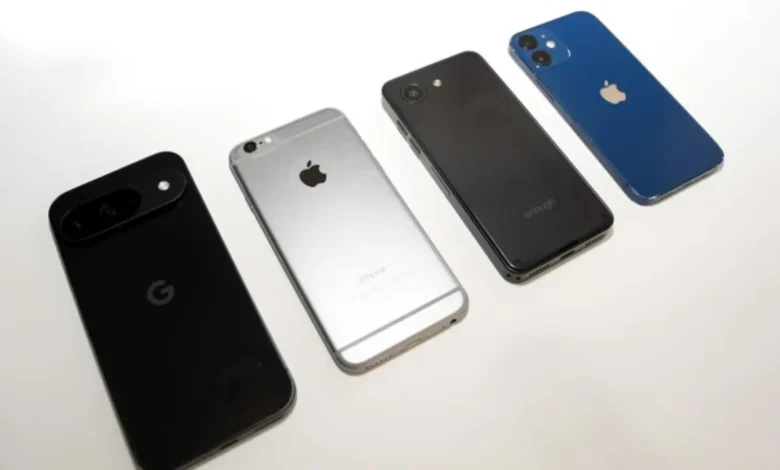
The modern smartphone industry has spent the better part of the past decade trapped in a relentless pursuit of maximalism. Year after year, major manufacturers like Apple, Samsung, and Google have pushed the boundaries of physical dimensions, releasing devices with expansive screens that frequently exceed 6.5 inches. For millions of consumers, these pocket-straining slabs have become the unquestioned standard, mimicking the utility of miniature tablets. However, this industry-wide shift toward larger form factors has alienated a vocal, passionate demographic of users who prize ergonomics, pocketability, and effortless one-handed operation above all else.
The launch of the iPhone mini line by Apple several years ago represented a brief oasis for this underserved market. Featuring a 5.4-inch display, the iPhone 13 mini offered flagship-tier performance packed into a chassis that could be comfortably navigated with a single thumb. Yet, despite an enthusiastic cult following, sluggish overall sales relative to its larger Pro and standard siblings convinced Apple to quietly phase out the mini footprint in favor of larger Plus and Max models. Today, consumers seeking a compact Apple device are forced to rely on aging hardware, the entry-level iPhone SE, or the burgeoning secondary market for refurbished devices.
Recognizing a persistent market gap that legacy manufacturers refuse to address, a new hardware initiative is stepping into the void. Enter the "Enough Phone," a forthcoming compact device developed by an independent team with a refreshingly straightforward mission: to deliver a small, modern smartphone that simply does enough. Currently navigating the prototype phase and capturing attention via crowdfunding platforms, the Enough Phone is positioning itself as a viable antidote to the oversized smartphone hegemony, offering a compelling blend of retro dimensions, modern connectivity, and a strong emphasis on user repairability.
Anatomy of a Compact Design: Specifications and Hardware Architecture
The core philosophy of the Enough Phone centers on physical restraint. According to specifications released by the company, the device measures 133 millimeters by 64 millimeters, with a thickness of under 12 millimeters. Translated into imperial units, this equates to roughly 5.24 inches by 2.52 inches, with a depth of under 0.47 inches. To put these dimensions into perspective, they place the device in direct spatial competition with the iPhone 13 mini, which measures 5.18 by 2.53 inches and stands at 0.3 inches thick. While the Enough Phone is marginally thicker—a design concession likely required to accommodate alternative internal component stacking and modularity—its footprint remains distinctly diminutive by contemporary standards.
The display, however, reflects a deliberate compromise aimed at balancing cost, usability, and power efficiency. The device features a 5.3-inch screen operating at a 1520 x 720 resolution. While this pixel density may feel a step backward for consumers accustomed to the crisp 2340 x 1080 panels found on modern flagship handsets, the target demographic for a compact alternative is rarely chasing ultra-high-definition mobile gaming or VR integration. Instead, the screen is engineered to deliver crisp text, clear media consumption, and comfortable daily navigation without imposing excessive battery drain.
Beneath the exterior casing, the hardware configuration is surprisingly robust for a niche device. The startup plans to integrate a 2.4GHz MediaTek Dimensity 7500 processor, coupled with 8GB of random access memory (RAM) and 128GB of internal storage. Crucially, the device includes a feature that has become nearly extinct in the modern smartphone landscape: a microSD card slot for expandable storage. Photography duties are slated to be handled by a single 50-megapixel Sony IMX766 rear sensor, accompanied by a remarkably high-resolution 32-megapixel front-facing selfie camera. Connectivity standards are thoroughly modern, encompassing 5G network support, Wi-Fi 6, and dual-SIM capabilities via an eSIM and a physical nano-SIM slot.

A Focus on Sustainability and Longevity: Repairability as a Selling Point
Beyond its physical size, one of the most distinctive commercial angles of the Enough Phone is its architectural approach to sustainability and consumer repair rights. For over a decade, major original equipment manufacturers (OEMs) have trended toward glued assemblies, proprietary fasteners, and hermetically sealed chassis that make consumer repairs virtually impossible without specialized industrial tools.
The Enough Phone challenges this status quo directly. While the device does not claim to be a fully modular puzzle piece, it is engineered with standard, easy-to-open screws that grant users straightforward access to internal components. Most notably, the device ships with a fully replaceable 3,500 mAh battery, a component that historically serves as the primary expiration date for mobile hardware. When paired with a software support lifecycle promised through 2032, the development team is explicitly marketing the device as a long-term investment designed to withstand the rapid obsolescence cycle of the broader consumer electronics market.
Furthermore, the hardware experience extends to subtle sensory details. In an era where generic stock ringtones and notification sounds dominate mobile operating systems, the company commissioned composer Brian Squillance of the musical project LAANDS to design custom jingles and audio branding specifically for the device, lending the hardware an artisanal, curated identity.
Software Ecosystem: Android Versatility and the Appeal of "Intentional" Computing
Hardware specifications represent only half of the consumer equation; the software environment dictates day-to-day utility. The Enough Phone offers prospective buyers a rare degree of software flexibility. Out of the box, users can choose to configure the device with a standard implementation of Android 17, ensuring full compatibility with contemporary applications, banking services, and digital utilities.
However, for a significant segment of consumers drawn to smaller phones, the desire for a compact device frequently correlates with a broader weariness regarding digital distraction, hyper-connectivity, and data harvesting. To address this, the Enough Phone offers an alternative operating system option known as OdysseyOS. Developed by SLEKE, OdysseyOS is described as a minimalist, "de-Googled" operating system explicitly tailored for "intentional phone use." For users seeking a hybrid device that bridges the gap between a modern smartphone and a distraction-free "dumbphone," OdysseyOS provides a streamlined interface devoid of the aggressive notification loops and background telemetry typical of mainstream ecosystems.
The Apple Dilemma: Navigating the Ecosystem Divide
Despite its versatile Android and alternative OS offerings, the Enough Phone presents a fundamental dilemma for loyal Apple ecosystem users. For consumers deeply integrated into iOS—utilizing iCloud integration, iMessage, AirDrop, and Apple Pay—transitioning to an Android-based or custom-OS hardware platform requires significant friction.
Apple’s current hardware lineup leaves iOS users with unappealing choices if they prioritize pocketable dimensions. Those unwilling to adopt standard, oversized handsets must either scour the secondary market for a functional, refurbished iPhone 13 mini or settle for the iPhone 17e, which represents the smallest current footprint Apple actively manufactures. While a well-maintained iPhone 13 mini remains capable of running modern iterations of iOS, it operates on borrowed time. Industry analysts note that as Apple advances its software roadmap toward future major iOS iterations, hardware support for older generations inevitably terminates, meaning current mini holdouts face an eventual expiration date on security updates and feature compatibility.

Commercial Strategy, Pricing, and Timeline
The path from conceptual prototype to mass-market availability is fraught with financial and logistical hurdles, a reality that has led the Enough Phone team to utilize crowdfunding channels to validate market demand. The device is currently being marketed through a Kickstarter campaign designed to secure early-stage capital and gauge production scale.
Early commercial reception has demonstrated pent-up demand. While initial promotional pricing tiers—such as the $399 "Super Early Bird" reward—sold out rapidly following the campaign’s announcement, standard early-stage backing options remain available. As of the current funding phase, the "Early Bird" reward tier is priced at $449. This package includes the hardware alongside a pre-installed glass screen protector, a protective carrying case, a USB-C cable, a USB-C to 3.5mm headphone adapter, a specialized hex screwdriver for maintenance, and distinctive green "Founders’ Edition" backplate screws that underscore the device’s repairable ethos.
Following the conclusion of the crowdfunding campaign, the retail price for the Enough Phone is projected to increase to $599, offering early backers a $150 incentive to absorb the inherent risks associated with hardware pre-orders. Production timelines indicate that the device is on schedule for formal manufacturing runs, with official consumer fulfillment and launch slated for May 2027.
Broader Market Implications
The viability of the Enough Phone extends far beyond the success or failure of a single crowdfunding campaign. It serves as a real-world stress test for a counter-cultural hypothesis within the consumer technology sector: that a significant, economically viable consumer base has been systematically ignored by an industry intoxicated by screen real estate expansion.
If the Enough Phone successfully transitions from prototype to commercial delivery, it could signal to larger OEMs that consumer demand for compact ergonomics is not merely a nostalgic vocal minority, but a sustainable niche market worthy of engineering attention. Conversely, should supply chain hurdles, component pricing, or consumer hesitation impede its rollout, it may cement the unfortunate reality that economies of scale have permanently eliminated the sub-5.5-inch smartphone from the mainstream product matrix. For now, the eyes of the compact phone community remain fixed on the horizon, watching to see if one startup can achieve what trillion-dollar tech conglomerates have deemed unprofitable.
Related posts: