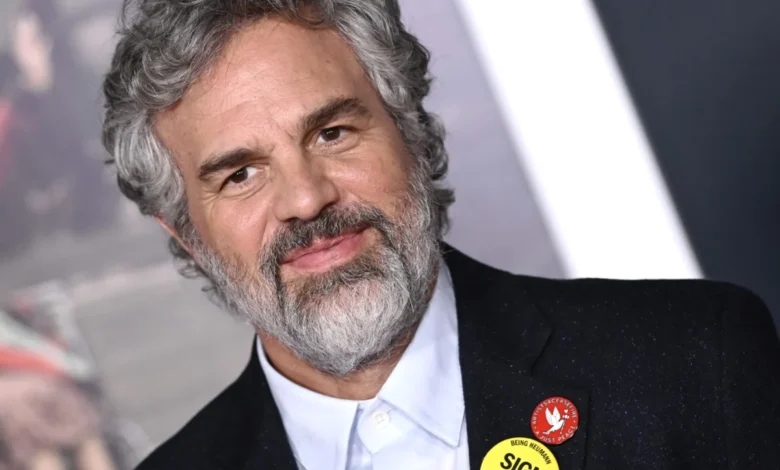
Mark Ruffalo is currently one of the most prolific actors in the entertainment industry, balancing an demanding filming schedule—highlighted by five major project releases in 2026 alone—with a deliberate, grounded approach to his domestic life. While his career requires him to maintain a near-nomadic existence, traversing international film sets and high-profile press tours, the Academy Award-nominated actor has long sought refuge in properties that reflect his desire for simplicity, sustainability, and community. For decades, he and his wife, Sunrise Coigney, have carefully curated a residential portfolio that spans from the rugged, quiet landscapes of upstate New York to the bustling cultural corridors of Manhattan. This evolution in housing not only marks the milestones of his professional success but also provides a window into his personal philosophy on family, land stewardship, and the preservation of historic architecture.
A Chronology of Roots: From Hollywood Hills to the Catskills
The trajectory of the Ruffalo-Coigney household began in the early 2000s, a pivotal era for the actor that saw his transition from a working performer to a household name. Following his marriage in 2000 and the birth of their first child in 2001, the couple established a foothold in Southern California. In December 2004, the family purchased a 3,000-square-foot residence in the Hollywood Hills for approximately $1.7 million.
The property, a single-story structure built in 1933, was designed with the aesthetic charm of a Connecticut farmhouse, featuring beamed ceilings, a stone fireplace, and a detached guesthouse. This acquisition coincided with a massive surge in Ruffalo’s career, as 2004 saw him starring in four significant films, including Eternal Sunshine of the Spotless Mind and 13 Going on 30. However, the transient nature of Hollywood life eventually clashed with the family’s desire for a more organic environment. By 2009, with three children in the household, the couple made the strategic decision to divest from their Hollywood holdings—selling the house to actress Zooey Deschanel and musician Ben Gibbard—and pivot their focus toward the East Coast.
The Catskills Sanctuary
Long before the move to New York became permanent, Ruffalo had identified the Catskills region as a spiritual and creative anchor. His history with Callicoon, New York, dates back to the mid-1990s. As a 28-year-old actor, he invested $63,000 into a 27-acre plot of land that initially featured only a modest one-room cabin. This purchase proved to be foundational. By 2001, the family upgraded to a former dairy farm on the property, which included a historic 19th-century post-and-beam barn.
Ruffalo has frequently cited this move as the "smartest thing" he ever did. The farm allowed the family to cultivate a self-sustaining lifestyle, complete with a sprawling garden containing asparagus, strawberries, corn, and fruit orchards. Beyond the agricultural utility, the move served a psychological purpose. By stepping away from the frenetic energy of Los Angeles, the family embraced a quieter rhythm. In various interviews, Ruffalo noted that the Catskills environment allowed his children to develop a sense of independence, describing the experience as "letting them grow a little wild." This rural immersion mirrors his own upbringing in Wisconsin, where he spent his youth traversing creeks and forests, and has remained a constant source of inspiration for his professional and personal life.
The Shift to Urban Education and Community Engagement
As his children reached school age in the mid-2010s, the logistical demands of a permanent rural residence prompted a shift toward urban centers. In 2015, the family purchased a $3.5 million townhouse in the Carroll Gardens neighborhood of Brooklyn. The 3,000-square-foot residence was a quintessential example of 19th-century urban architecture, boasting cathedral ceilings, wide-plank wood floors, and marble fireplaces. Despite the aesthetic appeal of the Brooklyn property, the family stayed for only two years, ultimately selling the residence in 2017 for $3.2 million—a transaction that resulted in a nominal financial loss but facilitated their next move into Manhattan.

The move to the Upper West Side of Manhattan solidified the family’s commitment to urban community involvement. By late 2017, the actor was linked to a high-end townhouse search in the area, and he has since integrated himself into the neighborhood’s local civic life. His advocacy for the preservation of the West Park Presbyterian Church, which began in earnest around 2023, underscores his role as a proactive community member rather than just an absentee celebrity homeowner. During public rallies in late 2025, Ruffalo confirmed his proximity to the landmark, noting he lived only a block away, signaling that his current residence is likely a four-story, early 20th-century townhouse.
Supporting Data and Real Estate Trends
The real estate decisions made by the Ruffalo family mirror a broader trend among high-net-worth individuals in the entertainment industry: a flight from the traditional celebrity hubs of Los Angeles toward locations that offer architectural history and community connectivity. Data from the 2004–2025 period shows a consistent shift in the luxury market where "legacy properties"—those with agricultural or historical value—are increasingly favored over modern, high-maintenance estates.
The financial performance of his past properties, such as the Carroll Gardens sale at a loss, highlights the reality of the New York luxury market, where carrying costs and market fluctuations can often outweigh capital gains. However, for an actor of Ruffalo’s standing, these properties represent more than assets; they are instruments of personal stability. His ability to move between the high-stakes world of Marvel blockbusters and the quiet, manual labor of a Catskills farm suggests a deliberate "good life formula" that prioritizes emotional health over pure investment returns.
Implications of Public Advocacy and Residence
The intersection of Ruffalo’s personal residence and his public activism is a point of interest for both urban planners and his fanbase. His vocal support for the landmark status of local architecture in the Upper West Side suggests that he treats his home not just as a shelter, but as part of a larger social fabric. By embedding himself in the preservation of local institutions, he mitigates the common critique that celebrities treat urban neighborhoods as temporary staging grounds.
His ongoing presence in the Upper West Side, contrasted with his deep, enduring ties to the Catskills, paints a picture of a life balanced between two distinct poles. The Manhattan home provides the accessibility required for his professional obligations, while the Catskills farm remains the primary vessel for his family’s values and history. As he continues to navigate a high-velocity career, his real estate portfolio remains a testament to his desire for grounding, reflecting a journey that started with a $63,000 cabin and evolved into a sophisticated navigation of both rural and urban landscapes.
Ultimately, the story of Mark Ruffalo’s homes is one of intentionality. Whether he is planting asparagus in the Catskills or rallying against the demolition of a local church in Manhattan, his real estate choices have consistently prioritized the preservation of community and the cultivation of an environment that facilitates long-term personal growth. For an actor who has spent his career portraying complex, often tortured, but deeply human characters, his home life provides the necessary equilibrium, confirming that for Ruffalo, the best roles are often played off-screen, in the quiet spaces he calls home.