Samsung Odyssey OLED G8 32-Inch 4K Gaming Monitor Hits Record Low Price of $999.99 on Amazon

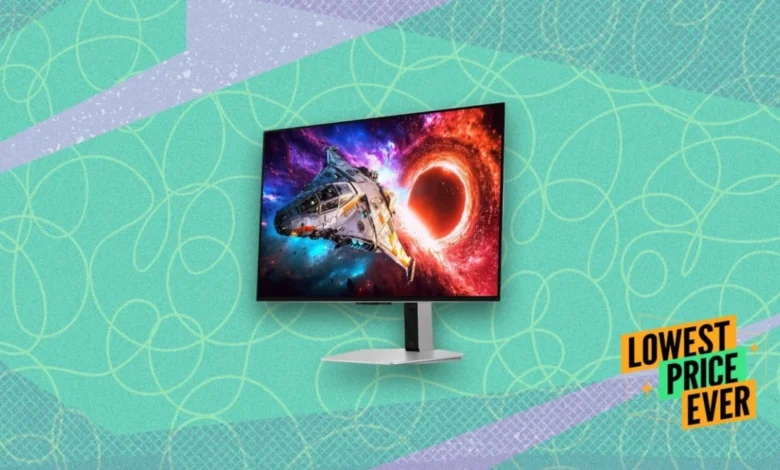
Amazon has introduced a significant price reduction on one of the market’s most sought-after high-end desktop displays, dropping the cost of the 32-inch Samsung Odyssey OLED G8 (model G80SH) to $999.99. This represents a $300 discount from its standard retail price of $1,299.99. According to market analysts and digital price-tracking tools, this marks the lowest recorded price for the QD-OLED monitor since its market introduction.
The price cut arrives as retailers and hardware manufacturers prepare for the late-autumn shopping season, a period historically characterized by aggressive promotional pricing on premium consumer electronics. The Samsung Odyssey OLED G8 occupies a unique space in the high-resolution gaming and productivity ecosystem, combining ultra-fast refresh capabilities with the deep contrast ratios native to Quantum Dot Organic Light-Emitting Diode technology.
Technical Specifications and Performance Capabilities
At the core of the Odyssey OLED G8 (G80SH) is a 32-inch 4K QD-OLED panel that operates at a maximum refresh rate of 240Hz. This combination addresses a long-standing compromise in high-end display manufacturing, where users previously had to choose between the ultra-high resolutions necessary for crisp desktop workflows and the rapid refresh rates required by competitive esports titles and fast-paced simulation games.
Achieving native 4K resolution at 240 frames per second demands substantial computing power. To accommodate the necessary bandwidth, Samsung equipped the monitor with modern connectivity standards, including DisplayPort 2.1 and HDMI 2.1 ports. These interfaces ensure that users connecting high-end graphics cards from current hardware generations can fully utilize the panel’s visual fidelity without experiencing data bottlenecks.
In addition to dedicated gaming inputs, the monitor features a versatile USB-C connection capable of delivering up to 98W of power. This inclusion transforms the display into a functional hub for professional users, allowing a compatible laptop or workstation to transmit high-definition video signals and receive substantial charging power through a single cable. This dual-purpose design aims to reduce cable clutter on modern desks, making the hardware an attractive option for professionals who split their time between demanding computational workflows and high-end entertainment.
The display also supports adaptive synchronization technologies, including AMD FreeSync Premium Pro and compatibility with NVIDIA G-SYNC frameworks. These systems mitigate screen tearing and stuttering during variable framerate fluctuations. However, reviewers and display specialists note that while OLED technology offers near-instantaneous pixel response times, some variable refresh rate (VRR) implementations can occasionally exhibit luminance flicker in shadowy or poorly lit scenes when frame rates fluctuate erratically.

Visual Fidelity and the OLED Advantage
The primary appeal of the Odyssey OLED G8 lies in its QD-OLED panel architecture. Unlike traditional LED-backlit liquid crystal displays (LCDs), which rely on a diffuse backlight shining through liquid crystal layers, OLED panels utilize self-emissive pixels that can turn completely off. This capability results in absolute black levels and an infinite contrast ratio, effectively eliminating the halo or blooming artifacts frequently observed around bright objects in dark environments.
This characteristic makes the monitor well-suited for HDR (High Dynamic Range) content consumption, where specular highlights—such as explosions, neon lights, or starlight—can achieve high peak luminance without compromising the darkness of adjacent picture elements.
Despite these optical advantages, Quantum Dot OLED technology introduces specific environmental challenges. In brightly lit rooms, ambient light striking the screen can cause blacks to take on a noticeable purplish tint, reducing the perceived contrast ratio unless the user is in a controlled lighting environment. Furthermore, organic light-emitting diodes remain susceptible to long-term image retention, commonly known as burn-in, if static graphical elements are displayed continuously over thousands of hours.
To mitigate this risk, Samsung has integrated active cooling mechanisms and software-based maintenance features, such as pixel shifting and automated panel refresh cycles, designed to equalize wear across the organic compounds. Samsung also includes coverage for burn-in resulting from normal consumer use within its standard hardware warranty framework, providing a degree of reassurance for prospective buyers hesitant about the longevity of OLED technology in desktop environments.
Market Context and Consumer Implications
The discounted price point of $999.99 positions the Odyssey OLED G8 more competitively against rival 32-inch 4K OLED displays manufactured by brands such as Dell’s Alienware, MSI, and ASUS, many of which launched within similar pricing brackets throughout the year. The price adjustment reflects a broader trend of component cost stabilization and increased manufacturing yields for large-format OLED panels, allowing brands to pass savings onto consumers ahead of the holiday shopping rush.
Industry analysts observe that while 32-inch 4K OLED monitors remain a luxury purchase relative to traditional IPS or VA panels, discounts of this magnitude lower the barrier to entry for enthusiasts seeking premium visual fidelity. Consumers utilizing older graphics hardware may find that the monitor outpaces their current system capabilities, necessitating a comprehensive hardware upgrade to leverage the 4K at 240Hz specification fully. Conversely, for users possessing high-end desktop configurations or versatile dual-purpose work-and-play environments, the current Amazon promotion offers a compelling opportunity to acquire top-tier display technology at a historic price low.