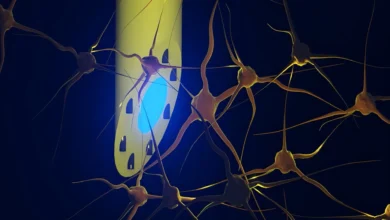
Decades-Old Agricultural Pesticide Chlorpyrifos Linked to More Than Double the Risk of Parkinson’s Disease in Groundbreaking UCLA Health Study


The intersection of modern agriculture and human neurology has long presented complex puzzles for public health officials, environmental toxicologists, and medical researchers alike. For decades, chemical agents designed to protect crop yields from destructive insects have been quietly integrated into the global food supply chain. While these substances have undeniably secured vast quantities of agricultural output, the long-term biological consequences for human populations living and working near treated lands are only beginning to come into sharp focus. A compelling new investigation led by researchers at UCLA Health has delivered significant findings regarding one such substance: chlorpyrifos. According to the study, individuals with long-term residential exposure to this widely utilized pesticide face more than 2.5 times the risk of developing Parkinson’s disease compared to unexposed populations.
Published in the peer-reviewed journal Molecular Neurodegeneration, the research transcends standard epidemiological association studies. By combining human demographic and geographic data with rigorous laboratory models involving both mice and zebrafish, the UCLA research team successfully mapped out the precise biological mechanisms through which the chemical inflicts neurological damage. The investigation reveals that chlorpyrifos directly sabotages the brain’s intrinsic cellular cleanup system, leading to a cascade of neurodegeneration that mirrors the hallmark pathology of Parkinson’s disease. As regulatory bodies grapple with the chemical’s ongoing presence in global agriculture, these findings offer crucial insights that could pave the way for early detection protocols and novel therapeutic interventions.
Understanding Parkinson’s Disease and the Environmental Factor
Parkinson’s disease remains a formidable public health challenge, currently affecting nearly one million Americans and millions more worldwide. As a progressive neurological condition, it systematically degrades specific populations of brain cells responsible for movement coordination. Clinical manifestations typically include resting tremors, muscle rigidity, postural instability, bradykinesia—a profound slowing of voluntary movement—and various non-motor symptoms that severely impact a patient’s quality of life.
At the physiological core of the disease is the selective degeneration and loss of dopaminergic neurons located within the substantia nigra, a critical structure in the midbrain. Dopamine functions as a vital chemical messenger, or neurotransmitter, enabling nerve cells to communicate efficiently and permitting the brain to orchestrate smooth, purposeful physical actions. When dopamine-producing neurons die off and neurotransmitter levels plummet, the brain loses its ability to properly regulate movement, triggering the characteristic physical symptoms of the condition.
While medical science has long recognized that inherited genetic mutations can predispose individuals to Parkinson’s, genetics alone cannot account for the vast majority of sporadic cases. Consequently, environmental toxicologists have increasingly turned their attention toward external risk factors, particularly agricultural chemicals. Because pesticides are chemically engineered to disrupt the nervous systems of targeted pests—often by interfering with vital enzymes or cellular respiration—it stands to reason that prolonged, low-level human exposure could provoke unintended adverse effects within the human nervous system.
A Detailed Chronology of Chlorpyrifos Regulation
To understand the weight of the UCLA Health findings, it is essential to examine the regulatory timeline of chlorpyrifos. Introduced to the commercial market in the mid-1960s by Dow Chemical Company under brand names such as Dursban and Lorsban, chlorpyrifos rapidly became one of the most heavily applied organophosphate insecticides in the United States and international agricultural sectors. It was deployed across a massive variety of crops, ranging from corn and soybeans to fruit orchards and nut trees.
However, growing concerns regarding neurotoxicity—particularly among children and agricultural workers—prompted a series of progressive restrictions over the decades:
- 2000–2001: Amid mounting scientific evidence concerning developmental neurotoxicity in children, the U.S. Environmental Protection Agency (EPA) reached an agreement with manufacturers to phase out almost all residential uses of chlorpyrifos. Indoor applications, pet collars, and residential lawn treatments were effectively banned.
- 2007–2015: Environmental and public health advocacy coalitions filed successive legal petitions demanding a complete ban on agricultural uses of chlorpyrifos, citing unsafe residues on food crops and occupational hazards for farmworkers.
- 2015–2016: The EPA under the Obama administration issued a revised human health risk assessment, formally proposing to revoke all food tolerances for the chemical, concluding that safe exposure levels could not be guaranteed.
- 2017–2018: In a controversial regulatory reversal, the EPA denied the petition to ban the agricultural use of the chemical, maintaining that existing tolerances were supported by standard scientific data.
- 2021: Following prolonged legal battles and state-level prohibitions—most notably in California and New York—the EPA issued a final rule revoking all tolerances for chlorpyrifos in food products, effectively halting its use on food crops nationwide.
- 2022–Present: Legal challenges from agricultural industry groups led federal courts to vacate the EPA’s 2021 ban in early 2023, citing procedural flaws in how the agency handled the rule. Consequently, while some states enforce stringent local bans, chlorpyrifos remains legally applied to certain agricultural commodities in parts of the United States and continues to see widespread utilization in developing international agricultural markets.
Epidemiological Methods: Connecting Residence to Risk
The human population analysis component of the UCLA study leveraged data from the long-running Parkinson’s Environment and Genes (PEG) study. The PEG initiative has spent decades tracking environmental exposures and genetic factors among residents of central California’s heavily agricultural San Joaquin Valley, an epicenter of intensive pesticide application.
For this specific study, researchers analyzed data from 829 individuals diagnosed with Parkinson’s disease and 824 matched control participants without the condition. To accurately quantify historical chemical exposure, the research team ingeniously cross-referenced historical residential and workplace address histories against California’s comprehensive, publicly accessible pesticide use reporting records—reputedly the most detailed agricultural chemical registry in the world.
By mapping where participants lived and worked over extended periods relative to officially recorded applications of chlorpyrifos, the team calculated cumulative exposure estimates. The analytical outcome was stark: individuals who experienced prolonged residential exposure to chlorpyrifos exhibited a greater than 2.5-fold increase in the relative risk of developing Parkinson’s disease compared to those with no documented exposure history.
Dr. Jeff Bronstein, professor of neurology at UCLA Health and the senior author of the study, emphasized the critical distinction this research provides for the scientific community. "This study establishes chlorpyrifos as a specific environmental risk factor for Parkinson’s disease, not just pesticides as a general class," Dr. Bronstein stated. By isolating a single chemical entity rather than grouping all agricultural sprays together, the research offers a precise target for future toxicological and epidemiological inquiries.
Translating Human Data into Laboratory Models
While epidemiological data can successfully demonstrate a compelling statistical correlation between an environmental exposure and a disease state, it inherently struggles to establish definitive causation on its own. To bridge this critical scientific gap, Dr. Bronstein and his colleagues designed rigorous animal model experiments to determine whether inhaling chlorpyrifos could actively reproduce the physical and cellular damage observed in human Parkinson’s patients.
The research team exposed laboratory mice to aerosolized chlorpyrifos over an 11-week period. This inhalation delivery method was deliberately selected to mirror the realistic, low-dose environmental routes through which humans living near agricultural zones might encounter airborne chemical drift.
The physiological response in the murine models was pronounced. The exposed animals developed notable movement abnormalities, mirroring the motor deficits characteristic of parkinsonism. Post-mortem histological examinations of the murine brains revealed a significant loss of dopaminergic neurons within the substantia nigra—the exact pathological hallmark that defines Parkinson’s disease in human patients. Furthermore, the researchers detected widespread neuroinflammation alongside abnormal biochemical deposits.
Of particular importance was the accumulation of alpha-synuclein proteins. Under normal physiological conditions, alpha-synuclein is a soluble protein located abundantly in the presynaptic terminals of brain neurons, where it assists in regulating neurotransmitter release. However, in the brains of Parkinson’s patients, this protein misfolds and aggregates into insoluble fibrillar deposits known as Lewy bodies. The appearance of alpha-synuclein accumulation in the chlorpyrifos-exposed mice provided robust biological validation that the chemical actively induces the precise molecular pathology underlying human neurodegenerative disease.
Uncovering the Breakdown in Cellular Autophagy
To pinpoint the exact intracellular mechanism responsible for this neurodegeneration, the UCLA team extended their investigation to zebrafish (Danio rerio). Zebrafish are widely utilized in genetic and neurodevelopmental research due to their optical transparency during early life stages and the sophisticated genetic tractability they offer, allowing scientists to monitor real-time cellular processes.
Through detailed biochemical assays, the researchers discovered that chlorpyrifos disrupts autophagy—the vital, evolutionarily conserved cellular recycling system responsible for clearing out damaged proteins, dysfunctional organelles, and metabolic cellular debris. Autophagy functions as an internal waste management system, continuously breaking down worn-out cellular components so that toxic accumulations do not overwhelm the cell.
In healthy neurons, autophagy is exceptionally active because nerve cells cannot easily divide and must remain functional for the entirety of a human lifespan. When chlorpyrifos interfered with this delicate cleanup process, the cellular waste management machinery stalled. Damaged proteins—most notably alpha-synuclein—began to accumulate rapidly inside the neurons. This progressive accumulation proved toxic, eventually triggering cellular stress responses, neuroinflammation, and programmed cell death.
Crucially, the research team also uncovered an encouraging counter-finding. When the scientists artificially restored the cellular autophagy process or experimentally removed the synuclein protein in their laboratory models, the neurons were successfully shielded from chlorpyrifos-induced damage. This discovery indicates that the pesticide’s neurotoxicity is not an irreversible, random catastrophe; rather, it operates through a specific biological pathway that could potentially be neutralized with targeted pharmaceutical interventions.
Broader Implications, Future Treatments, and Preventive Strategies
The implications of the UCLA Health study extend far beyond the academic literature, offering a multifaceted roadmap for future public health initiatives, clinical monitoring, and drug development.
From a therapeutic standpoint, the identification of autophagy dysfunction as the primary driver of chlorpyrifos-induced neurotoxicity points toward entirely new classes of pharmacological treatments. Pharmaceutical companies and academic laboratories are already investigating small-molecule therapeutics designed to enhance or stimulate autophagy pathways in the brain. While such drugs are primarily being developed for genetically linked forms of Parkinson’s disease, the new findings suggest they could eventually be repurposed to protect individuals with a documented history of environmental pesticide exposure.
From a preventive medicine perspective, identifying specific neurotoxic agents like chlorpyrifos allows healthcare providers to implement targeted neurological surveillance programs. Agricultural workers, long-term rural residents, and individuals living in close proximity to intensive farming operations who experienced high historical exposures could benefit from specialized screening protocols. Detecting subtle shifts in motor function or non-motor biomarkers years before clinical symptoms manifest will be paramount as the medical community moves closer to disease-modifying therapies that can halt or slow the progression of Parkinson’s.
Furthermore, public health experts emphasize that chlorpyrifos may not be an isolated offender. The research methodology established by the UCLA team provides a robust template for evaluating other commonly utilized agricultural chemicals. As regulatory bodies continue to re-evaluate the safety tolerances of legacy pesticides, toxicologists are eager to determine whether related organophosphates or alternative insecticide classes interfere with the same cellular cleanup mechanisms.
As scientific consensus solidifies around the link between specific environmental exposures and neurodegenerative diseases, the pressure mounts on both regulatory agencies and the agricultural sector. While the economic realities of global food production demand effective pest management strategies, the human cost of neurodegeneration requires an uncompromising commitment to environmental safety. By illuminating the precise cellular pathways through which agricultural chemicals damage the human brain, studies like this one do more than just diagnose a public health crisis—they illuminate the path toward prevention, protection, and future cures.