X-Men ’97 Season Two: A Deep Dive into the Comic Roots of the Animated Sequel’s Latest Adventures

The return of the beloved X-Men animated series in X-Men ’97 has not only reignited nostalgia for a generation of fans but has also proven to be a critical and commercial success for Marvel Studios and Disney+. As the second season unfolds, a recurring line within the narrative, "We need to get back to the 1990s!", serves as both an in-universe plot device and a meta-commentary on the show’s creative direction. This emphasis on the 90s is particularly intriguing, as it coincides with a period in X-Men comic book history that is often viewed by dedicated fans as a creative lull, a stark contrast to the vibrant and groundbreaking eras that preceded and followed it.
The original X-Men: The Animated Series ran from 1992 to 1997, a golden age for the franchise in animation. However, the comic books during this same period, while still popular, experienced a significant creative shift following the departure of legendary writer Chris Claremont in 1991, who had been instrumental in transforming the X-Men from niche characters into a global phenomenon. The subsequent era, leading up to the transformative run of Grant Morrison and Frank Quitely in 2001, was marked by a more convoluted narrative landscape and a stylistic departure that, while having its merits, often diverged from the core themes that made the X-Men so beloved.

Despite the perceived shortcomings of the 90s comics, X-Men ’97 has demonstrated an exceptional ability to translate even middling source material into compelling television. The series’ success lies in its deft adaptation of storylines that emerged in the years between the original animated series and its revival, skillfully weaving these narratives into its established 90s setting. This approach allows the show to explore new character arcs and plotlines while remaining true to the spirit of the original. This season, in particular, delves deep into the comic archives, drawing inspiration from key issues and storylines that defined the X-Men’s tumultuous journey through the 1990s and into the early 2000s.
The Cable Saga: From Mystery to Military Might
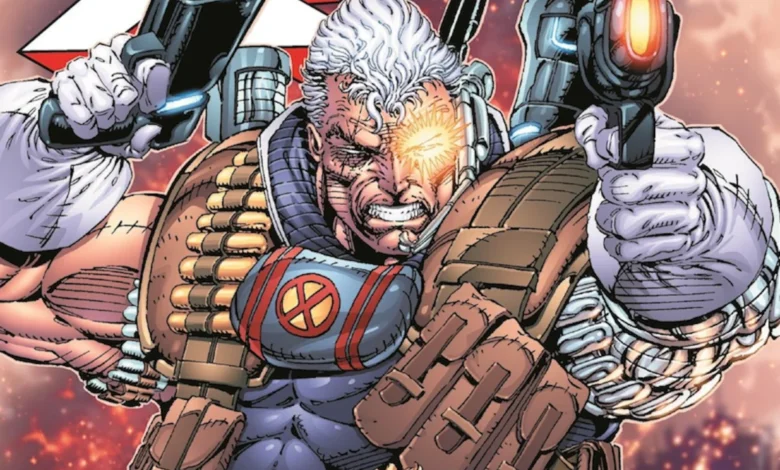
A central element introduced in X-Men ’97‘s first season, and further developed in its second, is the character of Cable and his complex origins. The season finale’s cliffhanger, which saw a portion of the X-Men displaced in time, directly leads into storylines that explore Cable’s past and future. In the animated series, the narrative of Cyclops and Jean Grey sending their son, Nathan Summers, to the future to save him from a techno-organic virus is presented with a degree of clarity. However, the comic book origins of Cable were far more convoluted, a tangled web of retcons and rewrites throughout the early 1990s.
X-Men: The Adventures of Cyclops and Phoenix (1994)

One of Marvel’s most significant attempts to solidify Cable’s backstory during this period was the four-issue limited series, X-Men: The Adventures of Cyclops and Phoenix. Published in 1994, this series, written by Scott Lobdell and illustrated by Gene Ha, served to definitively establish Cable as the son of Cyclops and Jean Grey (albeit a clone of Jean) and provided a coherent narrative for his transformation into the grizzled, cyborg warrior from the future. The series follows Cyclops and Jean as they venture into the future to raise their son, Nathan, offering a more streamlined and understandable account of his journey. For viewers intrigued by Cable’s dramatic backstory as depicted in X-Men ’97, this comic miniseries offers a direct and foundational exploration of his origins.
The Rise of X-Force: A New Breed of Mutant Warriors
The formation of X-Force, a more militant faction of mutants, is a significant development in X-Men ’97‘s second season. This shift mirrors the evolution of the X-Men comics in the early 1990s, where the focus began to broaden beyond the traditional X-Men roster.
Under the Gun: X-Force #1-5 (1991)

Cable’s debut in 1990’s The New Mutants #87 marked a pivotal moment, quickly transforming the series into a more action-oriented narrative centered around a mutant military force. This surge in popularity led to the cancellation of The New Mutants and the debut of X-Force in June 1991, which rapidly became one of Marvel’s best-selling titles. The first five issues, collected in Under the Gun, offer a raw and unfiltered glimpse into the team’s genesis. Despite the narrative challenges posed by co-writer Fabian Nicieza working with plotter and artist Rob Liefeld’s distinctive style, these early issues deliver the over-the-top mutant action that defined the era. X-Men ’97‘s portrayal of Cable forming a team to protect mutants while the X-Men are scattered directly draws from this foundational comic series.
X-Factor: The Public Face of Mutantkind
While X-Force operates in the shadows, X-Men ’97‘s second season also introduces X-Factor, a government-sanctioned team led by Cyclops’ brother, Havok. This storyline highlights the ideological differences between the two mutant groups, a theme deeply rooted in the comics.
"All New, All Different": X-Factor #71-76 (1991)

The introduction of this new X-Factor team in X-Factor #71, penned by Peter David and illustrated by Larry Stroman, presented a crucial concept: mutants needing to be the public face of their kind, projecting an image of acceptance and positivity to a fearful world. David’s masterful characterization and sharp humor imbued the team, featuring characters like Strong Guy and Multiple Man, with a tangible humanity. Stroman’s distinctive and expressive artwork further amplified the inherent oddity of X-Factor’s mission, making the series one of the most compelling and unique superhero books of its time. X-Men ’97‘s exploration of X-Factor provides a fascinating contrast to the more combative X-Force and the original X-Men.
The Shadow of Apocalypse: Genesis of a Conqueror
The temporal displacement of Magneto, Professor X, and other key characters in X-Men ’97‘s second season sends them to ancient Egypt, where they encounter the nascent form of the formidable villain, Apocalypse. This arc draws heavily from comics that delved into the deep history of this iconic antagonist.
X-Men: The Rise of Apocalypse (1996)

While Apocalypse first appeared in an early issue of X-Factor, his true origin and rise to power were not fully explored until the 1996 miniseries, X-Men: The Rise of Apocalypse. Written by Terry Kavanagh, with art by Adam Pollina and Anthony Williams, this series details En Sabah Nur’s journey among the Sandstormers and his embrace of the "Survival of the Fittest" philosophy. Crucially, it chronicles his first encounter with the cosmic Celestials, who bestow upon him advanced technology and immortal power, setting him on his path to becoming the tyrannical conqueror. This comic offers vital context for the ancient Egyptian setting and Apocalypse’s motivations as seen in the animated series.
Wolverine’s Transformation: The Adamantium Question
The immediate aftermath of the first season’s cliffhanger, where Magneto rips Wolverine’s adamantium skeleton from his body, is a pivotal plot point. While Wolverine appears relatively intact in the early episodes of season two, sporting bone claws and a new bandana, his journey is far from over. This storyline directly echoes a tumultuous period in the X-Men’s comic history.
"The Road to Casablanca": Uncanny X-Men #332 (1996)

The fallout from Wolverine losing his adamantium was one of the most bizarre and introspective periods in his character’s history. The storyline explored the primal tension between man and beast, albeit in a manner that was often considered outlandish, even by superhero comic standards. "The Road to Casablanca," by Scott Lobdell and Joe Madureira, is a key issue in this transformation, serving as an important Apocalypse tale as well. It delves into the consequences of Wolverine’s adamantium loss and his subsequent adaptation, providing a deeper understanding of the character’s enduring struggle for identity.
A New Era Dawns: Grant Morrison’s Influence
The 1990s, while significant for the development of characters like Cable and X-Force, are often seen as a period where the X-Men comics struggled to maintain their former creative momentum. This changed dramatically with the arrival of Grant Morrison and Frank Quitely in 2001.
E is for Extinction: New X-Men #114-116 (2001)

The groundbreaking run of Grant Morrison and Frank Quitely revitalized the X-Men franchise, introducing radical new concepts and a distinct visual style. The annihilation of Genosha, which kicks off their first storyline, E is for Extinction, was already integrated into X-Men ’97‘s first season. However, there is still ample material from this era to explore in season two. Trailers have already hinted at the team adopting the iconic black leather costumes designed by Quitely, a visual cue that signals a shift in their approach. In E is for Extinction, these costumes are donned to distinguish the X-Men from mainstream superheroes, signifying their new, more distinct identity in a world that increasingly fears and rejects them.
The Dynamics of Teams: X-Factor and the Mutant Liberation Front
The narrative complexity of X-Men ’97 season two is further enhanced by its exploration of various mutant factions and their interactions. The introduction of X-Factor, as mentioned, brings a governmental perspective, but the season also delves into other groups that defined the 90s mutant landscape.
Fatal Attractions Crossover (1993)

The Fatal Attractions crossover event from 1993 is a significant touchstone for understanding Magneto’s evolving character arc and his relationship with the X-Men. While this storyline culminated in the removal of Wolverine’s adamantium, it also introduced and developed key figures who would go on to play crucial roles in Magneto’s plans.
Exodus in X-Factor #92 (1993)
One such character is Exodus, introduced in X-Factor #92. Born in the 12th century, Exodus’s history is intertwined with the crusades and his eventual discovery and transformation into a servant of Apocalypse. After centuries in stasis, his reawakening and subsequent devotion to Magneto made him the Master of Magnetism’s most ardent follower. His presence in X-Men ’97 suggests a deeper exploration of Magneto’s leadership and the potential for both alliance and conflict within the mutant community.

The Perils of the Danger Room and the Rise of Generation X
X-Men ’97‘s second season is poised to incorporate even more iconic elements from the X-Men’s comic history, including the sentient Danger Room and the introduction of a new generation of mutants.
Astonishing X-Men #7-12 (2005)
While much of the season focuses on the 90s, it also draws from early 2000s material. Joss Whedon’s run on Astonishing X-Men, despite the controversies surrounding his treatment of actors, introduced compelling new facets to the X-Men mythos. The Danger Room, a staple of the original animated series as a training facility, is revealed to be a sentient entity in Astonishing X-Men #9. This living manifestation of the training facility, with its intimate knowledge of each X-Man’s weaknesses, presents a formidable new threat or potential ally. The series’ exploration of Danger’s evolving role promises to be a significant arc.

Generation X #1-4 (1994)
For fans wondering about the fate and development of characters like Jubilee, her journey in the 90s comics provides a clear pathway. Jubilee, the quintessential "mall rat" of the era, became the audience surrogate in the original animated series. Her transition from a sidekick to a more developed character is chronicled in Generation X #1, by Scott Lobdell and Chris Bachalo. This series, a spiritual successor to The New Mutants, gathers adolescent mutants under the tutelage of Banshee and Emma Frost. The cool characters and inherent dramatic tensions of Generation X laid the groundwork for the more complex Jubilee seen in X-Men ’97.
Filling the Gaps: Prequel Comics and Character Focus
To bridge the narrative gaps between the original animated series and the current season, and to provide additional focus on beloved characters, Marvel has also released companion comic series.

X-Men ’97: Season 2 (2026)
The comic series X-Men ’97: Season 2 serves as a direct prequel, expanding on storylines and character arcs that may not receive extensive screen time in the animated show. The first issue, by Steve Foxe and Salva Espín, focuses on Jubilee and Sunspot but also features X-Factor and the emerging X-Force. This series offers a deeper dive into the intricacies of these teams and their interactions with various villainous factions like Freedom Force and the Mutant Liberation Front, providing valuable context for the animated series’ broader narrative.
Conclusion: A Faithful Adaptation with Modern Resonance
X-Men ’97 has masterfully navigated the often-criticized creative landscape of the 1990s X-Men comics, transforming them into engaging television. By drawing from key storylines and characters that defined this era, the series not only honors its source material but also offers a fresh perspective for both longtime fans and new viewers. The deliberate choice to revisit the 90s allows X-Men ’97 to explore complex themes of identity, prejudice, and the evolving role of mutants in society, all while delivering the action and drama that made the original series a cultural touchstone. As the second season continues, its deep connection to the comic book roots promises to unveil further surprises and deepen the rich tapestry of the X-Men universe.