World Lemur Day highlights the urgent battle to save Madagascar’s most iconic primates from extinction.

Madagascar, the world’s fourth-largest island, serves as a unique evolutionary laboratory, hosting more than 100 known species of lemurs—primates found nowhere else on the planet. Defined by their striking appearance, characterized by oversized, reflective eyes, pointed snouts, and long, expressive tails, these animals are not merely cultural icons of the Malagasy people; they are the bedrock of the island’s forest ecosystems. However, as the world observes World Lemur Day on the last Friday of October, the reality for these primates is increasingly dire. According to the International Union for Conservation of Nature (IUCN), over 90% of all lemur species are currently threatened with extinction, pushed to the brink by habitat loss, charcoal production, illegal logging, and hunting.
A Legacy of Isolation and Endangered Status
The evolutionary history of lemurs dates back approximately 50 to 60 million years, when their ancestors drifted across the Indian Ocean from mainland Africa. In the absence of large terrestrial predators, they radiated into an astonishing variety of forms, from the diminutive mouse lemur, which weighs as little as 30 grams, to the vocal and rhythmic indri.
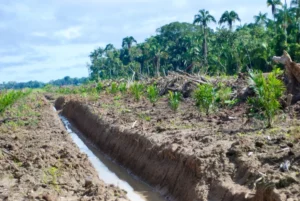
The current crisis is not a sudden event but a cumulative decline spanning several decades. The fragmentation of Madagascar’s forests began in earnest during the mid-20th century, as industrial-scale agriculture and cattle ranching replaced dense, biodiverse canopies with degraded pastures. Today, the loss of these forests is compounded by the "empty forest" syndrome, where even if trees remain, the animals have been hunted out of existence.
Chronology of Conservation Efforts
The fight to protect lemurs has evolved from localized monitoring to complex, landscape-scale restoration projects.
- 1960s: Significant deforestation begins in eastern Madagascar, fracturing critical wildlife corridors.
- 2023: A coalition of researchers and local communities initiates a massive reforestation effort to connect Andasibe-Mantadia National Park with the Analamazoatra Special Reserve.
- 2025 (September): Conservationists successfully lobby to include the Verreaux’s sifaka on the list of the World’s 25 Most Endangered Primates, shifting focus toward neglected dry forest ecosystems.
- 2026 (March–April): Reports highlight the dual challenges of invasive species management and the necessity of ecological connectivity in restoration strategies.
Restoring Connectivity: The Corridor Project
In the eastern regions of the island, the landscape has long been defined by a "patchwork" problem. The disconnection between the Andasibe-Mantadia National Park and the Analamazoatra Special Reserve created a biological bottleneck. Wildlife, particularly arboreal primates that depend on canopy continuity to forage and mate, found their genetic pools shrinking as they became isolated in small, fragmented islands of green.
In 2023, a strategic initiative was launched to re-establish a continuous corridor of native vegetation. This project aims to restore 150 hectares (370 acres) of indigenous forest. By rebuilding these "biological highways," conservationists hope to facilitate the movement of lemur populations, allowing for greater genetic diversity and resilience against localized climate events. The initiative is notable for its inclusion of local Malagasy communities, who are not only providing the labor for reforestation but are also being integrated into the long-term management of the corridors.
The Paradox of Invasive Flora
While reforestation is essential, it is fraught with unintended biological consequences. One of the most persistent hurdles is the proliferation of the strawberry guava (Psidium cattleyanum), an invasive species originating from Brazil. These trees have proven to be highly competitive, often outperforming native species in degraded soil.
The dilemma for conservationists is that lemurs—the very animals they seek to protect—are acting as unintentional vectors for this invasive plant. Lemurs exhibit a strong preference for the fruit of the strawberry guava, consuming it voraciously and dispersing its seeds throughout the forest floor. Anthropologist Dr. Cortni Borgerson, an associate professor at Montclair State University, has highlighted this cycle as a significant threat to forest recovery. She notes that the guava "lures Madagascar’s remaining frugivores to endanger the very forests on which they depend." This creates a "restoration trap" where human-led planting efforts are undermined by the rapid spread of non-native vegetation that offers little long-term value to the complex native ecosystem.

Shifting the Spotlight: The Dry Forest Crisis
While the lush rainforests of the east often dominate conservation headlines, the dry tropical forests of western and southern Madagascar are facing an even more precarious future. These regions receive far less international funding and research attention, leading to a "conservation gap."
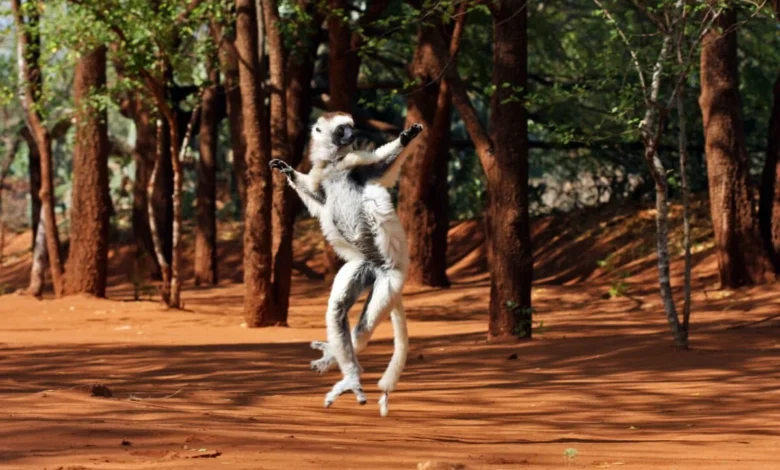
The recent elevation of the Verreaux’s sifaka (Propithecus verreauxi)—a species known for its distinctive "dancing" locomotion across open ground—to the list of the world’s 25 most endangered primates was a calculated move by the scientific community. By attaching the profile of a "charismatic" species to the plight of the dry forest, researchers hope to catalyze funding and policy interventions. Without a targeted approach to these arid habitats, the unique biodiversity of the west risks being entirely lost before it is fully documented.
Supporting Data and Ecological Implications
The data surrounding lemur decline is sobering. Beyond the loss of individual animals, the disappearance of lemurs triggers a cascade of ecological failure. Lemurs are the primary seed dispersers for many of Madagascar’s hardwood trees. If the lemurs disappear, the forest loses its ability to regenerate, leading to a feedback loop of soil erosion, reduced water retention, and local climate shifts.
Current assessments suggest that:
- Habitat Loss: Over 80% of Madagascar’s original forest cover has been destroyed since human arrival.
- Population Density: In many forest fragments, population density has plummeted to levels where the risk of inbreeding depression is a significant threat to species survival.
- Funding Disparity: Less than 15% of total conservation funding for primates in Africa is directed toward dry forest ecosystems in Madagascar, despite these areas harboring some of the highest levels of endemism.
Official Perspectives and Future Directions
The consensus among the conservation community is that the era of "protected areas as islands" must end. Government agencies, working in tandem with international NGOs, are increasingly prioritizing landscape-level management. This includes creating buffer zones around national parks, promoting sustainable agriculture that does not require clearing native timber, and implementing rigorous invasive species control protocols.
"Conservation is no longer just about guarding boundaries," a representative from a leading regional NGO remarked during a recent forum. "It is about restoring the functional integrity of the landscape so that the species can move, feed, and reproduce without human intervention."
For younger generations, the education component remains a vital pillar. Organizations like Mongabay Kids are actively working to demystify the lives of mouse lemurs and other smaller species, aiming to cultivate a new generation of Malagasy biologists who understand that the future of their country is inextricably linked to the survival of its most unique inhabitants.
Conclusion: The Stakes of Survival
As World Lemur Day serves as a reminder of the fragility of Madagascar’s natural heritage, the takeaway is clear: the challenges are complex, and there are no simple solutions. Whether through the arduous task of reforestation, the management of invasive plant species, or the tactical elevation of lesser-known species, the efforts being made today represent a final, critical window of opportunity. The survival of the lemur is not merely a question of saving a primate; it is a fundamental test of our global commitment to preserving the world’s most unique and endangered ecosystems. The coming decade will determine whether the forests of Madagascar remain a living sanctuary or become a silent reminder of what was lost.
Related posts: