Environmental defenders testify about attacks in Latin America linked to Canadian mining companies

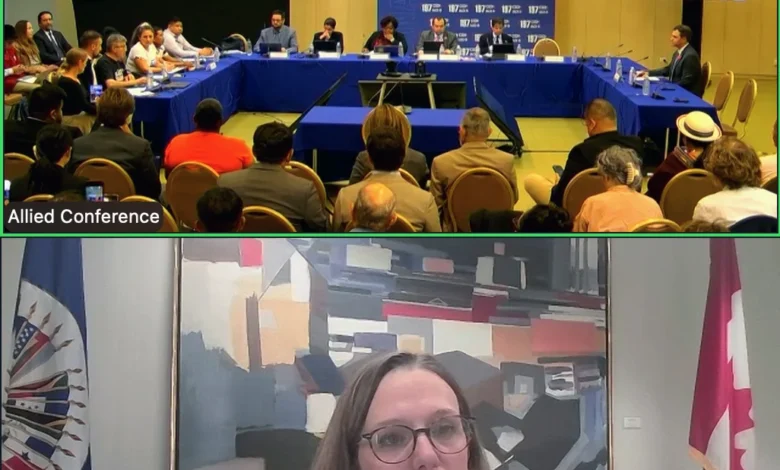
The Inter-American Commission on Human Rights (IACHR) convened in Panama on October 27 to address a mounting crisis involving the global operations of Canada’s extractive sector. During the hearing, representatives from six nations presented harrowing testimonies, detailing a pattern of environmental degradation, systemic harassment, and violent repression against those opposing mining projects backed by Canadian interests. The testimonies highlighted a critical disconnect between Canada’s international image as a champion of human rights and the reality of the impacts felt by frontline communities across the Americas.
Canada holds a unique position in the global mining landscape, serving as the base for approximately half of the world’s publicly listed mining and mineral exploration firms. While these companies provide significant economic output, their overseas activities have become the subject of intense international scrutiny. The October hearing in Panama provided a formal platform for activists to demand that Ottawa reconcile its corporate oversight responsibilities with the documented human rights abuses occurring in host countries.
A Pattern of Conflict: Testimonies from the Field
The testimonies provided a grim window into the lived experience of Indigenous and rural communities. Marco Manobanda, an Indigenous fish-farmer from Las Naves, Ecuador, offered a vivid account of the environmental and social toll exacted by the El Domo copper and gold project. The mine, operated by Vancouver-based Silvercorp Metals Inc. and Salazar Resources Ltd., has been linked to severe water contamination and deforestation.
"If this mining continues, they’re going to keep polluting our water, and we’ll run out of resources," Manobanda testified. "Since we make our living from that land and its resources, where are we supposed to go?"

Beyond environmental concerns, the human cost is rising. In June 2025, security forces in Ecuador reportedly utilized tear gas and rubber bullets to dismantle a peaceful protest against the El Domo project. Manobanda described an environment of persistent intimidation, noting that over 30 residents have been subjected to criminal charges, with several individuals receiving multi-year prison sentences for their opposition to the mine. The United Nations Special Rapporteurs have echoed these concerns, calling for meaningful, good-faith consultations that remain absent from the project’s development.
In Colombia, Mayerly López highlighted the threats facing the Santurbán páramo—a high-altitude, biodiverse ecosystem that serves as a vital water source for two million people. Aris Mining Corporation’s involvement in the Soto Norte project has sparked widespread resistance. López testified that defenders have been subjected to a smear campaign, with their images appearing on pamphlets that falsely associate them with illegal armed groups. This stigmatization is particularly dangerous in a nation that Global Witness has identified as the world’s deadliest for environmental defenders, with 39 killings recorded in 2025 alone.
The Erosion of Accountability: The CORE Controversy
The timing of the IACHR hearing is significant, occurring just months after the Canadian government controversially dismantled the Canadian Ombudsperson for Responsible Enterprise (CORE). Established to investigate allegations of human rights abuses linked to Canadian firms in the garment, mining, and oil and gas sectors, the CORE was intended to provide a pathway for international victims to seek justice.
Its elimination in mid-2026 left a vacuum in corporate accountability. The Canadian government has attempted to pivot responsibility toward the National Contact Point (NCP), a mechanism operating under the Organization for Economic Co-operation and Development (OECD) guidelines. However, experts and human rights advocates argue that the NCP is fundamentally ill-equipped to handle the gravity of the complaints being brought forward.
Arturo Ezquerro-Cañete, the Latin America program coordinator for MiningWatch Canada, described the transition as a degradation of oversight. "The position completely lacks teeth," he argued, noting that the NCP cannot compel the disclosure of documents, make binding findings of fact, or provide meaningful remedies for victims. Historical data supports this skepticism: since 2000, only three of the 33 cases processed by the Canadian NCP have resulted in formal, joint-resolution agreements.

Institutional Constraints and International Obligations
The IACHR, an independent organ of the Organization of American States (OAS), serves as a crucial, albeit limited, venue for these grievances. While Canada is a member of the OAS, it notably has not ratified the American Convention on Human Rights. This legal distinction prevents the IACHR from referring cases to the Inter-American Court of Human Rights, which possesses the mandate to issue binding judgments and order reparations.
Consequently, the Commission is limited to offering non-binding recommendations. Despite this constraint, the testimony remains a powerful diplomatic tool. Advocates are using the forum to pressure the Canadian government to adopt mandatory human rights and environmental due diligence legislation. Such a framework would legally require Canadian companies to identify, prevent, and mitigate risks across their global supply chains—a move that would align Canada with emerging regulatory trends in the European Union.
The Official Position: A Defense of the Status Quo
During the hearing, the Canadian government’s representative to the OAS, Gillian Gillard, defended the current oversight mechanisms. She characterized the NCP as a robust tool for "early resolution" and "preventing escalation." When pressed by commissioners regarding how Canada independently verifies that its corporations are upholding human rights standards abroad, the government representative did not provide a direct answer, instead citing a series of broad initiatives.
This lack of transparency has drawn criticism from civil society organizations. The Justice and Corporate Accountability Project, represented by lawyer Charis Kamphuis, noted that Canada’s failure to implement effective mechanisms is a direct violation of its international human rights obligations. The argument presented is that after three decades of documented harm, the "soft law" approach—relying on voluntary corporate social responsibility—has failed to prevent the systematic marginalization of vulnerable populations.
Broader Implications for Global Mining
The situation in Latin America is part of a larger global narrative regarding the "green transition." As the global demand for minerals required for renewable energy technologies surges, the pressure to expedite mining projects has intensified. This "rush for resources" often occurs in territories where land rights are contested and environmental regulations are weak.

The data provided by organizations like Global Witness paints a stark picture: Latin America has remained the deadliest region for environmental defenders for over a decade. The nexus between Canadian investment and these risks places the Canadian government in a difficult position. If it continues to prioritize the competitiveness of its mining sector over the rigorous enforcement of human rights, it risks losing its standing in international forums and potentially inviting future legal challenges.
The Path Forward: Demands for Reform
The witnesses in Panama concluded their testimony with a clear set of demands for the Canadian government:
- Mandatory Due Diligence Legislation: The implementation of a legal requirement for Canadian firms to conduct human rights and environmental impact assessments.
- Independent Oversight: The creation of an investigative body with the power to subpoena documents, make binding findings, and facilitate genuine remedies for affected communities.
- Conditional Financing: Making public financing, export credits, and insurance for mining companies contingent upon strict adherence to environmental and human rights safeguards.
- Transparency: A requirement for companies to disclose the risks associated with their operations and the steps being taken to mitigate them.
As the IACHR deliberates on the testimony heard in Panama, the international community will be watching to see if the Canadian government is willing to evolve its regulatory approach. The status quo, characterized by voluntary guidelines and decentralized accountability, is increasingly being viewed as incompatible with the modern expectations of corporate governance. Whether these calls for change will result in substantive policy shifts remains a critical question for the future of international human rights and the global extractive industry.
Related posts: