Rep. Haley Stevens’ fiancé is making waves in the Michigan Senate race as tensions flare between the congresswoman and the Democratic nominee

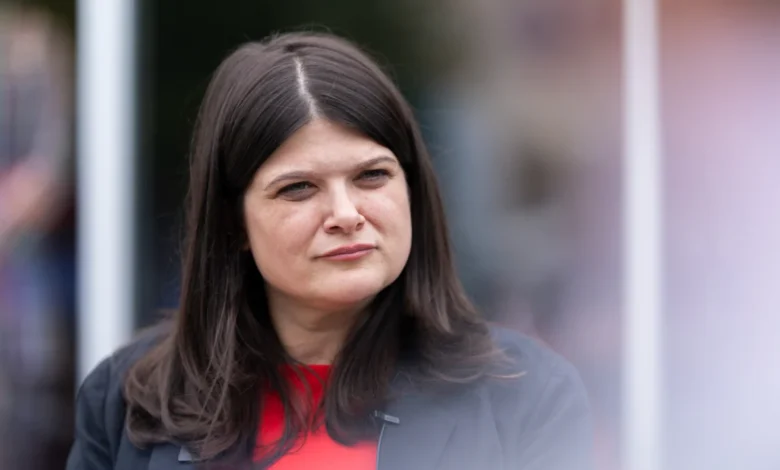
The final stretch of the 2026 Michigan U.S. Senate race has taken an unexpected and highly personal turn, with the primary campaign of Representative Haley Stevens effectively spilling over into the general election. While typical political norms dictate that defeated primary candidates pivot toward party unity to assist their party’s nominee, the dynamic between Rep. Stevens and Democratic nominee Abdul El-Sayed has become increasingly fractured. This tension has been further complicated by the public interventions of Stevens’ fiancé, Jason Turkish, whose vocal opposition to El-Sayed and surprising endorsement of Republican challenger Mike Rogers have created a political firestorm in the Great Lakes State.
A Fractured Primary Legacy
In August 2026, Michigan Democrats headed to the polls to decide their nominee for the seat vacated by long-serving leadership. Following a competitive primary, Abdul El-Sayed emerged victorious over a crowded field that included both Representative Stevens and State Senator Mallory McMorrow. In the months since, El-Sayed has faced a tight general election battle against Republican Mike Rogers, a race that could determine the balance of power in the U.S. Senate.
Under normal circumstances, the post-primary period serves as a healing process where rival camps merge resources and donor networks to ensure electoral success. However, the rapport between the Stevens and El-Sayed campaigns has deteriorated, primarily centered on ideological disagreements regarding U.S. foreign policy and the conflict in Israel. These differences, which were briefly explored during the primary, have now been amplified by the public rhetoric of Jason Turkish, a prominent attorney and donor who became engaged to Stevens earlier this year.
The Role of Jason Turkish
Jason Turkish, who has a history of bipartisan political giving, has transitioned from a private supporter of his fiancée’s career to a highly visible—and polarizing—political commentator. His recent media appearances, including a notable segment on Fox News, have focused on what he describes as "deep concerns" among Jewish Democrats regarding El-Sayed’s platform.
Turkish’s activities have reached a fever pitch over the last several days. On Wednesday, he attended a campaign event for Republican candidate Mike Rogers, a move that signaled a significant departure from his history as a Democratic donor. By Friday, as Rep. Stevens was conducting a high-profile interview with the New York Times to discuss party unity, Turkish was appearing on TMZ, claiming that he did not believe his fiancée would remain in the El-Sayed camp for much longer.
These assertions stand in direct contradiction to the public statements issued by Rep. Stevens herself. In her interview with the Times, Stevens reaffirmed her status as a Democrat who wants to see a party victory in the upcoming election. Nevertheless, she has conditioned her support for El-Sayed on his public disavowal of a third-party advertisement that blamed U.S. aid to Israel for rising domestic grocery prices. While El-Sayed’s campaign has maintained that the ad was not created or endorsed by them, Stevens continues to demand a formal rejection of the messaging as a prerequisite for her public participation in upcoming campaign rallies.
Chronology of Escalating Tensions
The timeline of the current dispute highlights a rapid breakdown in communication:
- August 2026: Abdul El-Sayed wins the Democratic primary for the U.S. Senate, defeating Rep. Haley Stevens and State Senator Mallory McMorrow.
- Late October 2026: A third-party advertisement surfaces, drawing criticism from Stevens for its characterization of U.S.-Israel relations.
- October 28, 2026: Media reports highlight Jason Turkish’s increasing involvement in the race and his growing public criticism of the Democratic nominee.
- October 30, 2026: Reports emerge that the El-Sayed campaign has requested distance from both Stevens and her fiancé, citing the need to focus on the general election rather than past primary grievances.
- October 31, 2026: State Senator Mallory McMorrow issues a stern rebuke of the ongoing infighting, urging all parties to "lock in" for the final days of the election.
- November 1, 2026: Turkish appears on national television, including Fox News, to advocate for the Republican candidate, Mike Rogers, citing his concerns regarding the Democratic nominee’s foreign policy stance.
The Response from Democratic Leadership
The public nature of this dispute has drawn sharp rebukes from within the Democratic Party. State Senator Mallory McMorrow, who ran alongside both Stevens and El-Sayed in the primary, has been among the most vocal critics of the current spectacle. In a statement released over the weekend, McMorrow emphasized the high stakes of the 2026 election, calling for an immediate end to the public posturing.
"This is a moment where we have to recognize the stakes," McMorrow stated. "Cut the shit. Lock in. Knock doors. Get out the vote. That’s it."
Her frustration echoes that of many Michigan Democrats who fear that the discord between a sitting congresswoman and the party’s senatorial nominee could depress voter turnout in a critical swing state. Political analysts note that for a race as close as the one between El-Sayed and Rogers, every constituency—including the donor class and the Jewish community—is essential for a path to victory. By alienating segments of the donor base and creating a narrative of division, the Stevens-Turkish conflict has provided an opening for the Republican campaign to highlight Democratic instability.
Implications for the Michigan Senate Race
The broader implications of this internal strife are significant. First, the involvement of a candidate’s spouse or partner in a hostile manner is historically rare and presents a unique challenge for campaign management. For the El-Sayed campaign, the challenge is twofold: maintaining a consistent policy message while mitigating the distraction caused by the rhetoric of those who were once political allies.
Second, the issue of foreign policy, specifically regarding the U.S.-Israel relationship, continues to be a fault line within the Democratic Party. While the party has attempted to present a unified front, the incident involving the third-party advertisement demonstrates how easily local or national campaigns can be derailed by external messaging that is not under their direct control. The demand from Rep. Stevens for a public disavowal suggests that the primary wounds have not fully healed, and that ideological disagreements remain a potent force.
Finally, the impact on voter perception cannot be ignored. In a state like Michigan, where the margins of victory in statewide races are often razor-thin, the appearance of infighting can lead to voter apathy. Republican candidate Mike Rogers has capitalized on this, utilizing the public rift to frame the Democratic Party as disorganized.
Moving Toward Election Day
As the election approaches, the El-Sayed campaign has made it clear that they are moving forward with their own strategy, regardless of the noise surrounding the Stevens camp. Their recent statement—that the congresswoman seems "intent on relitigating a primary that ended three months ago"—signals that they are no longer prioritizing the repair of that specific relationship.
Whether Rep. Stevens will ultimately participate in the final days of the campaign remains uncertain. If the event scheduled for Sunday continues without her, it will serve as a visual confirmation of the divide. For the voters of Michigan, the spectacle serves as a reminder of how high-stakes politics can often transcend policy, turning into personal conflicts that ripple across the entire electoral map. The final outcome of the Senate race will likely depend on whether the party can consolidate its base or if the divisions on display this week will have a lasting effect on the final tally.